
Infrastructure – Gurugram Noida Faridabad RRTS Corridor Gains Final Approval
Infrastructure – The Haryana government has cleared the final route and design for a major rapid transit project linking Gurugram, Faridabad, and Noida, setting the stage for a significant transformation in daily commuting across the National Capital Region.
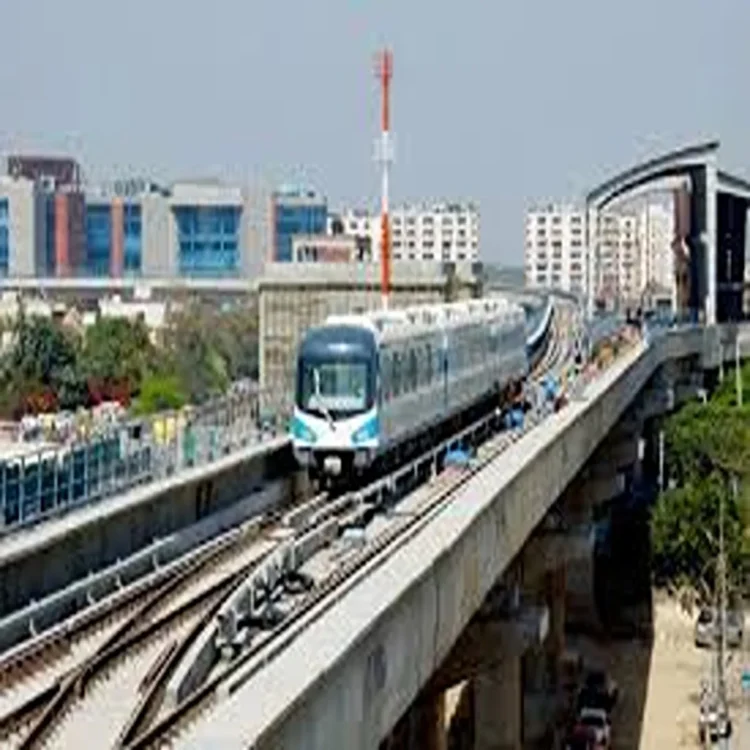
Project Approval and Timeline
The proposed Namo Bharat regional rapid transit system corridor, estimated at Rs 15,000 crore, has received formal approval under the leadership of Chief Minister Nayab Singh Saini. Officials familiar with the development indicated that the National Capital Region Transport Corporation has been instructed to prepare a detailed project report without delay. Construction is expected to begin by the end of the year, with completion targeted for 2031.
Stretching roughly 64 kilometres, the corridor will cover a wide span of key urban areas, with nearly 52 kilometres falling within Haryana’s jurisdiction. The project is designed to address long-standing traffic congestion and reduce travel time between major commercial and residential hubs.
Route and Key Stations
The corridor will originate at IFFCO Chowk in Gurugram and extend to Surajpur in Greater Noida. Along the route, 18 stations are planned to serve high-density zones. Important stops in Gurugram include Sector 29, Millennium City Centre, Sector 52, Wazirabad, and Sector 57.
In Faridabad, the alignment will pass through prominent areas such as Sainik Colony, NIT, Bata Chowk, and sectors 12 to 15, before moving onward. Meanwhile, in Noida and Greater Noida, the line will enter through the Sector 142–168 region and conclude at Surajpur Junction. Stations across these regions are expected to support both residential and business commuters.
Faster Commutes Across NCR
Once operational, the corridor is expected to bring a notable reduction in travel times. The journey between Gurugram and Noida could be completed in approximately 40 minutes, compared to the current road travel duration of up to two hours. Similarly, travel between Gurugram and Faridabad may take only 20 minutes, significantly improving daily mobility for thousands of commuters.
The trains will operate at speeds of up to 180 kilometres per hour, with services available every five to seven minutes. This high-frequency operation is aimed at ensuring reliability and convenience for passengers throughout the day.
Integration with Existing Networks
A key feature of the project is its integration with existing urban transport systems. The corridor will connect with the Delhi Metro’s Yellow and Violet lines, enabling smooth transfers for passengers traveling across different parts of the NCR.
In Gurugram, a 14.5-kilometre segment will link IFFCO Chowk with Millennium City Centre, Sector 52, and Gwal Pahari, connecting seamlessly with current metro and rapid metro networks. This integration is expected to enhance last-mile connectivity and reduce dependence on private vehicles.
Hybrid Transit Model
The proposed system will function as a hybrid model, combining elements of both regional rapid transit and metro services. This approach allows for high-speed travel over longer distances while also accommodating frequent stops within city limits. By balancing speed and accessibility, the system aims to optimise both infrastructure costs and land use.
Broader Impact on Urban Mobility
Officials believe the corridor will play a crucial role in reshaping transportation across the NCR. Beyond reducing travel time, the project is expected to ease road congestion, lower vehicle emissions, and contribute to a more sustainable urban environment.
The initiative also aligns with broader efforts to strengthen connectivity between major economic centres in the region. By linking Gurugram, Faridabad, and Noida more efficiently, the corridor is likely to support business growth and improve overall quality of life for residents.