
LegalUpdate – Delhi High Court Clarifies Role of Second Wife in Maintenance Case
LegalUpdate – Delhi High Court has ruled that a second wife cannot be considered a necessary or proper party in maintenance proceedings initiated by the first wife and her children against the husband. The court observed that such cases are limited to the legal rights and obligations between the parties directly involved in the maintenance claim.
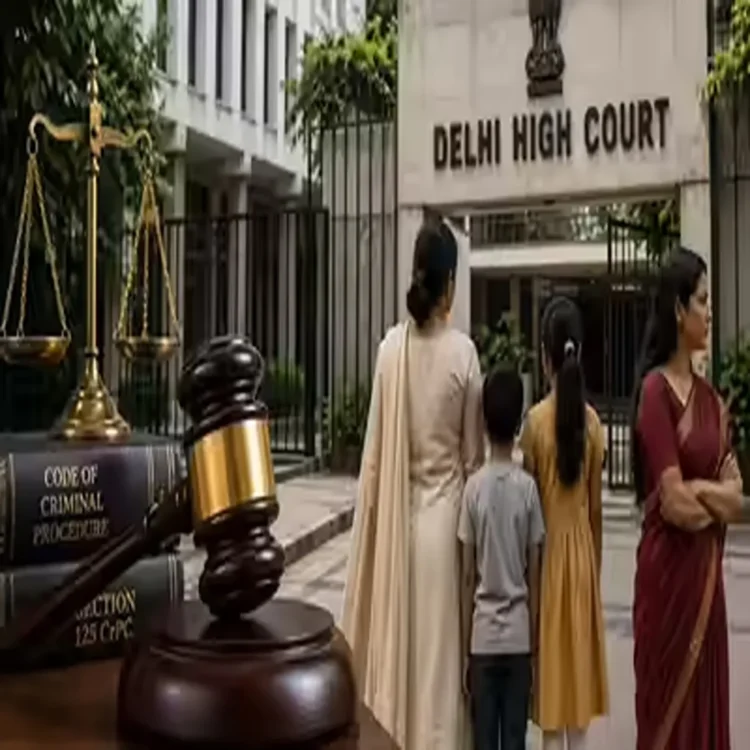
The decision came from Justice Swarana Kanta Sharma while dismissing a petition filed by a woman who sought to join an ongoing maintenance dispute between her former husband and his first wife. The case was linked to a challenge against a family court order regarding financial support for the children.
Court Examines Scope of Maintenance Proceedings
According to court records, the first wife had approached the High Court seeking revision of a family court decision. While the lower court denied maintenance to her, it directed the husband to provide Rs 10,000 each to their two children.
During the hearing of the matter, the man reportedly divorced his second wife as well. Following the divorce, the second wife filed an application requesting that she be added as a party to the ongoing maintenance proceedings. She argued that any order related to the husband’s financial responsibilities could affect her own financial interests and legal rights.
However, the first wife opposed the request, maintaining that the dispute was solely related to maintenance claims involving herself, her children, and the husband. She stated that no legal relief had been sought against the second wife and therefore her involvement was unnecessary.
High Court Rejects Intervention Plea
The High Court agreed with the objections raised by the first wife. Justice Sharma observed that proceedings under Section 125 of the Code of Criminal Procedure are specifically intended to address maintenance rights of wives, children, and parents who are unable to support themselves.
The court noted that the claims made by the second wife did not have any substantial connection to the adjudication of maintenance rights between the original parties in the dispute. It added that introducing unrelated claims could unnecessarily widen the scope of such proceedings.
In its order, the court emphasized that the legal framework governing maintenance cases is designed to remain focused and limited to those directly seeking relief and those obligated to provide support.
Financial Dependence Not Sufficient Ground
The second wife had argued that her financial dependence on the husband justified her inclusion in the matter. She claimed that decisions regarding the husband’s financial liabilities could indirectly impact her own situation.
The court, however, rejected this argument. It stated that accepting such reasoning would create a situation where any financially dependent individual could seek to intervene in maintenance proceedings, which would not be legally sustainable.
Justice Sharma described the plea as legally untenable and clarified that the principles of natural justice were not violated merely because the second wife was not included in the case. The order further stressed that maintenance proceedings cannot become a platform for resolving every financial dispute connected to an individual.
Significance of the Judgment
Legal experts believe the ruling reinforces the limited scope of maintenance proceedings under Indian law. The judgment highlights that courts dealing with maintenance matters must remain focused on the specific claims between the petitioner and respondent without expanding the litigation unnecessarily.
The decision is also expected to serve as a reference in similar family law disputes where third parties seek intervention in maintenance-related cases. By clearly defining who can participate in such proceedings, the court has attempted to maintain procedural clarity and prevent delays in family disputes.
The matter continues to draw attention within legal circles as it addresses the intersection of marital disputes, financial obligations, and procedural rights in family courts.