
Legal Proceedings – Delhi High Court to Hear Umar Khalid’s Fresh Bail Plea in 2020 Riots Case
Legal Proceedings –Student activist Umar Khalid has once again approached the Delhi High Court, filing a fresh appeal against the rejection of his bail plea in the case linked to the alleged criminal conspiracy behind the 2020 Delhi riots.
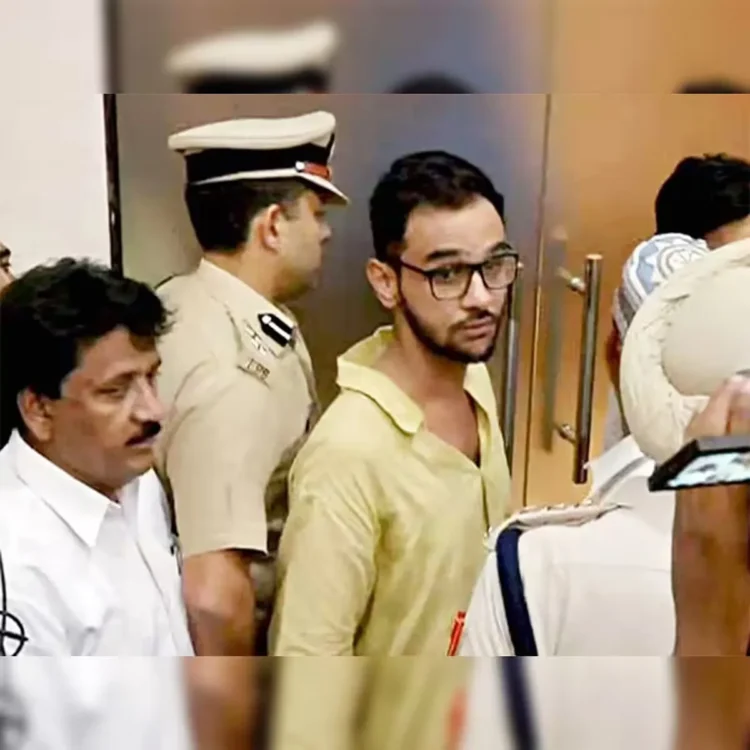
Khalid, who is facing charges under the Unlawful Activities (Prevention) Act (UAPA), challenged the trial court’s July 4 order that declined to grant him bail. This marks the third time he has sought relief before the Delhi High Court. The appeal is expected to come up for hearing on Friday.
Interim Bail Request Before Supreme Court Decision
Along with the regular bail appeal, Khalid has also requested interim bail until the Supreme Court delivers its decision on an important legal question concerning prolonged incarceration and delays in criminal trials under stringent laws such as the UAPA. The constitutional issue has been referred to a larger bench after two Supreme Court benches expressed differing views on the matter.
In his petition before the High Court, Khalid argued that the trial court made an error by refusing to examine his fresh application on its merits. According to the appeal, the lower court incorrectly relied on earlier Supreme Court orders without considering later judicial observations that may have altered the legal position.
Trial Court Relied on Earlier Supreme Court Order
The trial court had dismissed Khalid’s latest bail application, stating that the Supreme Court had already rejected similar pleas earlier and that it was bound to follow that decision. The court observed that it had no authority to depart from the apex court’s January 5 ruling and therefore could neither entertain the application nor grant bail.
The judge also held that the fresh application itself was not maintainable before the trial court. It further noted that it could not examine whether there had been any significant change in circumstances because the previous Supreme Court order remained binding.
Subsequent Supreme Court Remarks Cited by Defence
Khalid had filed the fresh application after another Supreme Court bench, during proceedings on May 18, expressed reservations about the earlier judgment that had denied bail to him and co-accused Sharjeel Imam. During those observations, the bench reiterated that granting bail should generally remain the rule, while imprisonment before conviction should be treated as an exception, including in cases registered under the UAPA.
Relying on those remarks, Khalid’s legal team argued that the subsequent judicial developments represented a material change in circumstances, making a fresh consideration of the bail request appropriate despite the earlier rejection.
Delhi High Court Awards Compensation in Child Drowning Case
In a separate matter, the Delhi High Court directed the Delhi government and the Delhi Jal Board to compensate the family of a 10-year-old boy who lost his life after drowning in a sewage pit in September 2014. Justice Mini Pushkarna ordered payment of Rs 16.92 lakh to the child’s mother along with annual interest at the rate of 9 percent. The court held the authorities responsible for the circumstances that resulted in the tragic incident.
Court Reaffirms Importance of Personal Liberty
A Delhi court, while hearing a case related to an alleged cryptocurrency fraud, observed that personal liberty remains one of the most valuable rights guaranteed under the Constitution. The court made the observation while rejecting a plea filed by the Central Bureau of Investigation seeking cancellation of bail granted to accused Ayush Varshney. Special Judge M. P. Singh ruled that the circumstances presented did not justify revoking the bail already granted.
High Court Seeks Plan to Prevent Waterlogging
Addressing recurring waterlogging concerns in the national capital, the Delhi High Court directed authorities to assess the feasibility of constructing a storm water drain along the NH-48 stretch between Mahipalpur and Rangpuri village. The court highlighted the strategic importance of the route, which connects Delhi with Gurugram and provides access to Indira Gandhi International Airport. It instructed the Special Task Force to hold a dedicated meeting to evaluate possible solutions aimed at improving drainage infrastructure and reducing disruption during heavy rainfall.