
Judiciary – Supreme Court weighs limits of state role in religious reforms
Judiciary – The Supreme Court continued its detailed examination of the Sabarimala review petitions on Wednesday, observing that it may not be practical to establish a uniform rule governing when the State can step into religious matters in the name of reform. The court indicated that such questions are deeply dependent on the specific facts of each case.
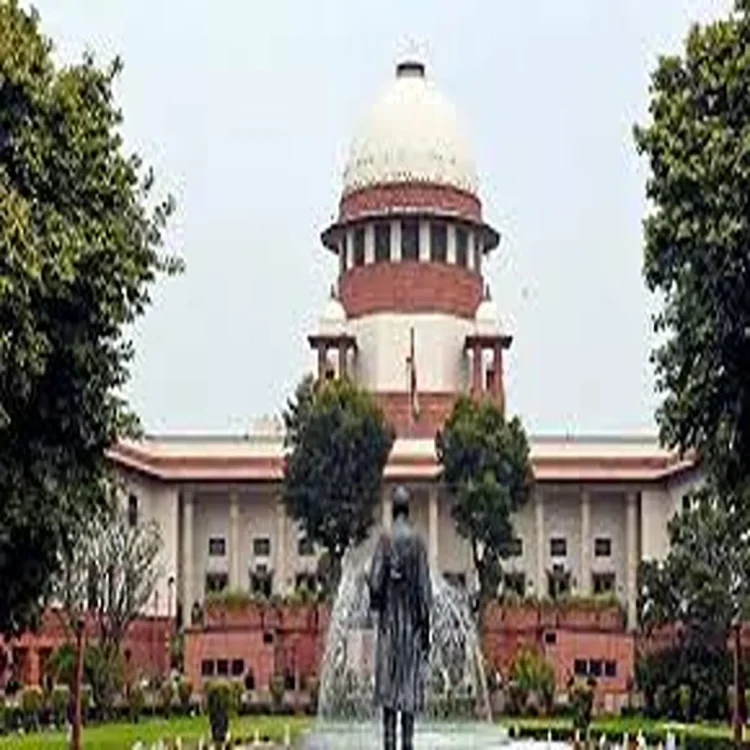
Court questions scope of state intervention
Hearing arguments before a nine-judge bench, the court focused on interpreting Article 25(2)(b) of the Constitution, which allows the State to enact laws aimed at social welfare and reform, even if they affect religious practices. The bench noted that while individual religious freedoms are protected, these rights are not absolute and are subject to other constitutional provisions.
The judges highlighted that the State, acting as a representative of public will, can address social concerns. However, they made it clear that courts must carefully evaluate whether such intervention genuinely serves reform or crosses into interference with religious traditions. The bench emphasized that each situation must be judged independently rather than through a fixed standard.
Debate over essential religious practices
During the proceedings, questions were raised about how far reform measures can go without infringing on established religious customs. One of the judges posed a hypothetical situation, asking whether a law permitting the entry of women of certain age groups into the Sabarimala temple could be justified as reform or seen as intrusion into religious practice.
This query brought attention to the broader issue of determining what constitutes an “essential religious practice.” The court explored whether long-standing traditions should be treated differently from practices that may not have a strong historical foundation.
Arguments from petitioners and legal experts
Senior Advocate Gopal Subramanium, responding to the bench, argued that courts must carefully examine the origins and significance of a practice before deciding if State intervention is valid. He stressed that understanding whether a custom is rooted in longstanding tradition is crucial in assessing its protection under the Constitution.
On the other hand, Senior Advocate Aryama Sundaram presented the view that while the Constitution promotes equality in many aspects of public life, this principle does not automatically extend to religious spaces. He argued that temples operate according to the specific nature and traditions of the deity, and therefore, religious customs should be interpreted within that context.
Concerns over judicial overreach
Another senior lawyer, Mukul Rohatgi, cautioned against courts stepping too deeply into religious matters. He suggested that just as courts avoid political controversies, they should also be careful about deciding what qualifies as an essential religious practice.
Rohatgi also raised questions about the relationship between Article 26, which protects the rights of religious denominations, and other fundamental rights. He argued that introducing concepts like constitutional morality into such matters could expand restrictions beyond what is explicitly stated in the Constitution.
Additional rulings by the court
In a separate matter, the court expressed concern over a prolonged administrative delay faced by a government employee seeking transfer to his home state. Noting that the individual had been pursuing the matter since 2011, the court directed the Uttar Pradesh government to pay compensation of Rs 1 lakh and ensure immediate action on the transfer.
In another significant development, the court brought closure to a long-standing dispute over land transactions in Tamil Nadu. It lifted a status quo order that had affected numerous homebuyers, stating that a welfare-oriented State should not attempt to reverse property deals made decades earlier.
Hearing to continue
The proceedings in the Sabarimala review case are ongoing, with further arguments scheduled. The case continues to raise important constitutional questions about the balance between religious freedom and the State’s role in promoting social reform.