
Judiciary – Supreme Court Emphasises Legal Principles Over External Commentary in Sabarimala Case
Judiciary – On the eighth day of hearings related to the Sabarimala reference, a nine-judge Constitution bench of the Supreme Court made it clear that judicial decisions must rest firmly on constitutional values rather than opinions expressed outside the courtroom. The bench stressed that public commentary, however influential, cannot override established legal reasoning during proceedings.
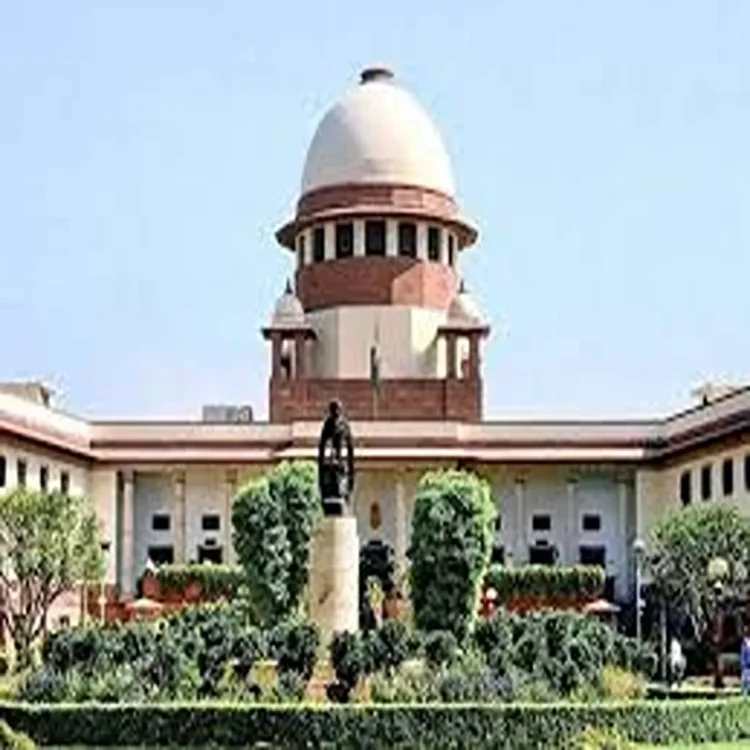
Court draws line on use of external opinions
The issue arose when advocate Neeraj Kishan Kaul, appearing for the Dawoodi Bohra community’s spiritual head, cited a newspaper column discussing judicial restraint. This prompted the bench to reflect on the kinds of materials that should be relied upon in court. Justice B V Nagarathna noted that while the judiciary respects scholarly and intellectual contributions, it cannot treat informal or unverifiable sources as dependable references.
She specifically cautioned against relying on information circulating through unofficial channels, highlighting that such content lacks credibility and cannot form the basis of legal arguments. The court reiterated that legal submissions must be supported by authoritative and verifiable material rooted in law.
Emphasis on maintaining judicial discipline
The bench advised lawyers to exercise caution when presenting non-legal sources, including opinion pieces and media articles, as part of their arguments. It underscored that while public discourse may benefit from diverse viewpoints, courtroom deliberations require a disciplined approach grounded in constitutional provisions and precedents.
This observation reinforced the broader principle that judicial reasoning must remain insulated from external influences that fall outside the structured legal framework.
Debate over religious rights and constitutional provisions
During the hearing, Kaul argued that religious denominations have the constitutional right to manage their own affairs under Article 26(b). He contended that this right should not be curtailed by Article 25, except in specific situations such as ensuring access to places of worship for all sections of Hindus.
The court is currently examining a group of review petitions that raise questions about how to balance the right to equality with the autonomy of religious institutions. The matter continues to generate complex legal debate around the interpretation of fundamental rights.
Concerns over traditions and anti-discrimination principles
Senior advocate Arvind Datar, representing those opposing the entry of women of menstruating age into the Sabarimala temple, argued that the Constitution itself acknowledges that certain religious practices may appear to conflict with anti-discrimination norms but are still protected. He maintained that these protections must be considered carefully within the constitutional scheme.
Objections raised over remarks about deity
Senior advocate K Radhakrishnan, appearing for the Pandalam royal family associated with the temple, expressed concern over statements made by some petitioners. He alleged that certain remarks were disrespectful towards the deity and had caused distress among devotees. He also questioned why authorities had not taken action in response to such comments.
Separate argument on practices in mosques
In a related discussion, advocate M R Shamshad, representing the All India Muslim Personal Law Board, referred to a different petition seeking permission for women to stand in the front row during Namaz in mosques. He argued that the plea was based on a misunderstanding, as mosques do not have a concept comparable to a sanctum sanctorum.
Court reiterates reliance on verified sources
Throughout the proceedings, the bench consistently maintained that judicial analysis must rely only on credible, verifiable sources. It reaffirmed that while public opinion plays a role in broader societal discussions, it cannot replace the rigour and discipline required in constitutional adjudication.
The hearings are ongoing, with the court continuing to examine the intersection of faith, equality, and constitutional rights in a case that has far-reaching implications.