
Security – Pakistani Forces Kill 22 Militants in Northwest Operation
Security – Pakistan’s military reported that security forces killed 22 suspected militants during a series of operations in the country’s northwestern region earlier this week. The clashes, which took place in Khyber district near the Afghan border, also resulted in the death of a young child caught in the crossfire, according to official statements.
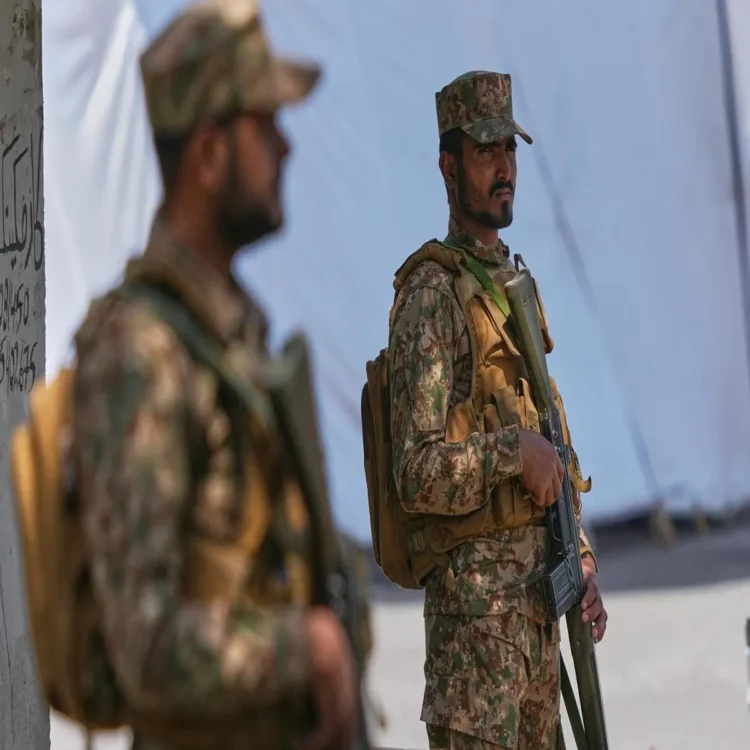
Operation Details and Casualties
According to the military’s media wing, the operation was carried out jointly by armed forces and law enforcement agencies on Tuesday. Officials described the encounter as an intense exchange of gunfire, during which the suspected militants were neutralized. The area where the operation unfolded has long been considered sensitive due to its proximity to the Afghanistan border and its history of militant activity.
Authorities confirmed that a ten-year-old child lost their life during the incident. The circumstances surrounding the child’s death point to the risks civilians face in conflict-prone regions, especially during high-intensity operations involving heavy gunfire.
Government Reaction to Civilian Death
Prime Minister Shehbaz Sharif expressed grief over the loss of the child’s life. In an official statement, he condemned what was described as unprovoked firing by militants and extended condolences to the affected family. The government reiterated its stance on continuing counterterrorism efforts while acknowledging the human cost associated with such operations.
The incident has once again drawn attention to the challenges faced by authorities in balancing security measures with civilian safety in volatile regions.
Rising Militant Activity in Border Regions
In recent years, Pakistan has witnessed a noticeable rise in militant attacks, particularly in provinces that share borders with Afghanistan. Many of these incidents have been linked to the Tehreek-e-Taliban Pakistan (TTP), an armed group that has intensified its activities following political changes in neighboring Afghanistan.
Security analysts note that the rugged terrain and porous border make it difficult to monitor movement, allowing militant groups to regroup and carry out operations. The resurgence of violence has prompted repeated military responses aimed at dismantling these networks.
Diplomatic Strain Between Pakistan and Afghanistan
The situation has also strained relations between Pakistan and Afghanistan. Islamabad has repeatedly alleged that militant groups are using Afghan territory as a base for launching attacks inside Pakistan. Afghan authorities, however, have denied these claims, maintaining that they are committed to preventing cross-border militancy.
This disagreement has led to periodic tensions, including skirmishes along the border. Both countries have accused each other of failing to control militant elements, further complicating diplomatic ties.
Escalation Following Recent Attacks
Earlier this year, Pakistan carried out a series of strikes targeting suspected militant positions across the border. The country’s defence leadership described these actions as a significant escalation in response to a wave of deadly suicide attacks.
These developments indicate a shift toward more aggressive security measures, reflecting growing concerns within Pakistan over internal security threats. At the same time, such actions risk deepening regional instability if tensions with Afghanistan continue to rise.
Ongoing Security Challenges
The latest operation highlights the persistent security challenges facing Pakistan in its northwestern regions. While authorities continue to conduct targeted operations against militant groups, the recurrence of violence suggests that long-term stability will require not only military action but also diplomatic engagement and regional cooperation.
The loss of civilian life in such incidents underscores the urgency of finding solutions that prioritize both security and the protection of vulnerable communities living in conflict zones.