
Judiciary – Supreme Court Declines Blanket Ban on Pellet Guns for Crowd Control
Judiciary – The Supreme Court has indicated that the use of pellet guns by security forces cannot be prohibited outright while existing government guidelines continue to permit their deployment in exceptional law-and-order situations. At the same time, the court clarified that any allegation of excessive or improper use can be examined individually through judicial scrutiny.
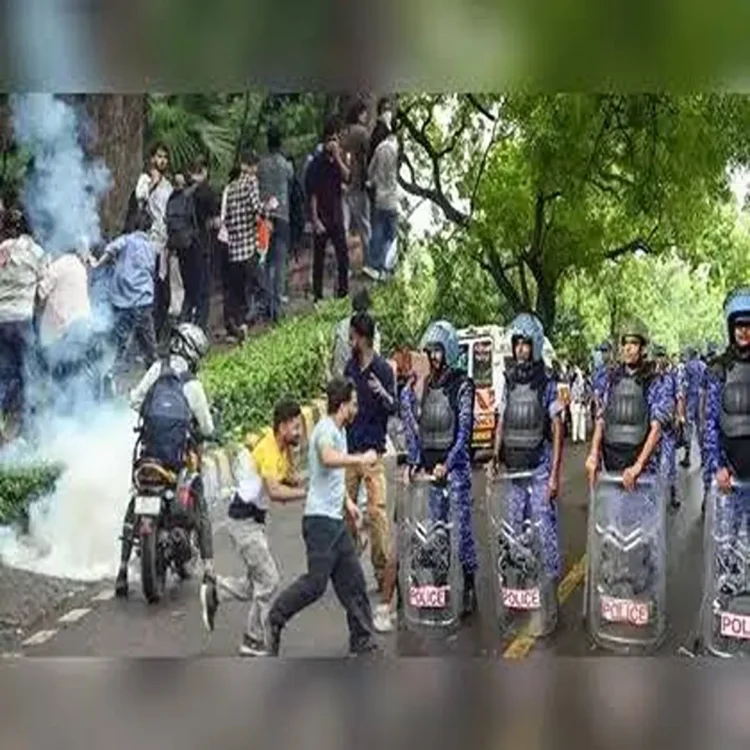
The observations came during the hearing of a petition related to the alleged use of metallic pellet guns during student demonstrations in Delhi over the NEET-UG paper leak controversy. A Bench comprising Chief Justice Surya Kant and Justices Joymalya Bagchi and V. Mohana also instructed the Centre to preserve the ammunition records of the Rapid Action Force (RAF) personnel who were deployed at Jantar Mantar during the protest.
Court Refers to Existing Police Guidelines
During the proceedings, the Bench pointed out that the Bureau of Police Research and Development (BPRD) advisory permits security agencies to use pellet guns only under exceptional circumstances while managing crowds. In view of this framework, the judges observed that a request seeking a complete prohibition on pellet guns was too broad without directly challenging the legal basis that authorises their use.
Justice Joymalya Bagchi remarked that anyone seeking to eliminate pellet guns entirely would first have to question the constitutional validity of the relevant provision permitting their use, particularly with reference to Article 21 of the Constitution, which guarantees the right to life and personal liberty.
Individual Cases Can Still Be Reviewed
While declining to consider a blanket ban at this stage, the Bench made it clear that the judiciary remains open to examining allegations involving specific incidents. If evidence suggests misuse or disproportionate force in a particular case, the court said such matters can be assessed independently on their own merits.
The Solicitor General, Tushar Mehta, submitted that security personnel often have to make immediate operational decisions depending on the circumstances unfolding on the ground during protests or law-and-order situations.
Petitioners Seek Relief for Injured Protesters
Senior advocate Vrinda Grover, representing the petitioners, informed the court that different categories of pellets, including rubber, plastic and metallic variants, are available. She argued that the injuries sustained during the July 20 protest were caused by metallic pellets recovered from the bodies of those injured, and therefore confined the relief sought to the use of metallic ammunition.
The court also directed the Delhi government to ensure the best possible medical treatment for injured protesters, including Prashant Kumar, Sheikh Irshad Mansoori and others who reportedly suffered pellet-related injuries during the demonstration.
The petition had been filed by former Central Information Commissioner and retired IPS officer Yashovardhan Azad along with two injured protesters. Besides seeking a ban on metallic pellet guns in law-and-order operations, the plea also requested compensation, medical care and rehabilitation for those affected during the Delhi protest.
Parliament Clears Anti-Paper Leak Amendment
In a related development connected to the wider NEET-UG controversy, the Rajya Sabha approved the Public Examinations (Prevention of Unfair Means) Amendment Bill, 2026 through a voice vote after Opposition members staged a walkout. The Lok Sabha had already passed the legislation a day earlier.
Union Minister Dr. Jitendra Singh reiterated the government’s zero-tolerance approach towards examination paper leaks, stating that strict measures were necessary to safeguard the interests of students. During the debate, Leader of the Opposition Mallikarjun Kharge argued that the amendment was introduced following sustained pressure from opposition parties and widespread student protests across the country.
Separate Legal Developments Linked to Protests
Meanwhile, police registered a zero FIR in Noida against a woman accused of using abusive language against Prime Minister Narendra Modi during a protest held at Jantar Mantar in New Delhi.
In another development, the Aurangabad Bench of the Bombay High Court imposed a penalty of ₹5,000 each on students who had filed false complaints alleging that their NEET-UG answer sheets had been tampered with. The order marks the first reported penal action against candidates found to have made baseless allegations regarding the examination process.