
InstrumentInnovation – Tripura Musician Creates Unique Guitar Inspired by Indian Classical Traditions
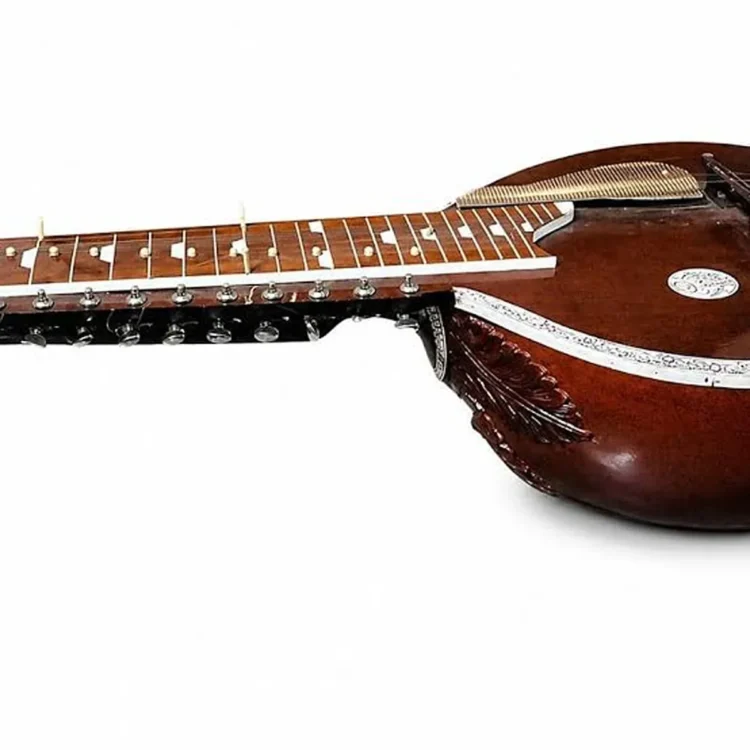
InstrumentInnovation – A musician and instrument maker from Tripura has developed a distinctive string instrument that blends the structure of a guitar with the tonal richness of traditional Indian classical instruments. After dedicating nearly 25 years to research and experimentation, noted instrumentalist Pankaj Kumar Das introduced the Padma Veena, a modified acoustic slide guitar that incorporates a natural gourd resonator, a feature rarely seen in modern guitar design.
A Long Journey of Musical Experimentation
Das, who holds a master’s degree in physics and serves as an assistant headmaster at a government higher secondary school, said the inspiration behind the instrument came from his deep interest in the sound characteristics of Indian classical music. According to him, many traditional Indian instruments derive their unique tonal quality from natural resonators rather than engineered wooden chambers.
He explained that instruments such as the veena, tanpura and ektara rely heavily on gourds to create their warm and resonant sound. In contrast, conventional guitars generally use plywood or wooden resonance chambers that produce a different tonal texture.
Blending Traditional Sound With Modern Design
The Padma Veena was designed specifically to support the nuances of Indian classical music. Unlike a standard guitar that typically features six strings, Das equipped his instrument with 22 strings to expand its tonal range and accommodate complex classical compositions.
To achieve the desired sound, he combined wood with a carefully processed gourd attached to the instrument’s body. The gourd undergoes an extensive drying and treatment process before being incorporated into the final design. Das believes this natural resonator produces a richer and deeper acoustic response than conventional plywood-based systems.
Enhancing the Guitar for Classical Performance
The musician focused on improving the acoustic properties of the slide guitar by adapting elements commonly found in traditional Indian instruments such as the veena, sitar and sarod. Particular attention was given to the resonating chamber and string arrangement, allowing the instrument to better express the melodic and microtonal characteristics associated with Indian classical performances.
According to Das, the project was not merely about altering the appearance of a guitar but about unlocking its potential as a serious classical instrument. The modifications were intended to bridge the gap between contemporary string instruments and centuries-old Indian musical traditions.
Search for Wider Recognition
Despite years of dedication and the uniqueness of the concept, Das said the Padma Veena has yet to receive the level of recognition he believes it deserves. He remains hopeful that musicians and researchers will take greater interest in the instrument and explore its possibilities in classical music settings.
Reflecting on the origins of the project, Das recalled that when he began playing the guitar in the early 1980s, he often wondered whether the instrument could one day emulate the expressive qualities of the human voice. While many musicians regard the sarangi as one of the closest instruments to vocal expression, he set out to discover whether a redesigned guitar could achieve a similar level of musical sensitivity