
Governance – West Bengal Cabinet Ends Religion-Based Imam Assistance Programs
Governance – The West Bengal government has announced a series of administrative and welfare-related decisions that signal a major change in the state’s policy direction. Several new measures, including the withdrawal of religion-linked financial aid schemes and the launch of a fresh support initiative for women, were approved during a Cabinet meeting held on Monday.
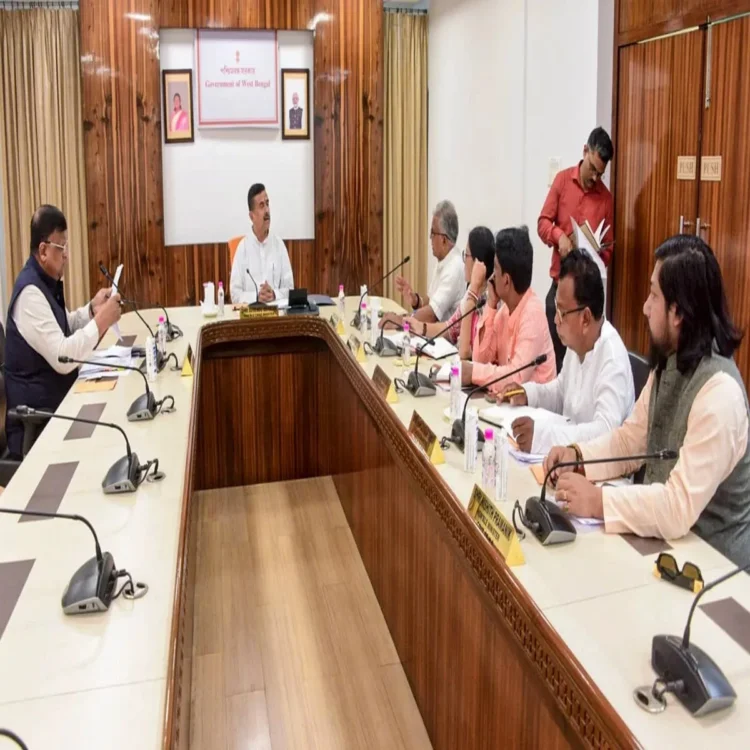
Cabinet Approves Major Administrative Changes
The meeting, chaired by Chief Minister Suvendu Adhikari, focused on governance reforms, welfare restructuring, and employee-related benefits. Among the most significant decisions was the discontinuation of financial support previously provided to imams and certain other groups under religion-specific assistance schemes.
According to Women, Child, and Social Welfare Minister Agnimitra Paul, the government has decided to end schemes that classify beneficiaries on the basis of religion. She confirmed that an official notification regarding the move would be released soon. However, student scholarship programs currently operating in the state will continue without interruption.
Annapurna Scheme Introduced for Women
The Cabinet also approved the rollout of the ‘Annapurna’ financial support scheme aimed at women across the state. The initiative is expected to provide direct monetary assistance and strengthen welfare outreach among economically weaker sections.
Officials indicated that the program is part of a broader effort to redesign social welfare policies with a stronger focus on financial inclusion and targeted support mechanisms. Detailed guidelines regarding beneficiary eligibility and payment structure are expected to be issued after June 1, when the decisions formally come into effect.
OBC List to Be Revised After Court Judgment
Another important development involves the state’s existing Other Backward Classes (OBC) list. The government has decided to withdraw the current list following a 2024 judgment by the Calcutta High Court.
Minister Agnimitra Paul stated that a fresh committee would be established to examine and determine eligibility for reservation benefits under the OBC category. The panel is expected to review applications and prepare recommendations in line with judicial directions and constitutional provisions.
The move is likely to have a significant impact on reservation policies and administrative procedures related to social justice programs in the state.
Panels to Probe Corruption and Crimes Against Women
In another major decision, the Cabinet approved the formation of two separate inquiry panels. One committee will examine allegations of corruption during the previous Trinamool Congress administration, while the second body will investigate reported crimes against women during that period.
Government officials said the panels would be tasked with reviewing records, gathering evidence, and submitting detailed reports to the administration. Further information regarding the structure, members, and timelines of these committees is expected to be announced in the coming days.
Seventh Pay Commission Gets Approval
The state government has also cleared the formation of the Seventh State Pay Commission for government employees. The commission will study salary structures and recommend revisions aimed at increasing the pay and benefits of state employees.
This decision is expected to affect a large section of the government workforce and could have broader financial implications for the state administration. Officials said the commission would begin consultations and assessments after its formal constitution.
The Cabinet decisions collectively represent a major policy transition in West Bengal, covering welfare distribution, reservation policies, governance oversight, and employee compensation reforms. Most of the newly approved measures are scheduled to be implemented from June 1 onward.