
Diplomacy – US Forces Intercept Iranian Drones Near Hormuz Shipping Route
Diplomacy – The United States military announced early Saturday that it successfully intercepted and destroyed all Iranian drones that were allegedly launched toward commercial vessels moving through the Strait of Hormuz. According to the U.S. Central Command (CENTCOM), maritime traffic in the strategically important waterway has continued without disruption despite the attempted attacks.
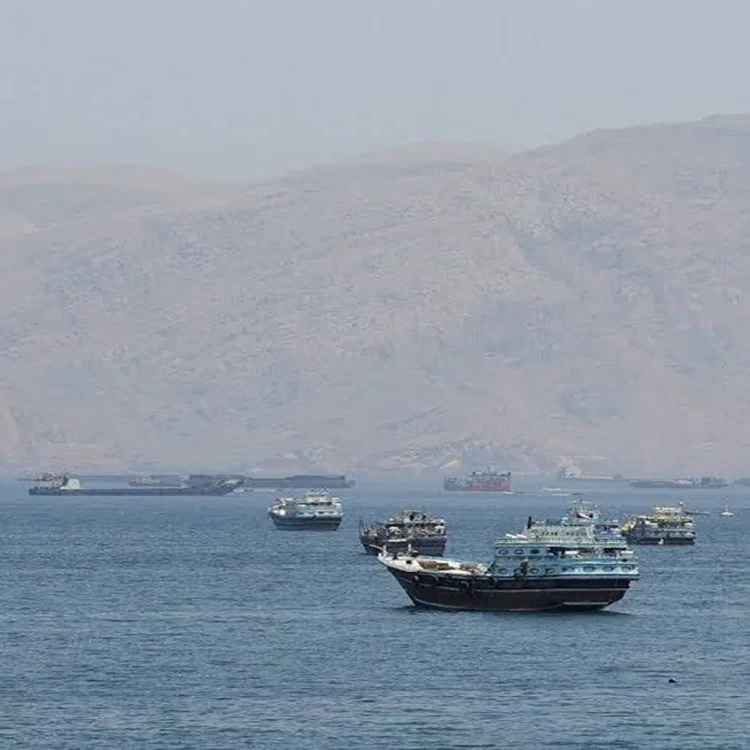
US Military Reports Successful Drone Interceptions
In a statement shared on social media platform X, CENTCOM said Iranian forces launched several one-way attack drones targeting commercial ships operating in the Strait of Hormuz. The command stated that U.S. forces responded swiftly and neutralized every drone involved in the operation. Officials emphasized that shipping activity through the narrow maritime corridor remained uninterrupted and that the route continues to be accessible for international trade.
The Strait of Hormuz is regarded as one of the world’s most vital shipping passages, serving as a key route for energy supplies and global commerce. Any security concerns in the area are closely monitored by governments and businesses worldwide because of their potential impact on international markets.
Iran Discusses Framework for Future Agreement
Meanwhile, developments on the diplomatic front continued as Iranian Foreign Minister Abbas Araghchi outlined details of a proposed memorandum of understanding involving Tehran and Washington. Speaking through remarks carried by Iran’s state broadcaster, Islamic Republic of Iran Broadcasting (IRIB), Araghchi said the framework would cover several major issues, including Iran’s nuclear activities, sanctions relief measures, and matters related to the Strait of Hormuz.
According to the minister, the arrangement is designed to move forward in two separate phases. He explained that discussions related to Iran’s nuclear program were postponed during the initial phase and would instead be addressed during the second stage of negotiations.
Conditions Attached to Final Agreement
Araghchi noted that the proposed framework contains obligations that must be fulfilled before any permanent agreement can be concluded. He stated that failure to implement the outlined provisions would prevent the signing of a final deal between the parties involved.
The Iranian foreign minister also indicated that one of the key points included in the understanding concerns the removal of what he described as a U.S. naval blockade. He suggested that this issue forms an important part of the broader discussions taking place between the two sides.
Future Management of the Strait Remains a Key Topic
Addressing maritime governance, Araghchi said international law does not permit the collection of toll charges for passage through the Strait of Hormuz. However, he stated that service-related fees could be introduced under future arrangements. He also mentioned that compensation measures for Iran are among the subjects currently under consideration.
The minister further stressed that the Strait of Hormuz falls under the sovereignty of both Iran and Oman. He indicated that future management of the waterway may differ from past arrangements and revealed that Tehran and Muscat are expected to release a joint statement in the near future outlining their approach to overseeing the strategic passage.
As tensions and diplomatic activity continue across West Asia and the Gulf region, developments involving maritime security, international shipping, and ongoing negotiations are expected to remain closely watched by governments, businesses, and global markets.