
Gig Workers – Shashi Tharoor Questions India’s ILO Vote as Labour Debate Intensifies
Gig Workers –Congress MP Shashi Tharoor has strongly criticised the Union government’s decision to abstain from voting on the International Labour Organization (ILO) Convention concerning decent work in the platform economy. The proposed convention aims to establish minimum labour standards for gig and platform workers across member countries. Calling the move disappointing, Tharoor argued that India should have backed the global framework designed to strengthen safeguards for millions of app-based workers.
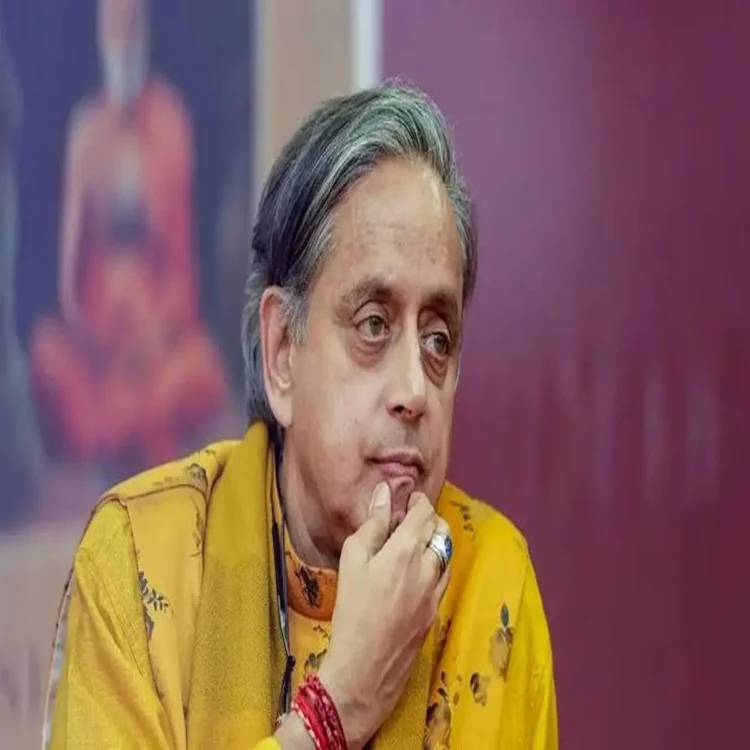
Tharoor Calls Abstention a Missed Opportunity
In a post shared on X, Tharoor said the government’s decision stood in contrast to the position taken by both Indian employers and worker representatives, who reportedly supported the convention during the ILO discussions. According to him, India should have joined other nations in endorsing the proposed standards instead of remaining neutral.
The Congress leader maintained that supporting the convention would have demonstrated India’s commitment to improving working conditions in the rapidly expanding platform economy. He also suggested that the principles outlined in the convention should eventually be reflected in the country’s domestic labour laws to provide stronger legal protection for gig workers.
Concern Over Conditions of App-Based Workers
Tharoor further stated that the government’s stand overlooked the challenges faced by a large number of young Indians earning their livelihoods through digital platforms. He said many workers in the gig economy continue to operate with limited social security and employment safeguards despite playing an increasingly important role in the country’s workforce.
The ILO convention seeks to establish internationally recognised standards covering issues such as fair working conditions, rights, and protections for individuals engaged in platform-based employment. The proposal has attracted attention as governments worldwide examine ways to regulate the fast-growing gig economy.
Government Highlights Growth of e-Shram Registration
While the political debate over labour rights continues, the Ministry of Labour and Employment has highlighted the progress of its e-Shram initiative. Responding to a question in the Lok Sabha earlier this month, Minister of State for Labour and Employment Shobha Karandlaje informed Parliament that more than 31.78 crore unorganised workers had registered on the e-Shram portal as of July 14, 2026.
The portal, introduced on August 26, 2021, was created to build a comprehensive national database of unorganised workers. It includes gig workers, platform workers and migrant labourers. Registered workers receive a Universal Account Number (UAN) through a self-declaration process, enabling them to access various government welfare initiatives.
Expansion of Welfare and Digital Services
The government has continued expanding the scope of the e-Shram platform over the past two years. In January 2025, dedicated microsites were launched for states and Union Territories to help local administrations manage worker registration, verification, data updates and state-specific services more efficiently.
Another major initiative was introduced in October 2024 with the launch of the e-Shram One-Stop Solution. The integrated platform was developed to bring multiple welfare and social security schemes together, allowing registered workers to view available benefits and access government programmes through a single portal.
According to the Labour Ministry, fifteen schemes operated by different central ministries and departments have already been integrated with e-Shram. The portal is also connected with the National Career Service for employment opportunities, the Skill India Digital Hub for skill development programmes, the Pradhan Mantri Shram Yogi Maan-dhan pension scheme, and the Ministry of Housing and Urban Affairs’ convergence portal.
The latest developments have brought renewed attention to the broader discussion on balancing technological growth with stronger labour protections, particularly as India’s platform economy continues to expand alongside government efforts to improve welfare coverage for unorganised workers.