
ElectoralRolls – Concerns Raised Over Voter List Revision and Citizen Inclusion Process
ElectoralRolls – Fresh concerns have emerged over the ongoing revision of electoral rolls after AIMIM President and Hyderabad MP Asaduddin Owaisi criticized the Union government’s approach to voter verification. Speaking on Wednesday, Owaisi argued that the Special Intensive Revision (SIR) exercise could have significant consequences for democratic participation if large numbers of citizens are removed from voter lists during the verification process.
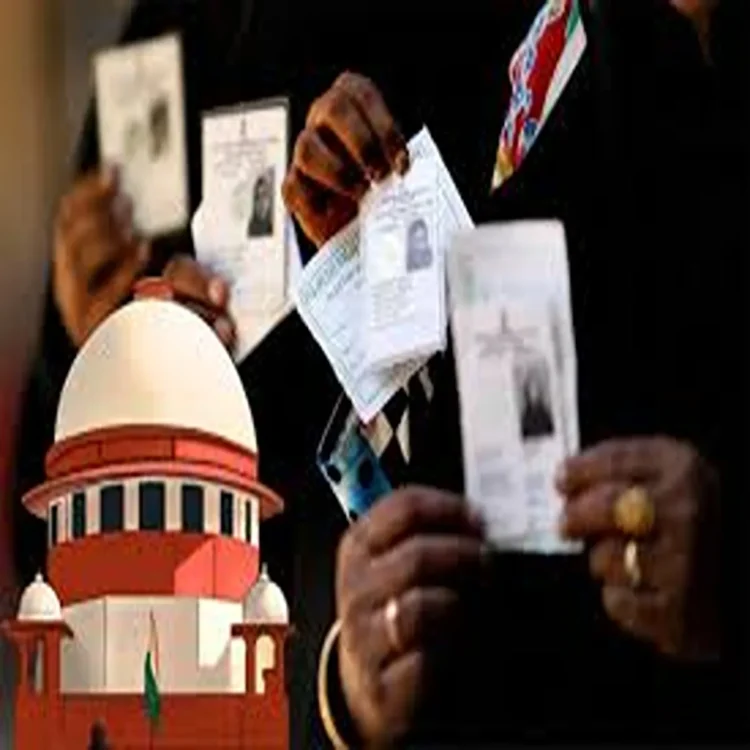
Allegations Over Large-Scale Deletions
In a statement shared on social media, Owaisi claimed that a document-based verification drive had already resulted in the removal of nearly 6.5 crore names from electoral rolls across 13 states and Union Territories. According to him, the government is now considering a broader framework that could formalize the review of such exclusions through a dedicated committee.
He alleged that the proposed mechanism may eventually be linked to identifying individuals suspected of being illegal immigrants and could create long-term administrative procedures related to detention and deportation. Owaisi questioned the purpose of such a move and urged greater public discussion on the issue.
Concerns About Democratic Representation
The AIMIM leader said the right to vote remains one of the most important democratic tools available to ordinary citizens, especially those from economically weaker backgrounds. He warned that any process resulting in widespread exclusion from voter rolls could weaken the political voice of vulnerable communities.
According to Owaisi, the impact of voter list deletions may extend beyond elections, as some individuals reportedly face challenges while accessing government welfare services. However, he emphasized that removal from an electoral roll does not automatically determine a person’s citizenship status under existing laws.
He further pointed out that millions of cases are still under review and that affected individuals retain the option to apply for voter registration through the prescribed process, including the submission of Form 6 where applicable.
Questions Raised Over Transparency
Owaisi also called for greater transparency in the implementation of the revision exercise. He stated that the Election Commission had not publicly disclosed figures showing how many deletions, if any, were linked to foreign nationality concerns.
The Hyderabad MP alleged that communities such as Muslims, women, migrant workers and economically disadvantaged groups could be disproportionately affected by the verification process. He argued that more detailed public data would help address concerns regarding fairness and accountability.
Debate Over Demographic Trends
Questioning the need for a new committee, Owaisi referred to government demographic statistics, saying available data indicate that population growth has largely stabilized. He cited the country’s total fertility rate of 2.0 and asked why additional measures were considered necessary despite these trends.
He expressed concern that discussions surrounding identification exercises could generate uncertainty and anxiety among sections of the population, particularly minorities.
Wider Criticism of Administrative Processes
Expanding his remarks beyond the electoral issue, Owaisi criticized what he described as an increasing dependence on documentation and verification requirements in various public systems. Referring to debates around NEET-UG 2026 and the CBSE OSM platform, he argued that citizens are frequently required to submit documents through multiple procedures while government systems continue to face operational challenges.
He maintained that public institutions should remain open to scrutiny and accountability, just as citizens are expected to comply with verification processes.
Election Commission’s Revision Schedule
Meanwhile, the Election Commission of India announced on May 14 the implementation of Phase III of the Special Intensive Revision across 16 states and three Union Territories. The exercise is expected to cover more than 36 crore electors and will be conducted in stages, including in Telangana.
The Commission stated that the revision has been aligned with the house-listing phase of the Census to make efficient use of manpower and administrative resources. For Telangana and Punjab, October 1, 2026, has been set as the qualifying date.
Under the published schedule, preparatory activities will take place from June 15 to June 24, followed by visits by Booth Level Officers between June 25 and July 24. Draft electoral rolls are scheduled for publication on July 31. Citizens will be able to submit claims and objections until August 30, after which the final electoral rolls are expected to be released on October 1, 2026.