
Elections – Counting Begins Across Four States Amid High Political Stakes
Elections – The counting of votes for the Assembly elections across Tamil Nadu, Kerala, West Bengal, Assam, and Puducherry commenced on Monday morning, with early trends expected to shape the political narrative by the end of the day.
Massive Voter Participation Across States
These elections witnessed participation from nearly 250 million voters, making it one of the most significant democratic exercises in recent years. Voter enthusiasm remained high across all states, with several regions recording notable turnout percentages that reflect strong public engagement in the electoral process.
West Bengal stood out with an exceptional voter turnout of 92.93 percent, marking one of the highest participation rates in the state’s electoral history. However, vote counting is being conducted for 293 out of 294 constituencies. The Election Commission had earlier ordered a re-poll in the Falta constituency of South 24 Parganas, scheduled for May 21, with results to follow later.
Tight Security and Intense Political Contest in West Bengal
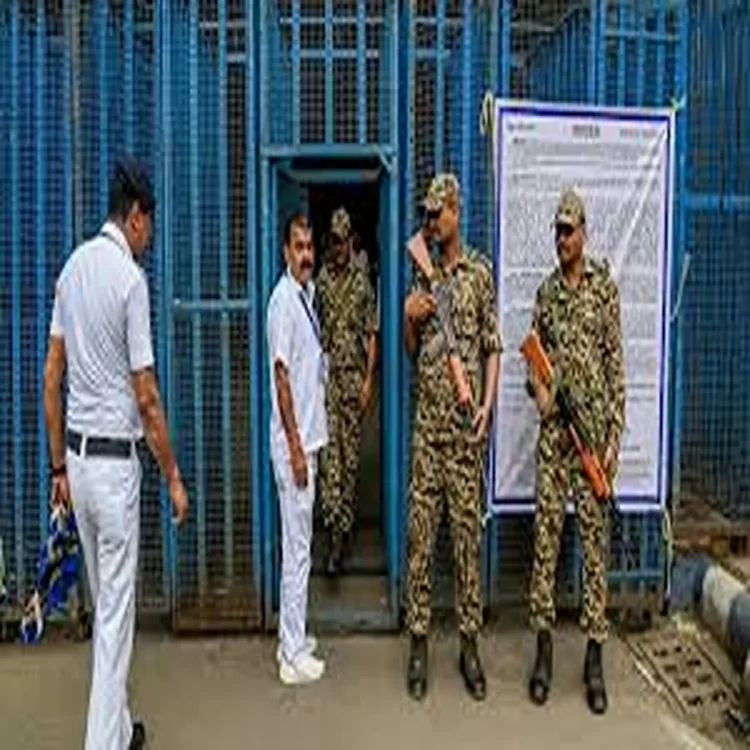
Counting operations in West Bengal are being carried out under strict security arrangements, particularly at key centers such as Kolkata’s Netaji Indoor Stadium. The state is witnessing a closely watched contest, where Chief Minister Mamata Banerjee and her party are seeking to retain power for a fourth consecutive term.
The Bharatiya Janata Party, which has steadily expanded its influence in the state over recent years, is emerging as a strong challenger. The outcome is expected to have broader political implications beyond the state.
Tamil Nadu Sees New Political Dynamics
Tamil Nadu recorded an impressive voter turnout of 85.1 percent, reflecting high public interest in the electoral process. Traditionally dominated by a two-party system, the political landscape in the state has seen a shift with the entry of actor Vijay’s party, Tamilaga Vettri Kazhagam.
Security measures were heightened at major party offices, including the DMK headquarters in Chennai, as counting began. Preliminary assessments and projections suggest that the ruling DMK-led alliance may retain an advantage, with estimates placing them between 120 and 145 seats.
At the same time, Vijay’s party has reportedly made notable inroads, particularly in urban centers such as Chennai and Madurai, where it is believed to have secured a considerable share of votes.
Kerala Faces Close Electoral Battle
In Kerala, the elections are testing the strength of incumbency. The ruling Left Democratic Front, led by Chief Minister Pinarayi Vijayan, is attempting to secure a third consecutive term—something unprecedented in the state’s political history.
However, early projections indicate a closely fought contest. The Congress-led United Democratic Front is expected to perform strongly, potentially securing around half the seats in the 140-member Assembly. A strong showing by the opposition could carry significance at the national level by reinforcing its political relevance.
Assam Likely to Continue Existing Leadership
In the northeastern state of Assam, the political scenario appears more stable. The ruling alliance, led by the Bharatiya Janata Party, is expected to maintain its position, with projections suggesting a comfortable majority in the 126-seat Assembly.
Despite efforts by opposition parties to form a united front, the ruling coalition’s organizational strength and voter base seem to have remained intact, giving it an edge in the contest.
Awaiting Final Results
As counting progresses through multiple rounds across all states, the final results are expected to provide clarity on the political direction in these key regions. The outcomes will not only determine state leadership but may also influence national political strategies in the coming years.