
Elections – BJP registers sweeping win, signals major shift in Bengal politics
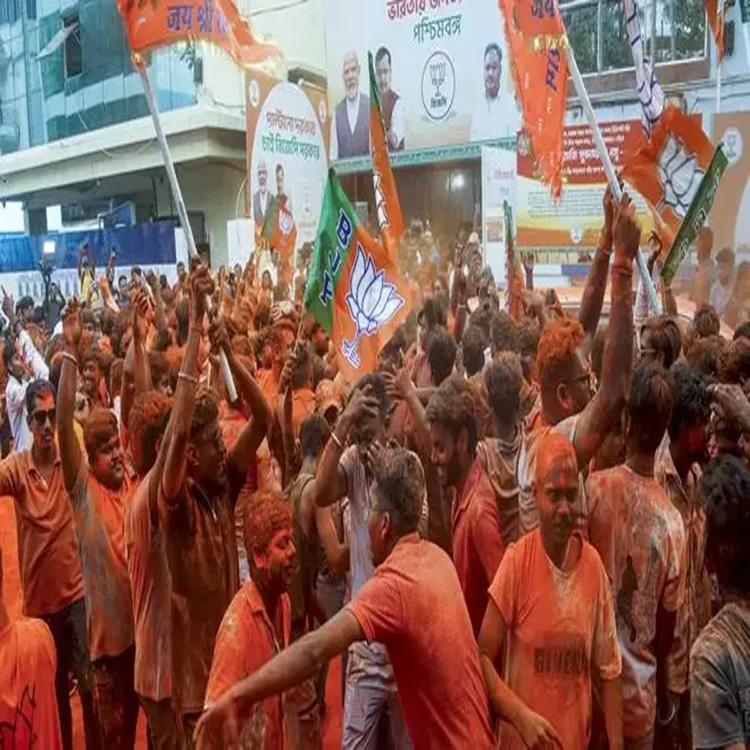
Elections – The Bharatiya Janata Party (BJP) has emerged with a decisive mandate in the latest round of assembly elections, marking a turning point in West Bengal’s political landscape. Reacting to the outcome, senior party leader Nitin Nabin extended his congratulations to voters across West Bengal and other states, crediting the result to public trust in Narendra Modi’s leadership.
Temple visit follows victory message
After the results were announced, Nabin visited a temple to offer prayers, describing the outcome as historic. Addressing the media, he said the mandate reflected the will of the people in regions considered culturally significant, including areas associated with Maa Kali and Maa Kamakhya. He added that his visit was meant to seek blessings for continued progress and stability.
Nabin expressed confidence that spiritual guidance would play a role in shaping the country’s development path. He highlighted the importance of cultural identity alongside economic growth, noting that both could advance together under the current leadership.
Focus on development and cultural heritage
Speaking further, Nabin emphasized that the government aims to balance development with the preservation of traditions. He said that the leadership of Prime Minister Modi has focused on strengthening infrastructure while also respecting India’s cultural roots. According to him, this approach resonates strongly with voters in states like West Bengal and Assam.
He also stated that the electoral outcome demonstrates that people see their aspirations reflected in the party’s agenda. Nabin maintained that the mandate should be viewed as a collective endorsement of policies aimed at economic progress, social welfare, and national unity.
A major shift in West Bengal politics
The BJP’s performance in West Bengal is being seen as a significant political development. For years, the state had been dominated by the All India Trinamool Congress led by Chief Minister Mamata Banerjee, a prominent critic of the central government. The latest results suggest a notable shift in voter preferences.
Out of the 294 assembly seats, results have been declared for 293 constituencies, with repolling scheduled in one seat in South 24 Parganas district. The majority mark stands at 196, and the BJP has crossed this comfortably, securing 206 seats. The Trinamool Congress followed with 81 seats, while smaller parties such as Congress, CPI(M), AISF, and Aam Janata Unnayan Party managed limited representation.
Vote share reflects competitive contest
In terms of vote share, the BJP secured approximately 46 percent, while the Trinamool Congress garnered around 41 percent. Other parties, including the Left Front and Congress, trailed significantly. Analysts note that while the contest remained competitive in terms of vote percentage, the seat distribution strongly favored the BJP.
The results also reveal regional patterns. The Trinamool Congress did not secure any seats in several districts, including Cooch Behar, East Midnapore, Jalpaiguri, and Darjeeling. Additionally, constituencies with significant tribal and Matua populations saw a clear shift toward the BJP.
Implications for future politics
Political observers suggest that this outcome could reshape electoral strategies in eastern India. The BJP’s strong showing indicates its growing influence in regions where it previously had limited presence. At the same time, the results may prompt opposition parties to reassess their approach and strengthen their grassroots engagement.
Nabin concluded by expressing hope that the mandate would lead to peace, prosperity, and inclusive development across the country. He reiterated that the party remains committed to delivering on public expectations while maintaining India’s cultural heritage.