
Election Reform – Government Urged to Build Consensus Before Introducing ONOE Bill
Election Reform – The debate over the proposed One Nation, One Election plan gathered momentum on Thursday as the Congress insisted that the Union government should hold detailed discussions with Opposition parties before introducing the legislation in Parliament.
Congress MP KC Venugopal said the proposed One Nation, One Election (ONOE) legislation cannot move ahead without meaningful engagement with Opposition parties. Speaking to reporters, he maintained that the government should first explain the details of the proposed law before expecting political support. According to him, Parliament functions through dialogue, and any major constitutional reform requires broad consensus rather than a unilateral approach.
Joint Parliamentary Committee Nears Report Submission
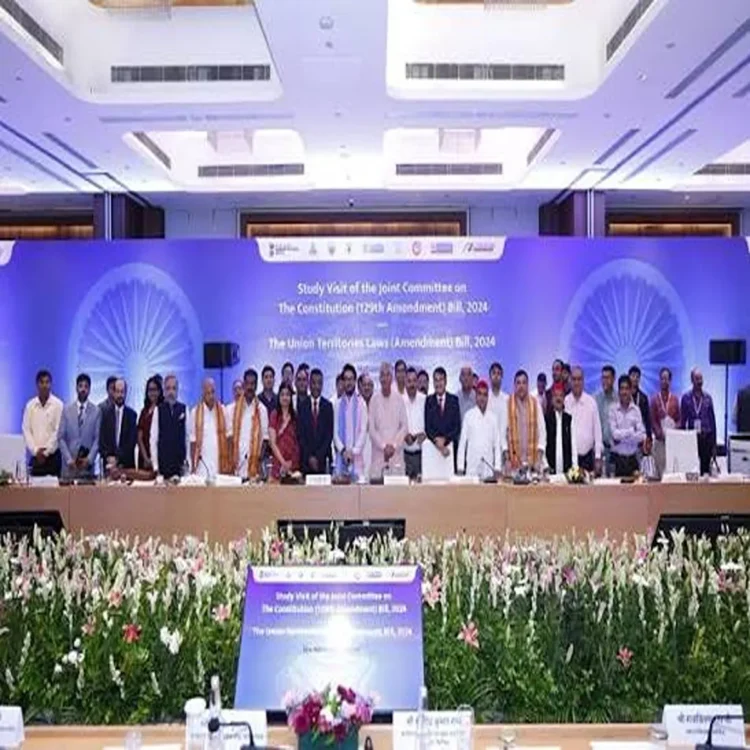
Venugopal’s remarks came as the Joint Parliamentary Committee (JPC), which has been reviewing the Constitution (One Hundred and Twenty-Ninth Amendment) Bill, 2024, along with the Union Territories Laws (Amendment) Bill, 2024, prepares to complete its examination. The committee is expected to approve its final report on July 17 before forwarding it to Parliament for further consideration during the upcoming session.
The committee has spent several months studying the proposed amendments and gathering inputs related to the legal and constitutional aspects of the plan. Its recommendations are expected to play a significant role in determining the next stage of the legislative process.
Objective Behind the Proposed Bills
The Constitution (One Hundred and Twenty-Ninth Amendment) Bill, 2024, forms the core of the government’s proposal to conduct Lok Sabha and State Assembly elections simultaneously across the country. The initiative, commonly known as One Nation, One Election, aims to align election schedules so that national and state polls are held together.
Alongside this proposal, the Union Territories Laws (Amendment) Bill, 2024, has also been introduced to support the broader framework needed for implementing simultaneous elections. Together, the two Bills are intended to establish the legal structure required for synchronising electoral cycles across different levels of government.
Both pieces of legislation were introduced in the Lok Sabha on December 17, 2024, before being referred to the Joint Parliamentary Committee for detailed scrutiny and recommendations.
Congress Lists Priorities for Monsoon Session
Separately, senior Congress leader and Rajya Sabha MP Jairam Ramesh outlined the issues his party intends to raise during the forthcoming Monsoon Session of Parliament. He said the Opposition plans to seek discussions on several matters, including alleged irregularities related to donations received for the Ram Temple, reported examination paper leaks, the alleged ethanol scam, and questions concerning India’s foreign policy.
The Congress indicated that these subjects would remain central to its parliamentary strategy during the session, reflecting the party’s intention to press the government for explanations on a range of political and administrative issues.
Opposition Preparing a Coordinated Strategy
Ahead of the Monsoon Session, leaders from various Opposition parties in both the Lok Sabha and the Rajya Sabha are scheduled to meet on July 20. The meeting will take place at the office of the Leader of Opposition in the Rajya Sabha, where participants are expected to formulate a common strategy for raising key issues and coordinating their approach inside Parliament.
The gathering is likely to focus on legislative priorities, parliamentary tactics, and responses to important government proposals, including the One Nation, One Election initiative.
Parliament Set for Busy Session
The Monsoon Session of Parliament is scheduled to run from July 20 to August 13. With the Joint Parliamentary Committee’s report on the proposed election reforms expected to be submitted before the session, discussions surrounding the ONOE proposal are likely to receive considerable attention alongside other political and legislative matters placed before both Houses.