
EducationProtests – KC Venugopal Criticises Centre Over Hunger Strike and Education Policies
EducationProtests –Congress leader KC Venugopal launched a sharp attack on the Union government on Monday, alleging that its response to ongoing protests, concerns over competitive examinations, and proposed higher education reforms reflected an increasingly centralised style of governance. He expressed support for activist Sonam Wangchuk’s indefinite hunger strike and accused the Centre of failing to engage with protesters despite the fast entering its third week.
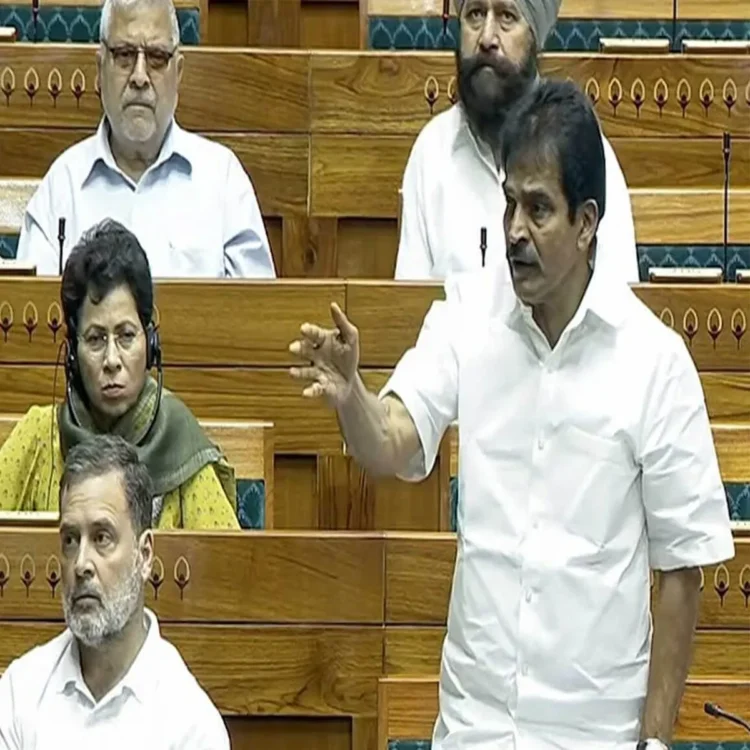
Congress Backs Wangchuk’s Ongoing Protest
Addressing reporters, Venugopal said the Congress stood firmly with Sonam Wangchuk, who has been on an indefinite hunger strike in New Delhi. He argued that the Union government had not responded meaningfully to the demands raised by those participating in the protest and had avoided discussions even as Wangchuk’s health reportedly worsened.
His comments followed the transfer of Wangchuk from the protest site at Jantar Mantar to Safdarjung Hospital after he completed 21 days of fasting. Authorities cited medical recommendations and directions issued by the Delhi High Court while shifting him to the hospital for treatment.
Examination Issues Remain at the Centre of the Protest
The hunger strike is also linked to demands raised by the Cockroach Janta Party (CJP), which has sought greater accountability over alleged irregularities in national-level competitive examinations. Among the concerns highlighted are allegations surrounding the NEET paper leak and calls for the resignation of Union Education Minister Dharmendra Pradhan.
Venugopal claimed that repeated controversies involving examination processes had weakened public confidence in the system. According to him, many students and parents continue to face uncertainty regarding the fairness and credibility of important entrance examinations, including NEET and CBSE assessments.
Questions Raised Over Government’s Response
The Congress leader argued that the government had failed to take adequate action despite repeated allegations related to examination paper leaks. He questioned why the Union Education Minister continued in office while protesters were demanding accountability.
Venugopal further alleged that instead of initiating dialogue with those on strike, the government chose to move Wangchuk to a hospital after his health condition declined. He maintained that a responsible administration should have prioritised discussions with the protesters rather than allowing the situation to escalate.
Opposition Targets Education and Democratic Institutions
During his interaction with the media, Venugopal described the BJP-led government as being opposed to democratic values, student interests, and labour rights. He said the Congress would continue raising these issues through public campaigns and parliamentary interventions.
The Congress leader also reiterated his criticism of the Centre’s functioning, alleging that important public concerns were being ignored while decisions were increasingly concentrated at the national level. He stated that his party would continue to challenge policies it considers harmful to democratic institutions.
Concerns Over Proposed Higher Education Bill
Apart from the ongoing protest, Venugopal criticised the proposed Higher Education Bill, claiming that the legislation could reduce the independence of universities and limit the authority of state governments in matters related to higher education.
According to him, the proposed framework would provide the Centre with greater control over university-related decisions, which he believes could affect the federal balance in the education sector. He said the Congress intends to oppose any measure that, in its view, weakens institutional autonomy or reduces the role of states in educational governance.
Venugopal concluded by saying that the Opposition would continue to highlight what it considers shortcomings in the government’s approach to education, democratic accountability, and public consultation during future political and parliamentary discussions.