
Education – Tamil Nadu Government Schools to Hold Student Elections to Promote Democratic Values
Education – Tamil Nadu is set to introduce a unique classroom-based democratic exercise as government schools across the state prepare to conduct student elections under the Magizh Mutram programme. Beginning this academic year, the School Education Department has expanded the initiative by establishing student parliaments, giving children an opportunity to understand how democratic systems function through direct participation in the election process.
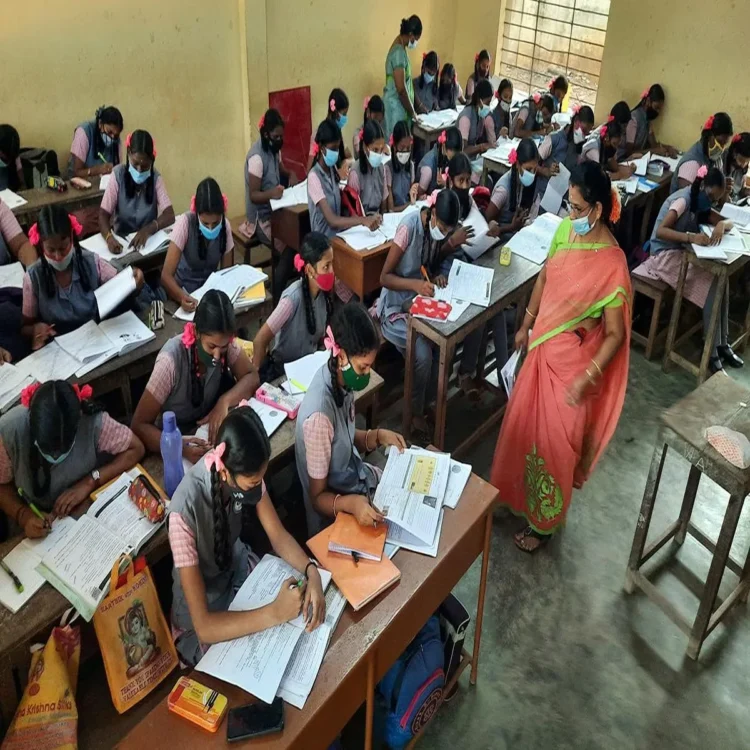
Student Parliament Added to Existing School Programme
The newly introduced model has been incorporated into the Magizh Mutram programme with the objective of helping students gain practical knowledge of elections and governance. Instead of learning about democracy only through textbooks, students will actively participate in campaign activities, prepare election manifestos, cast votes, and later work as elected representatives within their schools.
Education officials believe that such practical exposure will encourage students to appreciate democratic values, responsible leadership, transparency, and collective decision-making from an early stage of their education.
Five Student Houses Will Continue Across Schools
Every government school participating in the programme will continue to function through five student houses named Kurinji, Mullai, Marutham, Neithal, and Palai. Each house will have two leadership positions: a House Captain and a Student Minister.
House Captains will be chosen either through a draw of lots or by a show of hands, depending on the school’s decision. In contrast, Student Ministers will be selected through a structured election involving nominations, campaigning, and secret voting by students.
Election Schedule and Eligibility
According to the announced timetable, schools are expected to complete the selection of House Captains by July 3. Students contesting for the position of Student Minister will campaign on July 6, during which they will present their manifestos outlining the ideas, activities, and improvements they intend to introduce if elected.
Eligibility has been limited to specific classes in different school categories. Students studying in Class 5 at primary schools, Class 8 at middle schools, Class 9 at high schools, and Class 11 at higher secondary schools will be allowed to contest the elections.
Voting is scheduled for July 7. Students from every class will participate by casting separate ballots to elect one Student Minister for each of the five houses.
Student Ministries to Focus on School Development
Once the election process is completed, the five elected Student Ministers will be assigned different areas of responsibility. These include Education, Student Welfare and Safety, Information and Communication, Environment and Climate Action, and Health, Hygiene and Sanitation.
The allocation of these portfolios will not be based on election results but will instead be decided through a draw of lots, ensuring equal opportunity among all elected representatives.
Gender Representation Included in Leadership Structure
To encourage balanced representation, the School Education Department has issued specific guidelines for co-educational institutions. Within every student house, the House Captain and Student Minister must belong to different genders. For example, if the House Captain is a boy, the Student Minister for that house must be a girl, and the same rule will apply in reverse situations.
This arrangement is intended to promote equal participation and leadership opportunities for both boys and girls.
Student Leaders to Assume Office in July
The elected Student Ministers and House Captains will formally take their oath of office on July 10. Every student house will also receive its own flag and official badges for student leaders. Schools will maintain scoreboards to record points earned through competitions and various activities, while designated teacher coordinators will supervise and support the functioning of the student parliament throughout the academic year.
Through this initiative, the Tamil Nadu government aims to provide students with meaningful experience in democratic participation while encouraging leadership, responsibility, teamwork, and civic awareness within the school environment.