
Education Reform – Government Signals Major Changes After Student Protest Movement
Education Reform – Public concern over the integrity of India’s education system has intensified following months of student protests and growing demands for accountability. The developments reached a significant turning point after Union Education Minister Dharmendra Pradhan resigned from office, while Prime Minister Narendra Modi announced the formation of a high-level committee led by Nandan Nilekani to recommend long-term reforms. The decision is being viewed as an important step toward restoring confidence in the country’s education framework, although many observers believe meaningful implementation will determine its success.
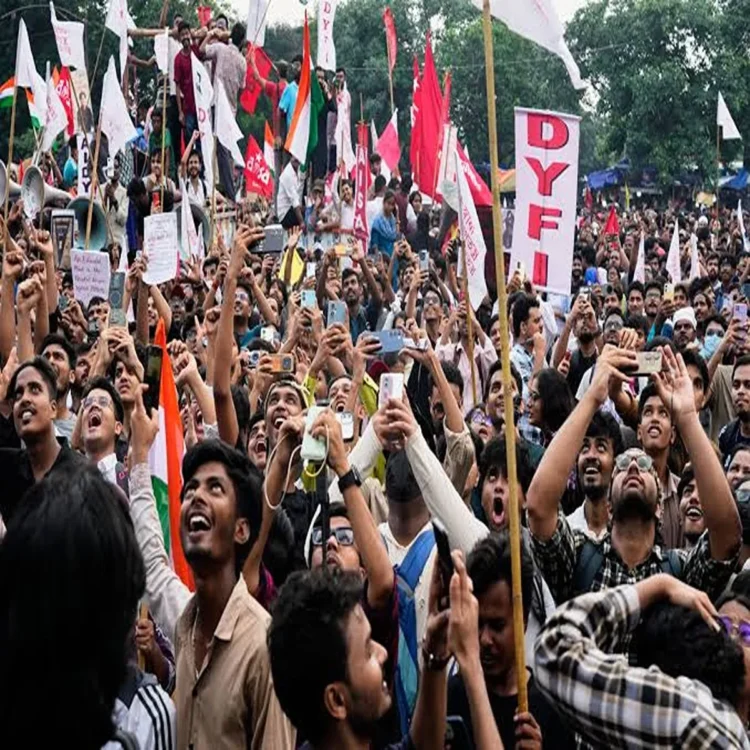
Student Protests Brought Education Issues to the National Spotlight
The nationwide debate gained momentum after demonstrations at Delhi’s Jantar Mantar highlighted widespread frustration over examination irregularities, particularly the NEET paper leak controversy. The movement expanded as students, educators, and civil society groups called for stronger safeguards against examination fraud. Environmentalist and education advocate Sonam Wangchuk’s indefinite hunger strike further increased public attention, placing additional pressure on authorities to respond to the growing concerns.
Social Media Reflected Youth Frustration
Public sentiment was also visible online. A social media campaign launched by Abhijeet Dipke, a student from Maharashtra pursuing higher education in the United States, quickly attracted millions of followers after he expressed dissatisfaction over remarks made about young people. While the campaign itself was symbolic, its rapid growth demonstrated that many members of the younger generation feel their concerns are not being adequately understood by policymakers and institutions.
Calls for a Stronger and Fairer Education System
Many students have argued that examination paper leaks damage far more than a single test. They believe such incidents undermine years of preparation, weaken trust in public institutions, and create uncertainty about future opportunities. The government’s recent actions, including leadership changes and promises of institutional reforms, are widely seen as attempts to rebuild confidence in the examination process and improve accountability across the education sector.
Focus Shifts to Long-Term Institutional Reform
The appointment of Nandan Nilekani to lead a reform task force has generated expectations that structural improvements could follow. Supporters of the move believe technology-driven governance, greater transparency, and stronger administrative oversight could help modernize India’s education system. However, experts note that reforms must extend beyond examination management to include curriculum quality, institutional governance, teacher development, and equal access to educational opportunities.
Students Seek Opportunity Rather Than Political Debate
The recent movement also highlighted that many young people are primarily focused on fairness, transparency, and quality education rather than political confrontation. Throughout the protests, students repeatedly emphasized their desire for a system where merit is protected and examination processes remain secure. Their demands reflected broader concerns about educational standards, career prospects, and equal opportunities for students from different economic backgrounds.
Bridging the Gap Between Policymakers and Young Citizens
The ongoing discussion has also revealed differences in expectations between generations. Today’s students often expect institutions and public leaders to earn their trust through transparency and performance rather than relying solely on authority or tradition. Analysts believe policymakers will need to engage more directly with young people, understand their concerns, and create policies that reflect the changing aspirations of a digitally connected generation.
Strengthening Public Confidence Through Accountability
Authorities have announced several measures intended to improve the credibility of competitive examinations. These include disciplinary action against officials linked to examination irregularities, the creation of a fast-track court to handle cases related to the NEET paper leak, and commitments to introduce stronger safeguards against future misconduct. The broader objective is to ensure that examination systems remain secure and that deserving students are evaluated fairly.
Education Remains Central to India’s Future
The debate surrounding recent events has reinforced the importance of education as a foundation for national development. A reliable education system supports economic growth, innovation, and social mobility while protecting the aspirations of millions of students. As reforms move forward, many believe that consistent implementation, institutional accountability, and transparent governance will be essential for rebuilding public trust and preventing similar controversies in the years ahead.
Separately, attention has also turned to international trade after reports indicated that the United States is considering new tariffs on imports from several trading partners, including India. According to available information, Indian generic pharmaceutical exports are expected to remain exempt from the proposed measures for now. Since India supplies a substantial share of generic medicines used in the American market, the exemption is being viewed as a positive development while both countries continue monitoring future trade policy decisions.