
Defence Preparedness – India Marks One Year Since Operation Sindoor Response
Defence Preparedness – Prime Minister Narendra Modi on Thursday commemorated the first anniversary of Operation Sindoor, describing the mission as a strong demonstration of India’s determination to combat terrorism and protect its citizens.
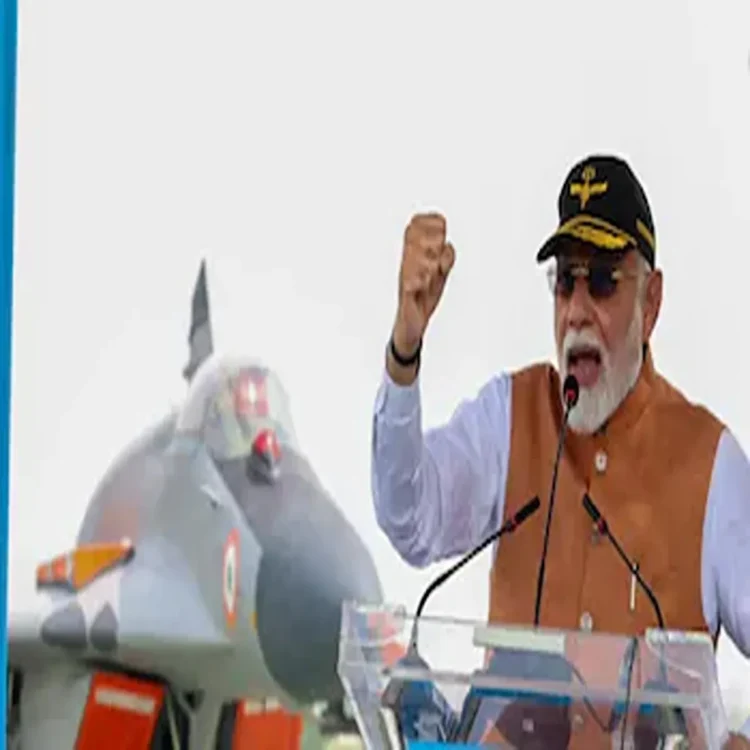
The Prime Minister praised the armed forces for their discipline, planning, and execution during the military campaign launched after the deadly terror attack in Pahalgam that killed 26 civilians. In a message shared on X, he said the operation reflected the country’s unwavering commitment to national security and highlighted the courage shown by military personnel during a difficult period.
Tribute Paid to Armed Forces
Marking the occasion, PM Modi also changed his display picture on X in honour of Operation Sindoor and the personnel involved in the mission. He stated that the operation demonstrated not only military strength but also the growing coordination among India’s defence services. According to the Prime Minister, the campaign further reflected the impact of India’s efforts toward self-reliance in defence production and strategic preparedness.
The Prime Minister noted that the country remains committed to dismantling terror networks and countering activities that threaten peace and stability. He added that the armed forces continue to remain vigilant against security challenges along the borders and beyond.
Operation Launched After Pahalgam Attack
Operation Sindoor began on May 7, 2025, following the terror strike in Pahalgam. The mission was designed as a targeted response aimed at destroying terror infrastructure located across the Line of Control and deeper inside Pakistan. Intelligence gathered by multiple agencies reportedly identified nine major camps linked to terror activities, which were later struck during the operation.
Officials stated that the campaign was planned carefully to avoid civilian casualties while maintaining operational effectiveness. Authorities described the response as intelligence-driven and focused on precision targeting to minimise collateral damage.
Coordinated Military Response Across Multiple Fronts
The operation involved coordinated action by the Indian Army, Indian Air Force, and Indian Navy. Defence officials highlighted the close integration among the three services during the mission, which extended across land, air, and maritime domains.
The Indian Air Force carried out precision strikes on identified targets, including military-linked infrastructure such as Nur Khan Air Base and Rahimyar Khan Air Base. Officials later released visual evidence during briefings to demonstrate the extent of the damage caused during the air operations.
India’s air defence systems were also activated after Pakistan reportedly attempted retaliatory drone and unmanned aerial vehicle attacks targeting airbases and logistical facilities. Defence authorities said the attacks were intercepted through a layered air defence structure supported by real-time command and control systems.
Defence Systems and Border Security Played Key Role
The Indian military deployed a combination of indigenous and legacy defence platforms, including the Akash missile system, Pechora systems, and OSA-AK units, to strengthen airspace protection. Officials stated that integrated command systems enabled rapid coordination and timely interception of aerial threats.
On the ground, Army air defence units reportedly worked alongside the Air Force to counter drone attacks and loitering munitions. Defence personnel were able to secure both civilian and military infrastructure despite repeated attempts at disruption.
Meanwhile, the Indian Navy maintained a significant presence in the Arabian Sea during the operation. Naval forces, supported by MiG-29K fighter aircraft and airborne surveillance systems, conducted continuous monitoring and ensured maritime security. Defence officials said the deployment limited hostile movement along Pakistan’s western coastline and strengthened India’s control over strategic waters.
BSF Prevented Infiltration Attempt
During the same period, Border Security Force personnel foiled an infiltration attempt in the Samba sector of Jammu and Kashmir. Troops responded after noticing suspicious movement near the International Border, leading to an exchange of fire in which at least two infiltrators were killed. Security forces also recovered weapons and ammunition from the site.
Officials described Operation Sindoor as more than a military campaign, calling it a broader statement of India’s security readiness, strategic coordination, and counterterrorism capability.