
RSS Chief Mohan Bhagwat: India Must Teach Dignity Through Conduct, Says
RSS Chief Mohan Bhagwat: India has a unique responsibility to guide the world by example, not merely through speeches or written knowledge. This message was emphasized by Mohan Bhagwat, who said that true learning and influence come from personal and collective conduct. According to him, values that are lived daily leave a deeper impact than ideas expressed only in words, especially at a time when the world is facing moral and social uncertainty.
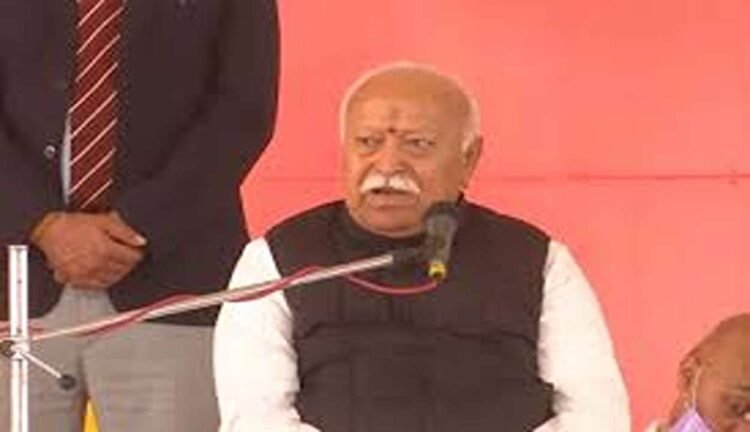
Message Delivered at Cultural Gathering
Speaking at a public gathering during Maryada Mahotsav in the town of Chhoti Khatu, located in Didwana-Kuchaman, the chief of Rashtriya Swayamsevak Sangh shared his thoughts on India’s civilizational role. He stated that while books and speeches contribute to awareness, they do not complete the learning process. The way individuals behave, treat others, and live their values is what truly defines dignity and wisdom.
Conduct as an Eternal Principle
Bhagwat explained that the principle of right conduct is timeless. Although circumstances change with every generation, the core idea of how a human being should live remains constant. He pointed out that this understanding existed a thousand years ago and will continue to guide humanity in the future as well. The difference lies only in situations, not in the foundational values that sustain society.
Unity Beyond Differences
Highlighting India’s philosophical heritage, Bhagwat said that ancient thinkers understood a truth that much of the world still struggles to grasp. Despite external differences in appearance, culture, or belief, humanity shares a common foundation. When people recognize that everyone belongs to one larger family, dignity naturally becomes part of everyday life. This sense of collective belonging encourages respect, harmony, and moral responsibility.
Dharma as the Guiding Force
The RSS chief described Dharma as the force that keeps life moving in balance, much like fire burns and water flows by their nature. According to him, Dharma is not limited to religious practice but represents the universal law that governs existence. He noted that India’s ancestors recognized this truth and structured life around it, ensuring continuity and moral order across generations.
Earlier Remarks on Spiritual Responsibility
Referring to an earlier address delivered in January, Bhagwat reiterated that Dharma drives the entire universe and shapes human responsibility. He reminded audiences that while humans perform work that aligns with divine purpose, they should never consider themselves above that higher truth. This humility, he said, is essential for maintaining balance between power and responsibility.
Respect for Saints and Moral Leadership
In his earlier statement, Bhagwat also emphasized the importance of respecting saints and spiritual leaders who live by truth. He stated that protecting and honoring such individuals is a collective duty, as they help preserve moral clarity in society. He echoed the sentiment often expressed by national leadership that humility before spiritual wisdom strengthens, rather than weakens, a nation.
India’s Role as a Global Guide
Concluding his message, Bhagwat said that as long as Dharma continues to guide India’s path, the country will retain its status as a global teacher. By practicing dignity, unity, and moral conduct in everyday life, India can offer the world a living example of harmony and ethical leadership, far more powerful than any written doctrine.