
Antiquities – Three Stolen Temple Sculptures to Return to India
Antiquities – Three historically significant sculptures, once removed from temples in Tamil Nadu, are set to be returned to India following detailed provenance research conducted by the Smithsonian’s National Museum of Asian Art in the United States. The move marks another step in ongoing global efforts to restore cultural artifacts to their countries of origin.
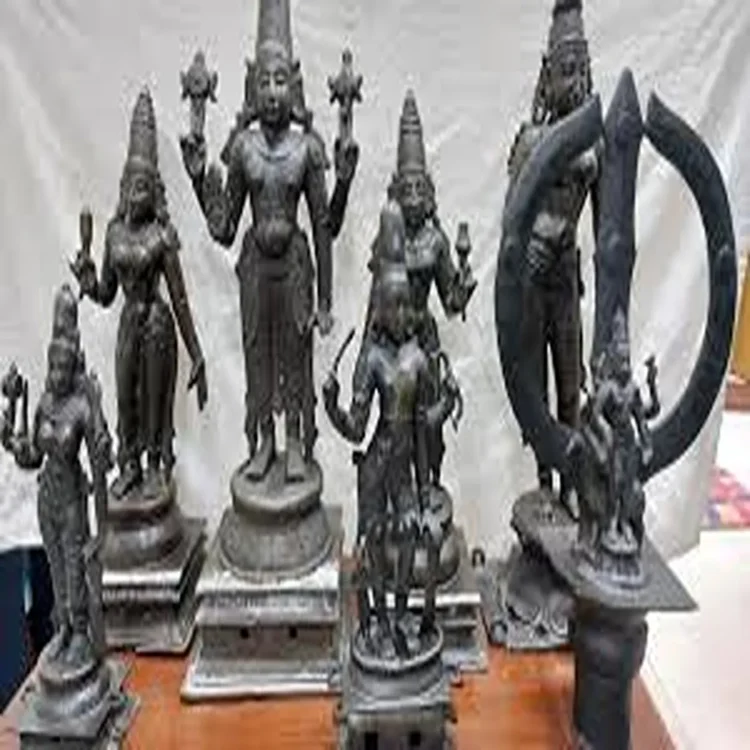
Agreement Formalizes Return of Rare Sculptures
India’s Deputy Chief of Mission in the United States, Namgya Khampa, recently signed an official agreement with Chase Robinson, Director of the National Museum of Asian Art, confirming the repatriation of the artifacts. The three sculptures include a ninth-century bronze depiction of Shiva as Nataraja, a twelfth-century sculpture of Shiva with Uma, and a sixteenth-century representation of Saint Sundarar alongside Paravi.
According to officials, these artifacts hold deep cultural and spiritual value, reflecting centuries of artistic tradition rooted in South India’s temple heritage.
Provenance Research Reveals Illegal Removal
The decision to return the sculptures follows extensive research into their origins. Investigations conducted by the museum revealed that all three pieces had been unlawfully removed from Indian temple sites. This discovery prompted authorities to initiate the process of repatriation in coordination with Indian officials.
The Indian Embassy in Washington acknowledged the development, stating that the return of these antiquities represents a meaningful effort to correct past injustices involving cultural property.
Historical Significance of the Artifacts
Each of the three sculptures carries unique historical importance. The bronze image of Shiva Nataraja, dating back to the ninth century, is widely regarded as a masterpiece of Indian art, symbolizing cosmic dance and divine energy.
The sculpture of Shiva and Uma, also known as Somaskanda, is a classic representation of divine family imagery in South Indian temple art. Meanwhile, the depiction of Saint Sundarar with Paravi highlights the devotional traditions associated with Tamil Shaivism.
These artifacts were once integral parts of temple worship and community life before being displaced.
Archival Evidence Confirms Temple Origins
Key findings from archival photographs played a crucial role in confirming the origins of the sculptures. Research conducted through the Photo Archives of the French Institute of Pondicherry helped establish clear links between the artifacts and specific temple locations in Tamil Nadu.
The sculpture of Saint Sundarar with Paravi was documented at a Shiva temple in Veerasolapuram village in 1956. Similarly, the Somaskanda sculpture was photographed at the Vishvanatha Temple in Alathur village in 1959. The Shiva Nataraja bronze was traced back to the Sri Bhava Aushadesvara Temple in Thanjavur district, where it was recorded in 1957.
Museum Collection and Acquisition Details
Two of the sculptures—the Somaskanda and the depiction of Saint Sundarar—were part of a collection donated to the museum in 1987 by Arthur M. Sackler. The Nataraja bronze, on the other hand, was acquired later in 2002 from a New York-based gallery.
Following the recent findings, the museum acknowledged the need to address gaps in the acquisition history and took steps to facilitate their return.
Continued Public Display Before Final Transfer
While the repatriation process has been formalized, the Shiva Nataraja sculpture will remain temporarily on display at the museum. This arrangement aims to provide visitors with an opportunity to appreciate India’s artistic heritage while the logistics of the transfer are completed.
Officials emphasized that such collaborations between institutions and governments are essential in ensuring ethical stewardship of cultural artifacts.
The return of these sculptures underscores the growing international consensus on preserving cultural heritage and respecting rightful ownership. It also highlights the importance of research and transparency in museum collections worldwide.