
AmbubachiMela – Kamakhya Temple Prepares for Massive Annual Spiritual Gathering
AmbubachiMela – The renowned Ambubachi Mela, one of eastern India’s most important religious festivals, is set to begin at the historic Kamakhya Temple in Assam on Monday. Authorities are expecting an overwhelming turnout, with more than eight lakh devotees, saints, spiritual seekers, and visitors from different parts of India and abroad anticipated to participate in the four-day event.
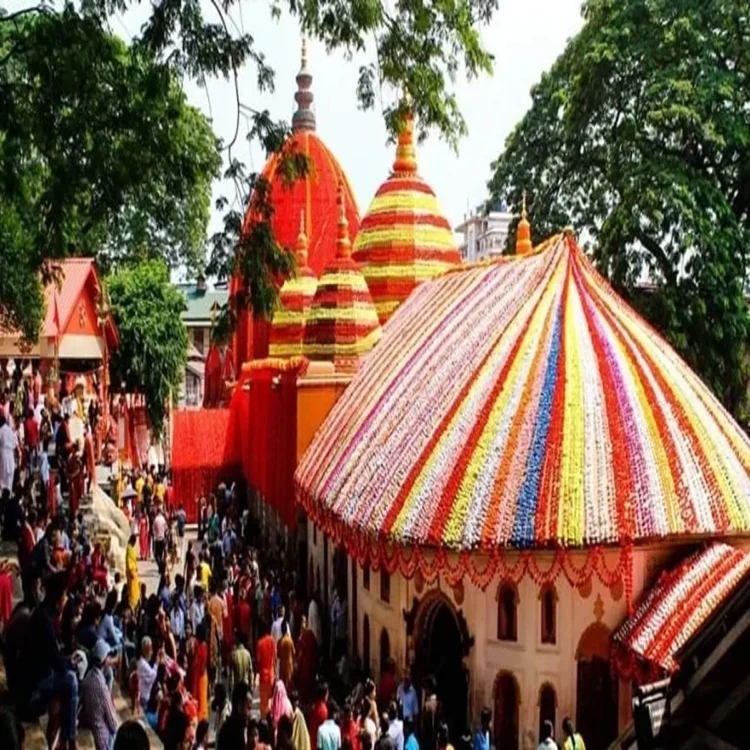
The annual festival is widely regarded as a celebration of feminine divinity and fertility. It is associated with the sacred belief that Goddess Kamakhya undergoes her yearly menstrual cycle during this period. Revered as a manifestation of divine feminine energy, the deity holds a special place in Hindu spiritual traditions, particularly among followers of Shakti worship and Tantric practices.
Rituals Mark the Beginning of the Sacred Observance
According to temple officials, the ceremonial commencement of the festival will take place through the traditional Pravritti ritual at 9:08:42 p.m. on Monday. This ceremony formally signals the beginning of the sacred period observed at the shrine each year.
Following the ritual, the temple doors will remain closed for three days. During this time, devotees will not be permitted to enter the sanctum, in keeping with long-established religious customs linked to the observance.
Temple to Reopen After Completion of Ceremonies
The concluding phase of the festival will begin on the morning of June 26. Temple authorities have announced that the Nivritti ritual will be performed after the completion of the customary Nitya Puja, marking the end of the sacred observance.
Once these ceremonies conclude, devotees will once again be allowed to enter the temple premises to offer prayers and seek blessings. The reopening traditionally attracts large crowds eager to participate in the final rituals.
Importance of the Kamakhya Shrine
Located atop the Nilachal Hills in Guwahati, the Kamakhya Temple is counted among the 51 revered Shakti Peethas in Hindu tradition. The temple has long been recognized as one of the most significant pilgrimage destinations dedicated to the worship of the Divine Mother.
During the three-day closure, regular religious activities inside the sanctum are suspended. This practice symbolically reflects the period of seclusion associated with the Goddess during the annual observance. The tradition has been followed for generations and remains a central feature of the festival.
Sacred Offerings Draw Thousands of Worshippers
A major attraction following the reopening of the temple is the distribution of sacred offerings known as Angodak and Angabastra. These items are considered highly auspicious among devotees and are believed to carry spiritual significance.
Every year, thousands gather at the shrine to receive these sacred tokens, often waiting for hours to participate in the ritual. Their distribution marks one of the most anticipated moments of the festival.
Extensive Arrangements in Place for Pilgrims
To manage the expected influx of visitors, the Assam government and temple management have completed extensive preparations. Special attention has been given to security arrangements, medical facilities, sanitation services, accommodation, and food distribution.
Officials have stated that coordinated efforts are being made to ensure the smooth conduct of the festival while maintaining the safety and comfort of pilgrims throughout the event. Additional personnel and support systems have also been deployed to handle the large congregation.
Guwahati Gears Up for a Major Spiritual Event
With preparations now finalized, Guwahati is preparing to welcome one of the largest religious gatherings in the region. The Ambubachi Mela annually transforms the city into a vibrant center of faith, spirituality, and cultural activity.
As devotees, ascetics, and seekers converge on the sacred temple, the festival once again highlights the enduring significance of the Kamakhya shrine and its deep connection to traditions celebrating the divine feminine.