
WestAsia – India Urges Immediate Calm After Rising Maritime Security Threats
WestAsia – India has voiced serious concern over the latest rise in tensions across West Asia, calling for restraint, diplomatic engagement, and the swift restoration of safe international shipping routes.
India has expressed strong concern over the renewed instability in West Asia, urging all sides to reduce tensions and return to diplomatic dialogue. Addressing an open debate on the Middle East at the United Nations Security Council on Tuesday, India’s Permanent Representative to the UN, Ambassador Parvathaneni Harish, said the recent increase in hostilities after a short period of calm was troubling. He stressed that peace can only be achieved through constructive negotiations and cooperation among all parties.
India Condemns Attacks on Commercial Ships
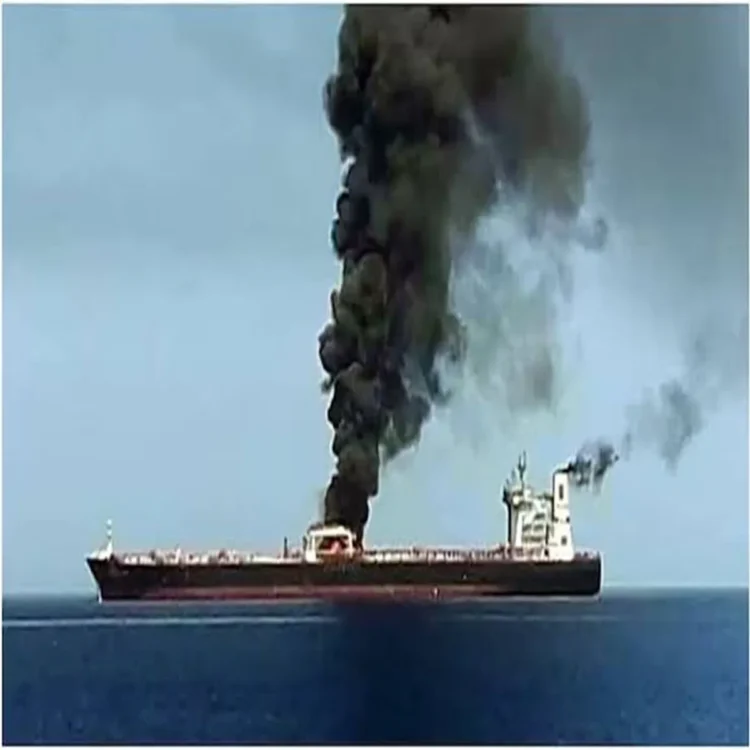
During his address, Harish strongly denounced recent attacks targeting merchant vessels passing through the Strait of Hormuz. He specifically referred to incidents involving GFS Galaxy, MT Al Bahiyah, and MT Mombasa, stating that such actions threaten international maritime safety and disrupt global trade. He noted that Indian nationals were directly affected, with several sustaining injuries, one citizen losing his life, and another remaining unaccounted for. India, he said, has consistently opposed violence against civilian seafarers and supports uninterrupted navigation through international waterways.
Call for Free Navigation and Diplomacy
Reaffirming India’s long-standing position, Harish said commercial shipping and civilian infrastructure must never become targets during regional conflicts. He urged the immediate restoration of unrestricted maritime movement in accordance with international law. According to him, dialogue remains the only sustainable path toward restoring stability and preventing further escalation in the region.
Strait of Hormuz Disruptions Raise Global Concerns
The remarks come as the security situation around the Strait of Hormuz continues to attract international attention. The United Nations reported that Iran again declared the strategic waterway closed on July 11 following attacks on commercial vessels. Data released by the UN Economic and Social Commission for Asia and the Pacific showed that daily vessel traffic, which had previously exceeded 100 ships before the conflict and later recovered to 49 by July 7, fell sharply to between eight and fifteen vessels by the middle of July.
India’s Strong Economic and Humanitarian Interests
Harish highlighted India’s close economic and strategic relationship with West Asia, noting that the region plays a vital role in the country’s trade, energy security, and overseas workforce. India conducts around $180 billion in annual bilateral trade with the region, has cumulative foreign direct investment exceeding $31 billion, and receives more than $52 billion in yearly remittances from Gulf Cooperation Council nations. Nearly 10 million Indians live and work across Gulf countries, making their safety and welfare a top priority for the Indian government.
Focus on Gaza Humanitarian Situation
While addressing the Security Council, Harish switched to Arabic to discuss the humanitarian crisis in Gaza. He said the international community should not allow concerns over maritime security to overshadow the urgent humanitarian challenges facing civilians in the Gaza Strip. He emphasized that the continued loss of civilian lives and destruction of essential infrastructure require immediate international attention and coordinated humanitarian action.
Harish also highlighted India’s continued support for the Palestinian people, stating that New Delhi has provided development assistance worth approximately $175 million through infrastructure projects, humanitarian aid, and contributions to the United Nations Relief and Works Agency for Palestine Refugees in the Near East (UNRWA). India, he added, remains one of the agency’s leading emerging donors and has offered operational flexibility in utilizing its contributions. He also referred to India’s recent commitment to establish a specialty hospital, an artificial limb fitment centre, and a vocational training institute in Palestine, alongside the ongoing construction of the Palestinian Institute of Diplomacy.
Support for Peace in Palestine, Yemen and Lebanon
India reiterated its support for a negotiated two-state solution, stating that a sovereign, independent, and viable Palestinian state living peacefully alongside Israel within secure and recognized borders remains essential for lasting regional peace. On Yemen, India reaffirmed its support for the country’s sovereignty and territorial integrity while condemning Houthi attacks on international maritime routes, including the Bab al-Mandab Strait and the Southern Red Sea. Regarding Lebanon, India stressed that UNIFIL peacekeepers must never be targeted and called for continued assistance to the Lebanese Armed Forces as preparations continue for future security arrangements.