
Student Visas – New US Visa Time Limit Raises Concerns for International Students
Student Visas – A proposed change to student visa rules in the United States has triggered concern among education advocates, who say the new policy could disrupt the academic journey of thousands of international students, including many from India, by limiting the time they are allowed to remain in the country.
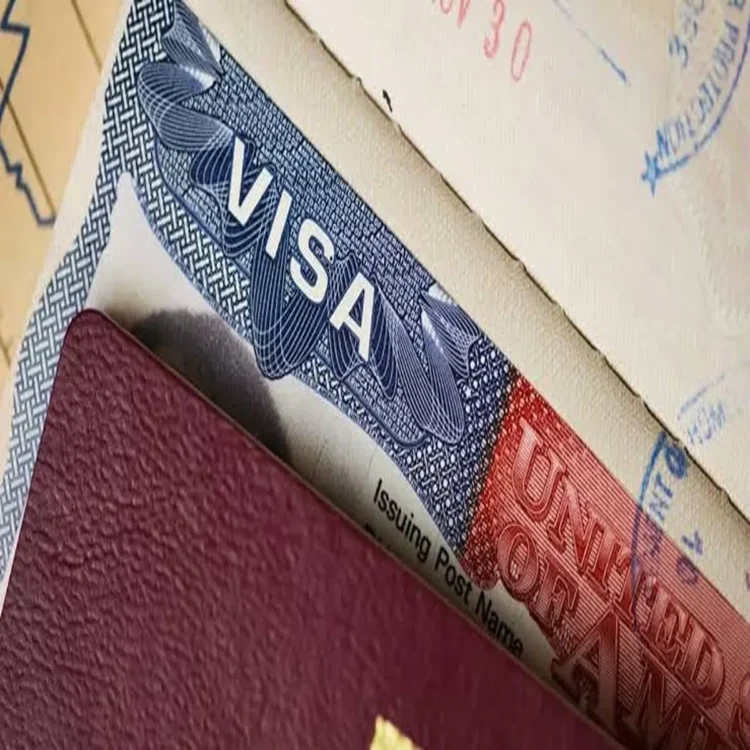
Indian Diaspora Group Seeks Delay in New Rule
The Foundation for India and Indian Diaspora Studies (FIIDS) has appealed to members of Congress, the US Citizenship and Immigration Services (USCIS), and the Department of Homeland Security (DHS) to postpone the implementation of the new regulation. According to the organisation, the policy was finalised during July 16-17 and is expected to come into force in the middle of September.
FIIDS argues that the rule replaces the long-standing “duration of status” system, under which eligible students could remain in the United States for the length of their approved academic programme. Instead, the new framework introduces a maximum stay of four years for F-1 and J-1 visa holders.
Concerns Over Degree Completion
The organisation said the revised policy would also include Optional Practical Training (OPT) and STEM OPT within the four-year limit, reducing the total time available for both academic study and post-study work experience.
In addition, FIIDS noted that the grace period after completing a course would be shortened from 60 days to 30 days. Students seeking to extend their stay would also need approval from USCIS through Form I-539, adding another administrative step to the process.
Khanderao Kand, FIIDS Chief of Policy and Strategy, said the proposed limit does not reflect the actual time required to complete many university programmes. He pointed out that bachelor’s degrees often take around 52 months to finish, while doctoral programmes generally extend well beyond five years.
Impact on Research and Universities
FIIDS warned that research-focused academic programmes, medical training, and doctoral studies frequently require more than four years, making the proposed cap difficult for many students to meet. The organisation also highlighted that J-1 research scholars and physicians commonly remain in their programmes for five to seven years.
According to the group, uncertainty over extension approvals could interrupt ongoing research projects, delay graduations, and affect faculty hiring plans that depend on international researchers and graduate students. Laboratories and universities may face challenges if students are forced to leave before completing their work.
Kand said the United States should pursue stronger immigration oversight without creating barriers that could weaken its research ecosystem or discourage talented students from choosing American institutions.
FIIDS Recommends Alternative Measures
The organisation has urged lawmakers to restore the duration-of-status system for F-1 and J-1 visa holders. It also proposed legal exemptions for graduate and STEM programmes whose typical completion time exceeds four years. Under its recommendation, qualifying students could remain for up to 64 months with automatic extensions where appropriate.
FIIDS further requested administrative relief from USCIS and DHS before the rule takes effect. Among its recommendations are automatic extensions for students who remain in good academic standing, exclusion of OPT and STEM OPT from the four-year calculation, quicker processing of Form I-539 applications, and restoration of the existing 60-day grace period after graduation.
Declining International Enrolment Adds to Concerns
FIIDS also linked the proposed visa changes to broader challenges facing US higher education. The organisation said international student enrolment dropped by 17 per cent during the autumn 2025 intake, marking the sharpest decline since the COVID-19 pandemic.
According to its estimates, the reduction in overseas admissions resulted in more than $1.1 billion in lost educational revenue and nearly 23,000 fewer jobs connected to the international education sector. FIIDS believes additional restrictions could further reduce the attractiveness of US universities for students considering higher education abroad.