
Strait of Hormuz – Trump Signals Possible Breakthrough Amid Conflicting Iran Claims
Strait of Hormuz – The future of the Strait of Hormuz remains uncertain as the United States and Iran continue to issue conflicting statements over possible diplomatic contacts, leaving one of the world’s most important energy corridors under intense international scrutiny.
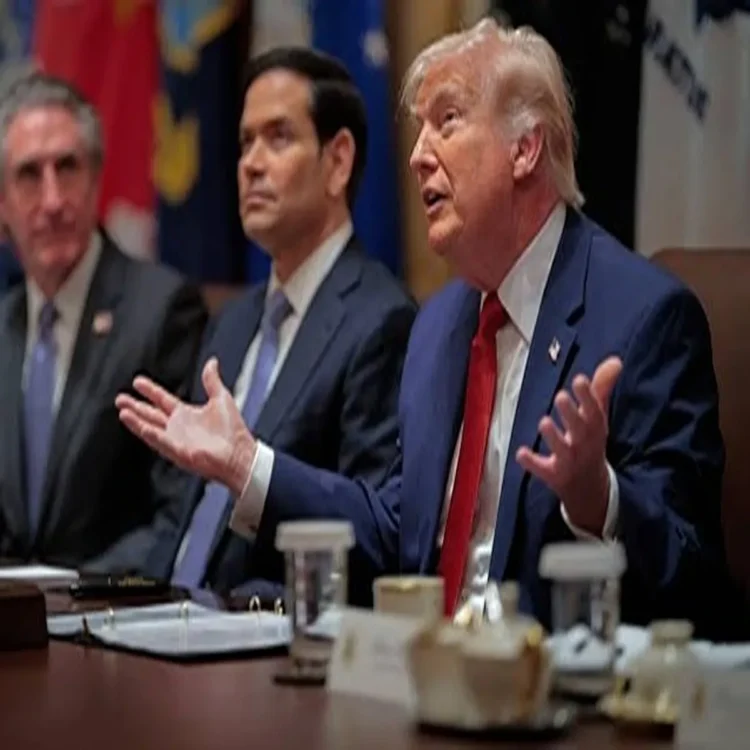
The uncertainty deepened after US President Donald Trump claimed that discussions related to reopening and securing the Strait of Hormuz could produce results “as early as tomorrow.” Speaking at the White House on Monday, Trump suggested that developments could move rapidly, even while warning Iran that it faced what he described as a “last chance” before the United States considered tougher action. His remarks came despite repeated denials from Tehran that any direct negotiations with Washington are taking place.
Iran Rejects Claims of Direct Negotiations
Iran’s Foreign Ministry firmly dismissed Trump’s assertions. Foreign Ministry spokesperson Esmaeil Baqaei told reporters in Tehran that no negotiations were currently being held with the United States. He stated that, apart from Foreign Minister Abbas Araghchi, who was visiting Iraq for a religious pilgrimage, the country’s negotiating officials remained in Iran.
Following Iran’s denial, Trump responded through his Truth Social platform, accusing Iranian leaders of sending mixed signals. He argued that Tehran privately sought discussions while publicly insisting that no talks were underway, describing the country’s leadership as inconsistent in its public messaging.
Oman Continues Maritime Consultations
Although Iranian officials denied direct engagement with Washington, Baqaei confirmed that Tehran was maintaining consultations with Oman. According to Iranian media reports, the discussions are focused on a temporary arrangement aimed at improving maritime safety in the Strait of Hormuz, a strategic waterway that handles nearly one-fifth of the world’s fossil fuel shipments.
Iranian officials also clarified that the Muscat-Tehran discussions involve only Oman and Iran, with no participation from any other government.
Gulf Nations Push for Diplomatic Solution
Trump said he decided against launching a large-scale military operation after receiving appeals from several regional partners, including Saudi Arabia, the United Arab Emirates, Qatar and other international contacts. According to the US president, these conversations encouraged Washington to allow more time for diplomatic efforts.
Saudi Arabia also confirmed that Crown Prince Mohammed bin Salman spoke with Trump and stressed the importance of reducing regional tensions through dialogue. The Saudi leadership called for efforts that could help establish a ceasefire and create conditions for a broader diplomatic solution.
Previous Agreement Failed to Hold
The latest developments follow the collapse of an earlier understanding between Washington and Tehran concerning maritime access through the Strait of Hormuz. A memorandum signed by Trump and Iranian President Masoud Pezeshkian on June 17 had initially aimed to support the reopening of the shipping route after earlier military tensions disrupted commercial traffic.
However, the agreement quickly unraveled following renewed attacks on vessels in the Strait and subsequent US measures targeting Iranian ports. Those events reignited concerns over the security of one of the world’s busiest energy transportation routes.
Regional Security Concerns Continue
The broader regional security environment remains fragile. Israeli Prime Minister Benjamin Netanyahu met Trump in Washington last week after months of heightened military activity involving Israel and Iran. Reports later suggested that the United States had considered additional military options in coordination with Israel before postponing further action.
Countries across the Gulf continue to seek de-escalation because any expansion of the conflict could directly affect regional stability, trade and energy exports. Recent months have already witnessed attacks involving US military facilities in the region, including an Iranian strike on a US base in Jordan that killed three American service members, one of whom was of Indian origin.
Meanwhile, tensions have also extended beyond the Strait of Hormuz. The Bab al-Mandab Strait, another critical shipping route linking the Red Sea, has experienced disruptions following attacks by Iran-backed Houthi forces on Saudi-linked energy infrastructure. The incidents have added further pressure to global shipping and energy markets, reinforcing concerns over the security of key maritime trade corridors.