
South China Sea – China Rejects International Support for 2016 Maritime Ruling
South China Sea –China has strongly rejected renewed international backing for the 2016 South China Sea arbitration ruling, reaffirming that it continues to exercise sovereignty over the disputed waters despite growing diplomatic pressure from multiple countries.
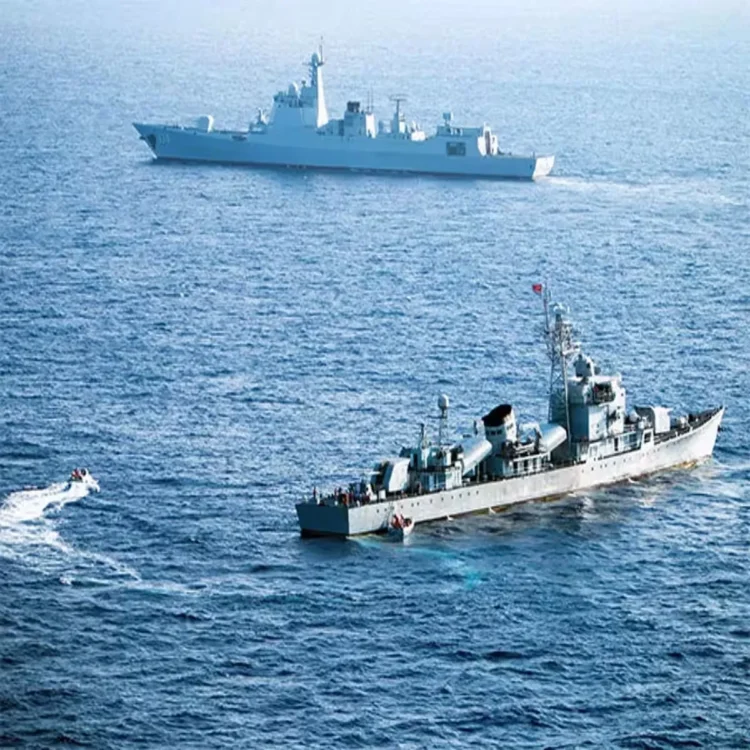
China Responds to Joint International Statement
China has reiterated its long-standing position on the South China Sea after Japan and 13 other nations reaffirmed support for the 2016 ruling by the Permanent Court of Arbitration in The Hague. The tribunal concluded that China’s broad maritime claims based on its “nine-dash line” have no legal basis under international law.
In response, Beijing summoned a senior Japanese diplomat to lodge a formal protest. According to China’s Foreign Ministry, Japan’s recent statements interfere in matters related to China’s territorial sovereignty and contribute to regional tensions rather than stability.
Chinese state media reported that officials conveyed their strong dissatisfaction to the Japanese Embassy, accusing Tokyo of taking actions that undermine regional peace and challenge the existing international framework.
International Support for Arbitration Decision
The joint declaration, issued by the United States, Australia, Canada, Estonia, Germany, Italy, Japan, Latvia, Lithuania, New Zealand, the Philippines, Romania, Slovenia, and the United Kingdom, marked the tenth anniversary of the July 12, 2016 arbitral ruling.
The participating governments described the tribunal’s decision as legally binding between China and the Philippines regarding the maritime claims examined during the proceedings. They emphasized that disputes in the South China Sea should be resolved peacefully and in accordance with the United Nations Convention on the Law of the Sea (UNCLOS).
Separately, the European Union also reaffirmed its support for the arbitration decision, describing it as an important milestone in the peaceful resolution of international disputes.
Japan Calls for Respect for International Law
Japanese Foreign Minister Toshimitsu Motegi stated that refusing to recognize the tribunal’s decision runs counter to the principle of peaceful dispute resolution and weakens respect for the rule of law within the international community.
China dismissed the remarks, arguing that Japan is not a claimant in the South China Sea dispute and therefore has no authority to comment on issues concerning Chinese territorial claims. Chinese officials also criticized Tokyo’s involvement in regional affairs, accusing Japan of interfering in matters beyond its jurisdiction.
Chinese government representatives further linked their criticism to historical issues, referring to Japan’s actions during the Second World War while warning against what they described as renewed attempts to expand its regional influence.
Beijing Maintains Its Position
The arbitration ruling issued in 2016 found that China had no historic rights to resources within areas claimed under the so-called nine-dash line and concluded that several of Beijing’s activities in disputed waters violated provisions of UNCLOS.
China has consistently rejected the decision since it was delivered, describing it as invalid and lacking legal effect. The Chinese Foreign Ministry again referred to the ruling as unlawful and non-binding, urging other countries to respect China’s territorial sovereignty and avoid actions that it believes increase tensions in the region.
Chinese state media also criticized the coordinated statement issued by Japan and other governments, stating that Beijing would firmly safeguard its maritime rights and territorial interests.
In addition, China’s Foreign Ministry released a video highlighting the country’s historical connection with the South China Sea, describing the waterway as an important part of China’s civilization and national interests.
Countries Reaffirm Commitment to a Rules-Based Indo-Pacific
The 14 participating governments reaffirmed their commitment to maintaining a free, open, peaceful, and rules-based Indo-Pacific region. Their joint statement stressed the importance of freedom of navigation, overflight, and other lawful uses of the sea as guaranteed under UNCLOS.
The countries also voiced opposition to unilateral actions, coercion, or the use of force that could threaten regional stability. They expressed concern over activities involving coast guard vessels, military assets, and maritime militia that may obstruct lawful operations or endanger the safety of personnel and fishermen.
The statement concluded by urging all parties involved in the South China Sea disputes to respect the 2016 arbitral award and pursue peaceful dialogue in accordance with international law. The participating nations also reaffirmed their support for ASEAN’s vision of the South China Sea as a region of peace, stability, cooperation, and lawful international commerce.