
North Korea – Sanjeev Jain Named India’s Next Ambassador to Pyongyang
North Korea – The Ministry of External Affairs has appointed Sanjeev Jain as India’s next Ambassador to the Democratic People’s Republic of Korea, commonly known as North Korea. The announcement was made in an official statement issued on Monday, with the ministry confirming that Jain is expected to assume his new responsibilities shortly.
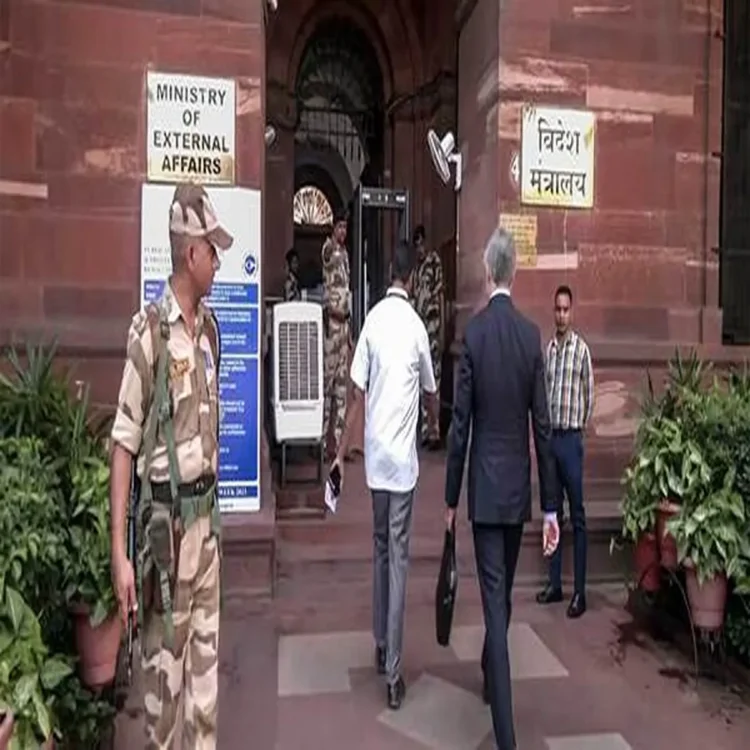
Experienced diplomat selected for Pyongyang assignment
Sanjeev Jain belongs to the 2008 batch of the Indian Foreign Service and is currently serving as India’s Ambassador to Cabo Verde. His appointment to Pyongyang marks a new diplomatic posting in a region that remains central to international discussions on security, peace and stability.
Jain will replace Aliawati Longkumer, who is currently India’s Ambassador to North Korea. Longkumer was appointed to the position on June 16, 2025. The Ministry of External Affairs did not provide further details about the timing of the transition or Jain’s expected arrival in Pyongyang.
India and North Korea maintain longstanding diplomatic ties
India and North Korea have maintained official relations for several decades. According to the Ministry of External Affairs, the relationship between the two countries has generally been based on friendship, cooperation and mutual understanding.
Consular relations between India and North Korea were established in March 1962. India later opened its Consulate General in North Korea in 1968. Full diplomatic relations at the embassy level were formally established on December 10, 1973.
Over the years, the two sides have continued to engage through diplomatic channels on matters of shared interest. The Foreign Office Consultations mechanism has served as an important platform for regular exchanges between officials from both countries.
India’s historical role after the Korean War
India played a significant role in efforts to address humanitarian issues after the Korean War, which lasted from 1950 to 1953. Following the conflict, the United Nations formed the Neutral Nations Repatriation Commission, a nine-member body chaired by India.
The commission was tasked with overseeing the repatriation and exchange of prisoners of war. Major General K. S. Thimayya led the commission’s work, which received international recognition for its contribution to the post-war process.
India’s involvement during that period remains an important chapter in its historical engagement with the Korean Peninsula.
New Delhi continues to support dialogue on Korean Peninsula
India has consistently called for restraint and peaceful engagement on the Korean Peninsula. In previous statements, the Ministry of External Affairs urged North Korea to avoid nuclear and ballistic missile tests, saying such actions could increase regional tensions.
New Delhi has supported efforts aimed at reducing conflict through dialogue, diplomacy and constructive engagement. India has also reiterated its support for peace, stability and reconciliation in the region.
The government had welcomed the inter-Korean summits held at Panmunjom in April 2018 and in Pyongyang in September of the same year. India also welcomed the meetings between United States President Donald Trump and North Korean leader Kim Jong-un in Singapore in June 2018 and Hanoi in February 2019.
India expressed hope that such diplomatic initiatives would help lower tensions and contribute to a durable peace process on the Korean Peninsula.