
NicobarProject – India Advances Strategic Great Nicobar Infrastructure Expansion Plan
NicobarProject – India has initiated a large-scale development effort on Great Nicobar Island to strengthen its maritime capabilities and economic reach.
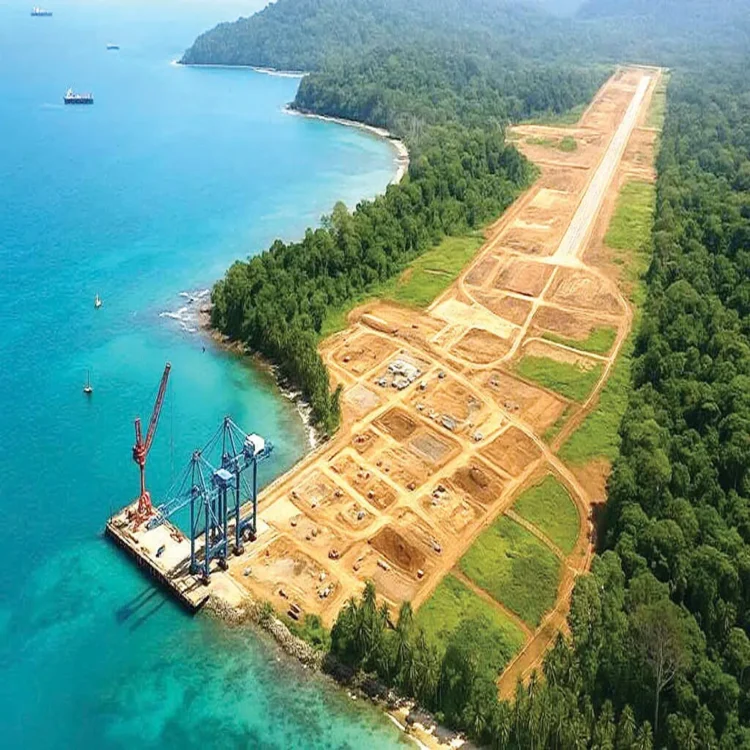
India has begun work on an ambitious project in Great Nicobar aimed at turning the island into a key maritime and economic center. According to an official statement released on Friday, the initiative is designed to take advantage of the island’s location near one of the busiest global shipping corridors while also addressing national security priorities.
Strategic Location and Economic Importance
The project is expected to significantly improve India’s position in the Andaman Sea and across Southeast Asia. Its proximity to the East–West international shipping route, roughly 40 nautical miles away, gives it a natural advantage for handling cargo traffic. With deep water exceeding 20 meters, the site is suitable for large vessels that currently bypass Indian ports due to limited capacity.
At present, a large share of India’s cargo is rerouted through foreign ports such as Colombo and Singapore, leading to revenue losses. By establishing a domestic transshipment hub, the government aims to reduce this dependency and retain more trade within the country.
Key Infrastructure Components
The development plan includes several major infrastructure elements. Among them is an International Container Transshipment Terminal with a projected capacity of 14.2 million TEUs. A new greenfield international airport is also part of the proposal, along with a 450 MVA gas and solar-based power facility.
Additionally, a modern township is being planned to support residential, commercial, and institutional needs linked to the project. These combined developments are expected to create a self-sustaining ecosystem centered around port-led growth.
Competing Regional Developments
The move comes at a time when neighboring countries such as Myanmar, China, and Sri Lanka are expanding their own deep-water port infrastructure to capture a larger share of global shipping traffic. India’s initiative is seen as a response to this growing competition, aiming to secure its presence in a strategically vital region.
The International Container Transshipment Port at Galathea Bay forms the core of this effort. Its location and natural advantages are expected to attract both domestic and international cargo flows.
Environmental Measures and Safeguards
Authorities have stated that the project will follow a structured environmental framework. Only a small portion, around 1.82 percent, of the island’s forest area is expected to be diverted. To offset this, compensatory afforestation is planned across approximately 97.3 square kilometers.
The island is known for its rich biodiversity and ecological value. Officials have emphasized that development will proceed with safeguards in place to minimize environmental impact.
Tourism and Connectivity Potential
Beyond trade and logistics, the project is also expected to boost tourism. Great Nicobar’s proximity to popular international destinations such as Phuket and Langkawi enhances its appeal. Improved connectivity through the proposed airport is expected to make the island more accessible.
The current airport in Port Blair handles about 1.8 million passengers annually. In comparison, the new airport in Great Nicobar is projected to handle at least 1 million passengers initially, with capacity expected to grow significantly over time.
Focus on Local Communities
Officials have highlighted that the welfare of indigenous communities remains a priority. The project does not propose displacement of the Shompen and Nicobarese populations. Instead, there are plans to expand notified tribal reserve areas through administrative measures.
The township development is also intended to provide necessary infrastructure for workers and service providers while aligning with the broader development framework.
Overall, the Great Nicobar initiative reflects a combination of economic ambition, strategic planning, and environmental consideration, positioning the island as a future hub in India’s maritime network.