
MissileDefense – US Intelligence Review Challenges Claims About Iran’s Military Losses
MissileDefense – Recent intelligence findings from American defence agencies suggest that Iran has restored access to most of its underground missile facilities despite earlier claims from Washington that the country’s military capabilities had been severely weakened during the latest regional conflict.
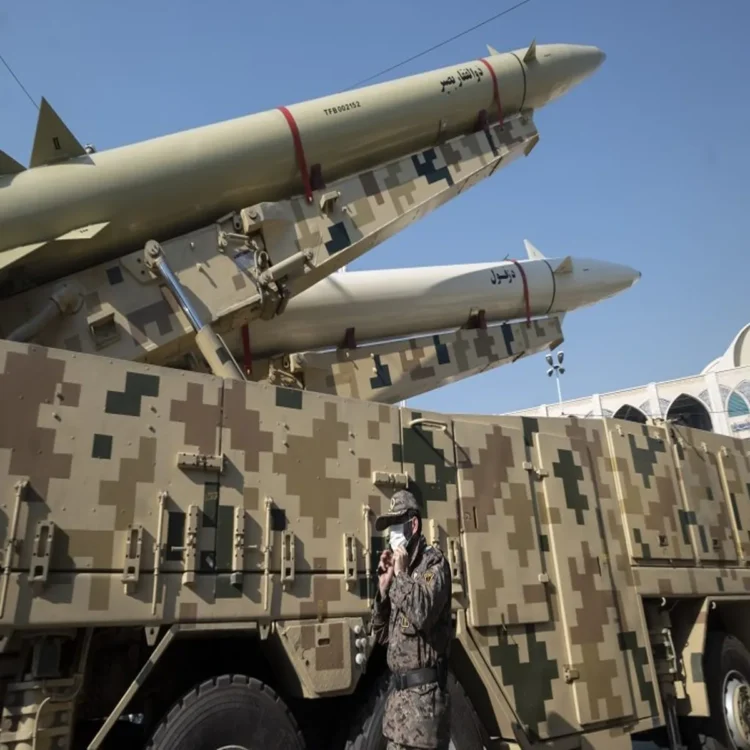
The updated assessment, first reported by The New York Times, indicates that Iran has regained operational control over a large portion of its missile network located near the Strait of Hormuz, one of the world’s most strategically important maritime routes. According to classified evaluations reviewed by senior US officials, 30 out of 33 missile sites in the region are now functioning either partially or fully.
Intelligence Findings Present Different Picture
The intelligence review appears to differ sharply from statements made in recent months by US President Donald Trump and senior members of his administration. Public remarks from Washington had suggested that Iran’s missile systems and launch capabilities were largely destroyed during coordinated military operations involving the United States and Israel.
However, internal assessments prepared earlier this month reportedly show that nearly 90 percent of Iran’s underground missile infrastructure remains operational to varying degrees. Analysts involved in the review concluded that Tehran continues to maintain significant military capacity despite repeated strikes targeting launch sites, storage facilities, and defence systems.
Officials familiar with the findings said the restored facilities could allow Iran to redeploy mobile missile launchers and potentially resume missile operations if regional tensions escalate again.
Missile Stockpile Largely Intact
According to the intelligence estimates, Iran still possesses around 70 percent of its missile inventory from before the conflict began. This includes both ballistic missiles and cruise missiles that form a major part of the country’s strategic defence programme.
The review also found that Iran continues to control roughly 70 percent of its mobile missile launcher fleet. These launchers are considered difficult to target because they can be moved quickly between locations, making them an important element of Iran’s military strategy.
Only three missile facilities near the Strait of Hormuz were reportedly assessed as completely inaccessible after the military campaign. The remaining sites have either been repaired or reconnected sufficiently to support future operations.
Satellite Monitoring Reveals Recovery Efforts
US military intelligence agencies relied heavily on satellite imagery, surveillance systems, and electronic monitoring to prepare the latest assessment. Officials tracking the developments reportedly observed signs of repair work at several underground facilities that had previously been considered heavily damaged.
The report noted that Iranian authorities were also able to restore access to storage areas used for missiles and launch equipment across multiple regions of the country. Some assessments further suggested that Tehran had repaired damaged missiles and completed assembly work on weapons that were close to production before the conflict intensified.
Earlier reporting by The Washington Post also cited US officials claiming that Iran retained most of its mobile launch systems and had successfully reopened many underground military sites.
Concerns Growing Over US Munitions Supplies
The intelligence findings have also triggered discussions within American defence circles about the heavy use of military resources during the conflict. Reports indicate that the United States consumed large quantities of advanced weapons and interceptor systems while supporting operations in the region.
According to the assessment, the US military used more than 1,000 Tomahawk missiles along with over 1,300 Patriot interceptor missiles during the confrontation. Thousands of additional long-range precision weapons were also deployed.
Defence experts reportedly warned that rebuilding these stockpiles could require several years, especially as tensions remain unstable across West Asia. Military planners are said to be evaluating how prolonged conflicts could affect future readiness and commitments to regional allies.
The current ceasefire in the region remains fragile, and officials continue to monitor developments closely amid concerns that renewed hostilities could once again disrupt stability near the Strait of Hormuz.