
Migration – Boat Disaster Leaves Hundreds Missing in Andaman Sea
Migration – A large number of people are feared missing after a vessel carrying Rohingya refugees and Bangladeshi nationals capsized in the Andaman Sea, according to the United Nations. The incident has once again drawn attention to the ongoing risks faced by displaced communities attempting dangerous sea journeys in search of safety and better opportunities.
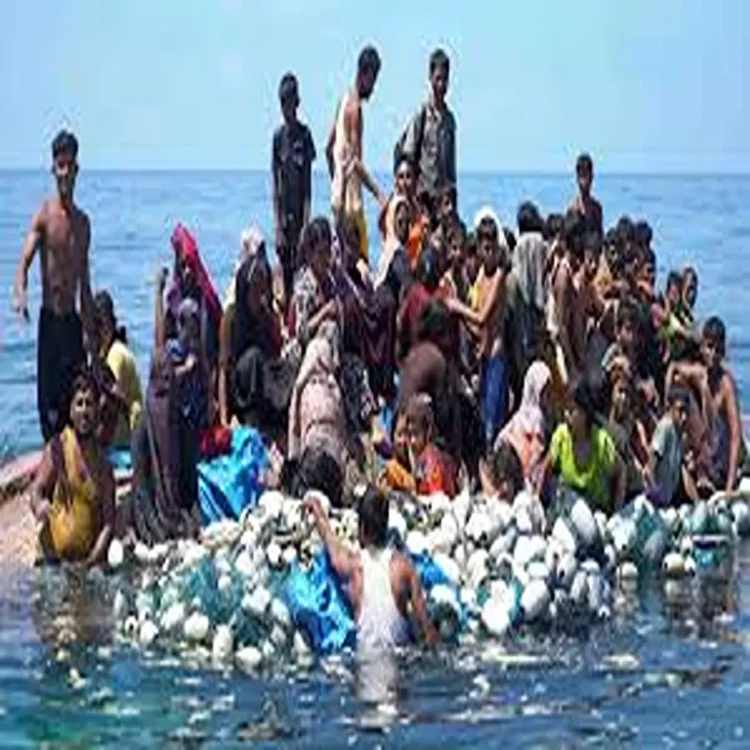
Vessel Overturned Amid Harsh Sea Conditions
The United Nations refugee agency reported that the boat had departed from Teknaf in southern Bangladesh and was heading toward Malaysia when it encountered severe weather. Strong winds, rough waters, and overcrowding are believed to have caused the vessel to overturn. Initial estimates suggest that around 280 people were on board, including children, with nearly 250 feared missing.
Officials noted that such journeys are often undertaken in unsafe and poorly equipped boats, increasing the risk of fatal accidents. The latest incident is still under investigation, and exact details remain limited.
Ongoing Struggles of Displaced Communities
The tragedy highlights the prolonged displacement faced by the Rohingya population. Many of those on board are believed to have come from refugee camps in Cox’s Bazar, Bangladesh, where more than a million people live after fleeing violence in Myanmar’s Rakhine state.
Conditions in these camps remain challenging, with limited access to education, employment, and essential services. These hardships often push refugees to seek alternative routes, even if it means risking their lives at sea.
Violence in Rakhine State Fuels Uncertainty
The situation in Myanmar continues to remain unstable, particularly in Rakhine state, where clashes between the military and the Arakan Army have intensified. This ongoing conflict has made the prospect of safe return uncertain for many Rohingya families.
Humanitarian agencies have repeatedly emphasized that without long-term solutions and improved conditions, displaced populations are likely to continue taking dangerous migration routes. The lack of stability in their home regions leaves them with few viable options.
Survivors Recount Harrowing Experience
A small number of survivors were rescued days after the incident. According to the Bangladesh Coast Guard, a passing vessel identified several individuals struggling in the water and managed to bring them to safety near the Andaman Islands.
One survivor described being persuaded by traffickers with promises of employment in Malaysia. He recounted that passengers were kept in confined conditions during the journey, and some did not survive even before the boat capsized. He also reported suffering burns from spilled fuel.
After the vessel overturned, survivors remained in the open sea for over a day before being rescued. Their accounts underline the severe risks associated with such journeys.
Human Trafficking Networks Under Scrutiny
Authorities and international organizations have pointed to human trafficking networks as a major factor behind these incidents. These groups often lure vulnerable individuals with false assurances of jobs and better living conditions abroad.
Sea routes used by traffickers are particularly hazardous, with overcrowded boats frequently lacking proper safety measures. Experts warn that without stronger enforcement and coordinated international action, such tragedies are likely to continue.
Call for Long-Term Solutions
The United Nations has stressed the urgent need to address the root causes of displacement. It has called for efforts to create conditions that would allow Rohingya refugees to return to their homeland safely and voluntarily.
The agency also highlighted the importance of expanding humanitarian support and ensuring access to basic rights in refugee-hosting regions. Without meaningful intervention, vulnerable populations may remain trapped in cycles of risk and uncertainty.
The Andaman Sea, which borders Myanmar, Thailand, and the Malay Peninsula, has witnessed several similar incidents in recent years. According to previous reports, hundreds of lives have been lost in comparable shipwrecks, underscoring the scale of the crisis.