
MaritimeSecurity – US Pushes Global Alliance to Safeguard Hormuz Shipping Route
MaritimeSecurity – The United States is actively seeking support from allies to form a multinational coalition aimed at ensuring safe maritime passage through the strategically vital Strait of Hormuz. According to recent reports, Washington has begun diplomatic outreach to encourage countries to participate in what is being described as a coordinated international maritime effort.
Diplomatic Effort Gains Momentum
An internal communication from the US State Department, circulated to American embassies earlier this week, outlines the framework of the proposed initiative, referred to as the Maritime Freedom Construct. Diplomats have been instructed to engage foreign governments and assess their willingness to join either in a diplomatic capacity, a military role, or both.
The plan positions the State Department as the central hub for diplomatic coordination, while US Central Command would handle operational responsibilities. This includes monitoring maritime activity in real time and facilitating intelligence-sharing among participating nations to enhance shipping safety in the region.
Coalition Aims to Strengthen Navigation Security
The proposed coalition would focus on improving cooperation between member states through information exchange, coordinated diplomatic strategies, and enforcement of existing sanctions. Officials believe that collective action will help deter disruptions and ensure uninterrupted commercial shipping through one of the world’s most critical energy corridors.
The communication emphasizes that broader participation would reinforce global efforts to maintain open sea lanes and protect economic stability. It also highlights the importance of presenting a unified international stance in response to challenges affecting maritime transit in the region.
Complementing Existing International Efforts
The initiative is not intended to operate in isolation. Instead, it would work alongside ongoing maritime security programs led by other nations, including efforts spearheaded by the United Kingdom and France. By aligning with these existing operations, the US hopes to create a more cohesive and effective global response to emerging threats.
Rising Tensions in the Strait of Hormuz
The Strait of Hormuz has recently become a focal point of geopolitical tension, particularly amid stalled negotiations between Washington and Tehran. The narrow waterway, through which a significant portion of the world’s oil supply passes, remains under heightened scrutiny as uncertainty grows.
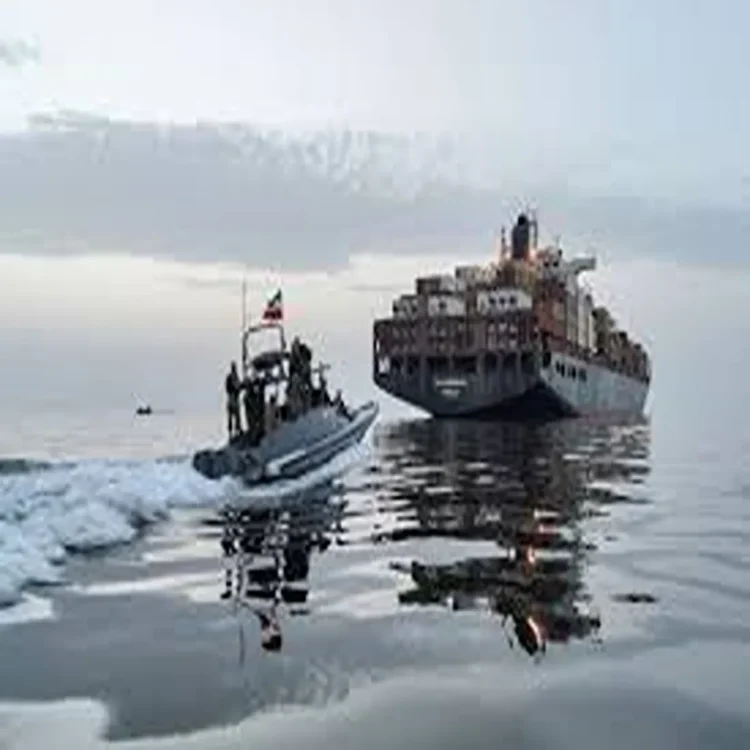
Reports indicate that Iran has taken measures against vessels that do not comply with its transit regulations, while the US Navy has implemented extensive restrictions affecting ships traveling to and from Iranian ports. These developments have added complexity to an already fragile situation.
US Maintains Pressure on Iran
US leadership has reiterated its commitment to maintaining pressure on Iran, particularly regarding its nuclear program. Officials have indicated that maritime restrictions will remain in place until a broader agreement is reached. This approach, according to statements from US authorities, is seen as a strategic alternative to direct military escalation.
However, Iranian officials have signaled that continued restrictions could prompt a significant response. A senior security source in Tehran suggested that new actions may be taken if the current situation persists.
Economic and Political Implications
The ongoing standoff has begun to impact global markets, particularly energy prices, which have shown upward movement amid uncertainty. Reduced shipping activity through the Strait of Hormuz has also been observed, marking one of the lowest levels of maritime traffic in recent months.
Domestically, the situation carries political consequences as well. Prolonged tensions and economic pressures are influencing public sentiment and could have implications for upcoming electoral cycles in the United States.
Uncertain Path Ahead
With diplomatic negotiations at a standstill and military tensions simmering, officials on both sides acknowledge that the situation may remain unresolved in the near term. Some analysts suggest the conflict could conclude without a definitive agreement or escalation, leaving the region in a state of cautious uncertainty.