
Maritime – Rising Strait of Hormuz Tensions Highlight Legal Grey Areas
Maritime – The growing strain in the Strait of Hormuz has exposed significant gaps in international maritime law, particularly as two of the key players—the United States and Iran—are not signatories to the United Nations Convention on the Law of the Sea. This absence has limited the effectiveness of established legal mechanisms, leaving the situation heavily influenced by geopolitical considerations rather than clear legal rules.
Legal Framework Faces Limitations
According to maritime law expert Professor Proshanto K Mukherjee, the current dispute reflects a fragile legal environment where international conventions offer limited authority. The Law of the Sea, which defines navigation rights through strategic waterways, was formalised in 1982. However, since neither the US nor Iran has ratified the convention, its provisions cannot be fully enforced in this case.
This creates uncertainty around critical issues such as transit passage, which allows ships to move freely through international straits. Without universal acceptance of these rules, even basic navigation rights become subject to interpretation and dispute.
Power Dynamics Take Centre Stage
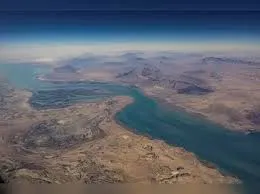
In the absence of binding legal commitments, the situation risks being shaped by power rather than principle. Mukherjee noted that the narrow geography of the Strait of Hormuz makes it particularly vulnerable to physical control. Any attempt to restrict passage—such as deploying naval forces—could quickly escalate tensions and disrupt maritime traffic.
This reality underscores a broader concern: when legal structures are weak or unenforceable, strategic dominance often dictates outcomes. In such circumstances, international norms may take a back seat to national interests.
Oman’s Role Adds Diplomatic Complexity
The involvement of Oman introduces another layer of complexity. Situated along the Strait and a signatory to the Law of the Sea convention, Oman plays a crucial role in any discussions about navigation rights. Any agreement or negotiation regarding passage through the strait would likely require its participation, making diplomatic coordination more intricate.
This triangular dynamic complicates efforts to reach a clear and unified resolution, as each country operates under different legal and political considerations.
Safety Concerns Impact Shipping Decisions
Beyond legal debates, safety risks are becoming a pressing issue for global shipping companies. Reports suggesting the presence of mines in the waterway have raised serious concerns about vessel security. Shipping operators must now weigh the risks of navigating through potentially dangerous waters against the economic necessity of maintaining trade routes.
Such developments could discourage transit through the strait, affecting global supply chains and increasing costs for international trade.
Disputes Over Transit Fees Emerge
Another point of contention involves the collection of tolls from vessels passing through the strait. There are indications that some ships have already paid fees to ensure safe passage. Mukherjee highlighted that discussions may be underway regarding the sharing of such revenues between the US and Iran.
These arrangements, however, fall outside established legal frameworks and appear to be driven more by negotiation than by any recognised maritime law. This further illustrates how economic and strategic interests are shaping the situation.
Limited Avenues for Legal Resolution
While international legal bodies such as the International Court of Justice and the International Tribunal for the Law of the Sea remain available, their effectiveness depends on the willingness of countries to participate and comply with rulings. ITLOS, in particular, specialises in maritime disputes and could offer a more focused platform for resolution.
However, given the current geopolitical climate, reliance on such institutions may be limited. Legal processes often require time and cooperation, both of which may be in short supply during periods of heightened tension.
Broader Impact on Global Trade
The ongoing developments in the Strait of Hormuz have far-reaching implications. As one of the world’s most critical shipping routes, any disruption can significantly affect energy supplies and international commerce. The uncertainty surrounding legal rights, safety conditions, and political intentions is already placing pressure on global markets.
Mukherjee emphasised that the situation remains fluid, with outcomes likely to be shaped more by strategic decisions than by established legal norms.