
KashmirIssue – India Criticises Pakistan for Raising Kashmir at UN Security Council Forum
KashmirIssue – India strongly criticised Pakistan at a United Nations forum on Tuesday, accusing it of using its role as co-chair of a Security Council meeting to advance political narratives instead of maintaining neutrality. New Delhi reiterated that Jammu and Kashmir is an internal matter and rejected Pakistan’s references to the region during the discussion.
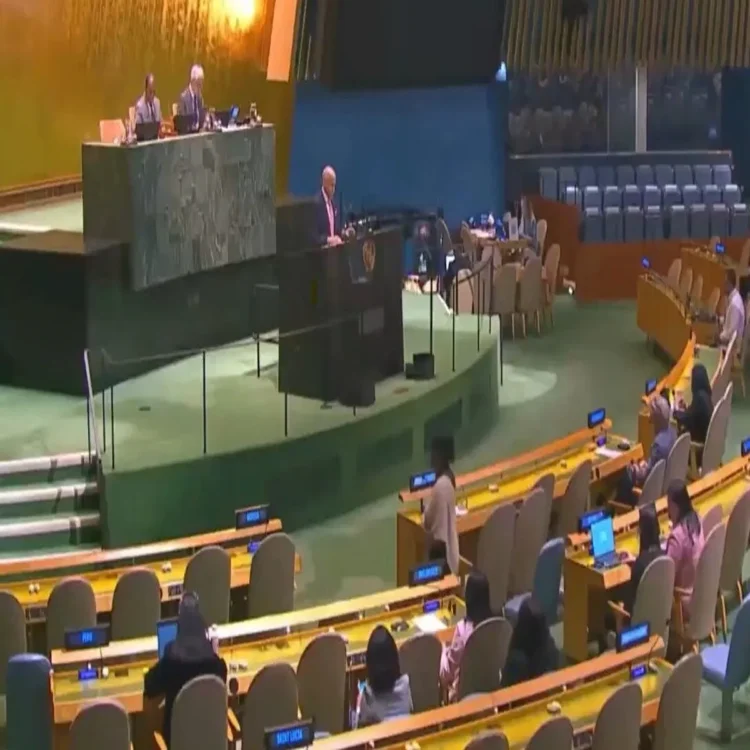
India Objects to Pakistan’s Remarks
Speaking at an informal Security Council session, India’s Permanent Representative to the UN, P. Harish, said Jammu and Kashmir has always been an integral part of India and will continue to remain so. He expressed disappointment that a country serving as co-chair of the meeting chose to introduce what India described as a political issue into a forum that was expected to remain balanced and impartial.
The meeting, titled “Bridging the Implementation Gap: Security Council Resolutions and Maintenance of International Peace and Security,” was jointly organised by China and Pakistan. Representatives from both countries presided over the discussion.
Kashmir Mention Sparks Diplomatic Exchange
During the session, Pakistan’s Permanent Representative to the United Nations, Asim Iftikhar Ahmad, once again referred to the Kashmir issue, a subject Islamabad frequently raises at international forums. India responded by asserting that Pakistan itself has failed to comply with relevant UN resolutions linked to the region.
According to India’s position, Pakistan did not fulfil the requirements of the UN Security Council Resolution 47 adopted in April 1948. That resolution called for the withdrawal of Pakistani forces, security personnel and other individuals from areas of Kashmir that came under its control during the conflict.
India Highlights Historical Context
Indian representatives argued that Pakistan continues to occupy territories that New Delhi considers illegally held. India also pointed to unrest in areas administered by Pakistan, claiming that local protests and resistance movements have been met with strong security measures.
The exchange reflected the longstanding differences between the two neighbouring countries over Kashmir, an issue that has remained a recurring point of disagreement at international institutions for decades.
Focus of the Arria Formula Meeting
The discussion took place under the Arria Formula format, an informal mechanism used by the UN Security Council to facilitate broader conversations on international concerns. These meetings allow participation from member states, experts, organisations and other stakeholders outside the Council’s formal procedures.
The format was introduced by Venezuelan diplomat Diego Arria as a way to encourage more flexible dialogue on matters affecting international peace and security.
Call for Review of Security Council Mandates
Apart from responding to Pakistan’s comments, India used the forum to advocate a review of Security Council mandates under the wider UN80 initiative, which seeks to evaluate the effectiveness of the United Nations as it marks its 80th year.
Harish argued that if mandates issued by the UN General Assembly are being examined for relevance and efficiency, Security Council mandates should also be subject to similar scrutiny. He said periodic reviews are necessary to ensure that international mechanisms remain effective in addressing contemporary challenges.
Need for Updated Mediation Frameworks
India further suggested reassessing provisions under Chapter VI of the UN Charter, which deals with mediation, negotiation and other peaceful methods for resolving disputes. Harish noted that such mechanisms are designed for specific circumstances and should not automatically be considered permanently applicable.
Referring to the Palestinian issue as an example, he said decades of changing mediation efforts have not yet produced a lasting solution. He argued that international frameworks must evolve with changing realities and that outdated approaches should be reconsidered when they no longer serve their intended purpose.