
Iran Blockade – US Marines Board Commercial Tanker During Gulf of Oman Operation
Iran Blockade -The United States has stepped up enforcement of its naval blockade targeting Iran, with American military forces conducting inspections and monitoring commercial shipping movements in the Gulf of Oman.
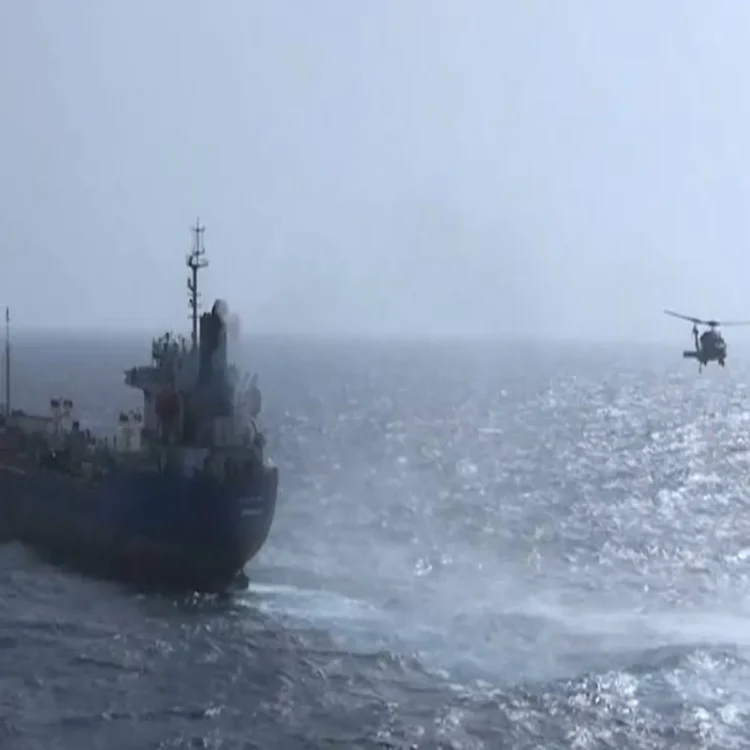
The United States Central Command (CENTCOM) announced on Thursday that US Marines carried out a verification boarding of the commercial tanker M/T Wen Yao in the Gulf of Oman as part of ongoing efforts to enforce Washington’s naval blockade against Iran. According to the military command, the operation was intended to verify compliance with restrictions linked to the blockade while maintaining oversight of maritime activity in the region.
CENTCOM outlines enforcement actions
In a statement shared through its official social media channels, CENTCOM said American forces had taken action against several commercial vessels attempting to transit the area. The command stated that three ships were redirected after trying to bypass the blockade, one vessel was disabled after failing to comply with instructions, and another was boarded to confirm adherence to US enforcement measures.
CENTCOM also maintained that shipping routes through the Strait of Hormuz and nearby waters remain open for lawful commercial traffic. However, it said vessels attempting to breach the US naval blockade against Iran would continue to face operational action by American forces.
Strategic importance of the Gulf of Oman
The Gulf of Oman connects directly to the Strait of Hormuz, one of the world’s most strategically significant maritime passages. A substantial share of global crude oil exports and energy supplies moves through this narrow waterway, making any military activity in the area closely watched by governments, shipping companies, and energy markets.
Given its importance to international trade, developments involving naval deployments or shipping restrictions in the region often attract global attention because of their potential impact on commercial transportation and energy security.
White House explains scope of blockade
Earlier on Thursday, the White House said the Strait of Hormuz remains accessible for commercial vessels that are not travelling to or departing from Iranian ports. During a media briefing, White House Press Secretary Karoline Leavitt said the blockade ordered by the US President applies specifically to ships connected with Iranian ports rather than to all commercial traffic using the strategic waterway.
Leavitt said the restrictions had been reinstated after the United States concluded that Iran had failed to meet its commitments under previous agreements. She added that the blockade is fully operational and is being supported by a significant American military presence across the region.
According to the White House, more than 10,000 US sailors, Marines, and airmen are currently involved in the mission. The deployment also includes two aircraft carriers, over 20 warships, and dozens of military aircraft tasked with supporting maritime security operations and enforcing the blockade.
Iran criticises US military presence
Iran responded by rejecting the American position and criticising the continued deployment of US forces in West Asia. Brigadier General Abolfazl Shekarchi, spokesperson for Iran’s Armed Forces, said during an interview carried by Iranian state broadcaster IRIB that the United States and Israel should not maintain a military presence in the region.
He argued that Iran’s control over the Strait of Hormuz contributes to regional stability and claimed that the growing military presence of the United States is responsible for increasing tensions in the strategic corridor. Shekarchi also warned that Iran could respond by targeting American infrastructure across West Asia if Iranian infrastructure were attacked.
Regional tensions remain under close watch
The latest exchange of statements highlights continuing friction between Washington and Tehran as military activity in and around the Strait of Hormuz remains elevated. While the United States says its naval operations are focused on enforcing sanctions-related measures and ensuring secure commercial navigation, Iran continues to oppose the American deployment and insists that regional security should remain under its own control.
As both sides maintain their positions, international observers are closely monitoring developments in one of the world’s most vital maritime routes, where any escalation could have wider implications for global shipping and energy markets.