
InterestRates – Federal Reserve Holds Rates Steady Amid Global Uncertainty
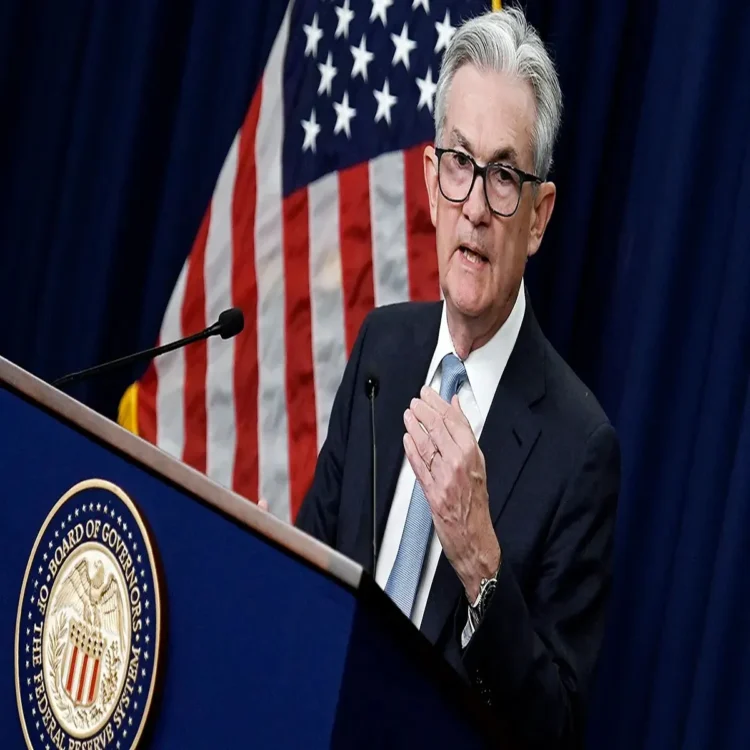
InterestRates – The United States Federal Reserve has decided to keep its benchmark interest rates unchanged, maintaining the current range between 3.5 percent and 3.75 percent following its latest policy meeting. The decision comes at a time when economic signals remain mixed and geopolitical tensions, particularly in West Asia, continue to cloud the global financial outlook.
Policy Decision Reflects Cautious Approach
In its official statement, the Federal Open Market Committee (FOMC) emphasized that holding rates steady aligns with its current assessment of economic conditions. The committee indicated that any future adjustments would depend heavily on evolving data, the broader economic outlook, and a careful evaluation of potential risks.
The Federal Reserve reiterated its long-standing objectives of supporting maximum employment while gradually bringing inflation back to its 2 percent target over time. Officials signaled that patience remains key as they assess whether current policy settings are sufficient to guide the economy toward those goals.
Division Among Policymakers
While the majority supported maintaining the existing rate range, the decision was not unanimous. Four members expressed differing views, highlighting ongoing debate within the central bank.
Governor Stephen I. Miran stood out by advocating for a modest rate cut of 25 basis points, suggesting that current conditions may warrant a slightly more accommodative stance. Meanwhile, Beth M Hammack, Neel Kashkari, and Lorie K Logan agreed with keeping rates unchanged but raised concerns over the tone of the policy statement, particularly its suggestion of a potential shift toward easing in the future.
This divergence reflects broader uncertainty among policymakers about the direction of the economy and the appropriate pace of monetary policy adjustments.
Economic Activity Shows Mixed Signals
Recent economic data indicates that the US economy continues to grow at a steady pace. However, some underlying indicators present a more nuanced picture. Job creation has been relatively subdued in recent months, even as the unemployment rate has remained largely stable.
This combination suggests that while the labor market is not weakening significantly, it is also not showing strong momentum. Policymakers are closely monitoring these trends to determine whether they signal a cooling economy or simply a temporary slowdown.
Inflation Remains a Key Concern
Inflation continues to run above the Federal Reserve’s target, posing an ongoing challenge. A notable factor contributing to this pressure is the recent increase in global energy prices, which has had a ripple effect across various sectors.
The central bank acknowledged that inflation dynamics remain uncertain and will require continued vigilance. Officials indicated that sustained progress toward price stability is essential before considering any significant policy shifts.
Global Developments Add to Uncertainty
Geopolitical developments, particularly in West Asia, have introduced additional uncertainty into the economic outlook. The Federal Reserve noted that these events could influence global energy markets, financial conditions, and overall economic stability.
Such external factors make it more difficult to predict future economic trends, prompting the central bank to adopt a flexible and data-driven approach.
Future Policy to Remain Flexible
Looking ahead, the Federal Reserve made it clear that it will continue to closely track a wide range of indicators, including labor market conditions, inflation data, financial market developments, and international events.
The committee emphasized its readiness to act if necessary, signaling that policy adjustments remain on the table should risks emerge that threaten economic growth or price stability.
For now, the decision to hold rates steady reflects a balance between caution and preparedness, as the central bank navigates a complex and evolving economic landscape.