
Hormuz Strait – UNSC Members Push Emergency Resolution Over Maritime Security Crisis
Hormuz Strait – Growing international concern over maritime safety and rising tensions in West Asia has prompted renewed diplomatic action at the United Nations Security Council.
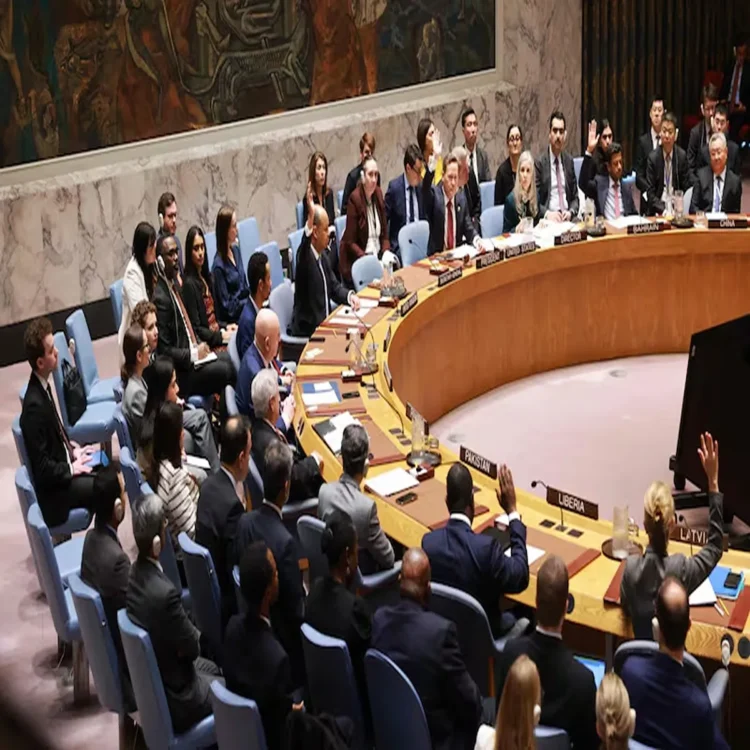
The United Nations Security Council is expected to discuss an emergency resolution this week as international backing increases for a proposal focused on protecting navigation through the Strait of Hormuz. According to reports, the draft resolution introduced jointly by Bahrain and the United States has received support from more than 129 countries, reflecting growing concern over stability in one of the world’s most important maritime trade routes.
Rising Support for the Draft Resolution
Diplomatic sources indicate that support for the proposal has expanded steadily in recent days. Somalia and the Democratic Republic of the Congo have now joined the list of co-sponsors, a move viewed as important because both nations currently serve as elected members of the Security Council.
The resolution seeks to maintain open maritime access through the Strait of Hormuz, a key passage for global oil shipments and commercial trade. It also aims to reinforce international law while protecting shipping lanes, energy transportation, and international waterways from disruption.
Bahrain, the United States, Saudi Arabia, Qatar, Kuwait, and the United Arab Emirates are listed among the principal sponsors backing the initiative.
Security Concerns Intensify in the Gulf Region
The proposed emergency meeting comes after recent drone attacks targeting nuclear-related facilities in the UAE. Diplomats are closely monitoring developments as regional tensions continue to affect global markets and energy security discussions.
Washington first introduced the proposal at the Security Council earlier this month amid increasing friction linked to maritime transit in the Gulf region. American officials argue that threats to commercial vessels and shipping routes have raised serious concerns for the international economy.
US Secretary of State Marco Rubio accused Iran of destabilising maritime trade by allegedly threatening to restrict movement through the strategic waterway. In statements released by the US State Department, Rubio claimed Tehran had engaged in activities including attacks on vessels, sea mine deployment, and attempts to impose costs on maritime traffic.
Key Demands Included in the Proposal
According to details circulating among diplomatic representatives, the draft resolution calls on Iran to halt attacks connected to maritime operations and stop activities that could endanger shipping routes.
The proposal also reportedly asks Iran to disclose the placement of any sea mines and cooperate with international efforts aimed at removing them. In addition, the resolution supports the establishment of a humanitarian corridor intended to ensure safer movement in affected areas.
Officials backing the proposal argue that uninterrupted access through the Strait of Hormuz is critical for global energy markets and international trade stability.
Iran Rejects US-Backed Resolution
Iran has sharply criticised the draft resolution, describing it as politically motivated and accusing Washington of attempting to justify actions against Tehran under the banner of protecting navigation.
Iran’s mission to the United Nations stated that the proposal would not resolve the broader regional crisis and instead could deepen tensions. Iranian representatives argued that long-term stability depends on ending conflict in the region and removing restrictions affecting Iranian ports and maritime movement.
Tehran maintained that diplomatic solutions, rather than increased international pressure, remain the only practical path toward reducing tensions in West Asia.
Trump Signals Delay in Possible Military Action
Meanwhile, US President Donald Trump stated that a potential military strike against Iran has been temporarily delayed while diplomatic discussions continue.
Speaking about ongoing negotiations, Trump said several Gulf countries, including Saudi Arabia, Qatar, and the UAE, requested additional time for talks because they believed progress toward an agreement was possible. He suggested discussions with Tehran had shown signs of movement, though he stopped short of predicting a final breakthrough.
The latest developments come as Washington continues balancing diplomatic engagement with military preparedness amid growing concern over Iran’s nuclear activities and regional influence. International observers now await the outcome of Security Council deliberations, which could shape the next phase of the crisis in the Gulf region.