
Geopolitics – US Indo-Pacific Strategy Faces Pressure Amid Iran Conflict
Geopolitics – The United States is facing mounting strategic pressure as its ongoing military engagement with Iran raises concerns about preparedness in the Indo-Pacific, where tensions involving China and Taiwan continue to intensify. Military officials and lawmakers are increasingly questioning whether current deployments could weaken America’s ability to respond to future threats in Asia.
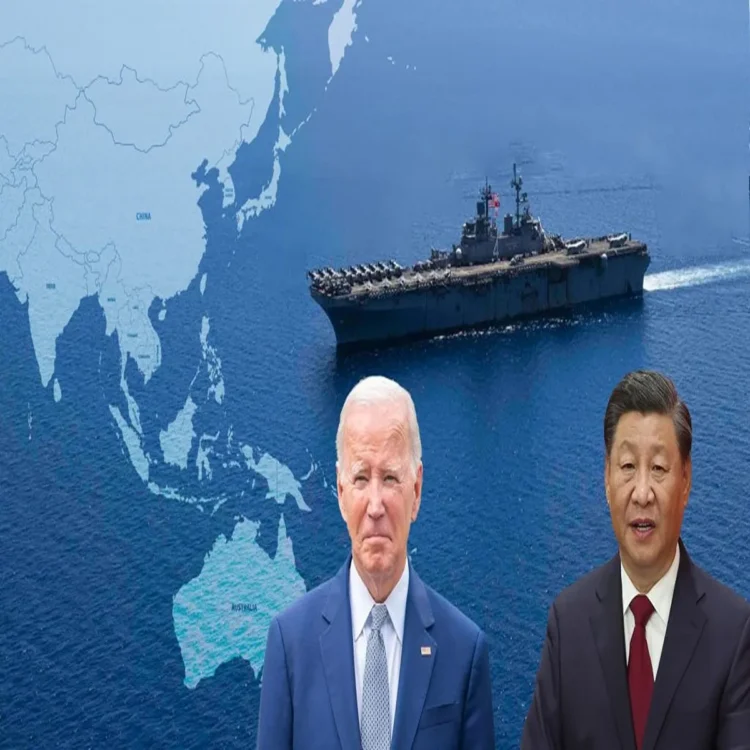
Concerns Over Military Resource Allocation
During a recent Congressional Armed Services Committee hearing, Admiral Samuel J. Paparo, head of the US Indo-Pacific Command, addressed lawmakers on the status of forces across a vast region extending from Hawaii to the Indian Ocean. While he avoided disclosing precise figures, Paparo acknowledged that US stockpiles of advanced weaponry are limited, emphasizing that resources are being used carefully.
However, some lawmakers expressed unease. Senator Richard Blumenthal noted that the ongoing military campaign in Iran appears to have significantly strained US reserves. He stressed the importance of recognizing the financial and operational costs of the conflict, urging faster replenishment of critical munitions.
Shifting Deployments Raise Strategic Questions
The redeployment of key military units has added to these concerns. Elements such as the Japan-based 31st Marine Expeditionary Unit and the USS Abraham Lincoln carrier strike group have been moved to the Middle East. Analysts suggest that such movements may temporarily reduce America’s military presence in the Indo-Pacific at a time when regional tensions are high.
In addition, surveillance activity in the region reportedly declined earlier this year. While Paparo framed this as part of a broader global strategy, some experts see it as a sign of stretched operational capacity.
China’s Expanding Military Capabilities
At the heart of US strategic concerns lies China’s rapidly advancing military power. The People’s Liberation Army has been steadily modernizing, developing a wide array of missile systems, including hypersonic weapons, and expanding its naval and nuclear capabilities.
Paparo warned that China’s activities near Taiwan are not merely routine drills but could serve as preparation for potential military action. He also highlighted Beijing’s assertive behavior in contested waters, including the South China Sea and East China Sea, where tensions with neighboring countries persist.
Emerging Trends in Modern Warfare
The hearing also focused on evolving forms of warfare. Paparo pointed to the growing use of cyber operations, artificial intelligence, and information campaigns designed to influence public perception and disrupt decision-making.
One example cited was the circulation of digitally created images depicting Chinese troops in Taipei, intended to project an image of inevitability. Alongside this, the increasing use of low-cost drones and autonomous systems is reshaping battlefield dynamics by accelerating response times and intensifying attacks.
Strengthening Alliances and Deterrence
Despite these challenges, US military leadership remains committed to maintaining a strong presence in the Indo-Pacific. Paparo emphasized that alliances play a critical role in regional stability. The United States conducted over 100 joint exercises with partner nations last year, including large-scale drills such as Exercise Balikatan in the Philippines.
These joint operations, involving thousands of troops from multiple countries, are intended to enhance coordination and demonstrate collective readiness. According to Paparo, such efforts are central to deterring conflict and maintaining a balance of power in the region.
Need for Faster Military Modernization
A key issue raised during the hearing was the pace of US defense production. Paparo called for accelerated manufacturing of advanced weapons systems, including long-range missiles, drones, and hypersonic technologies. He warned that current production timelines do not match the speed at which resources are being consumed.
The admiral also highlighted gaps in support capabilities, such as air refueling aircraft and missile defense systems. Strengthening these areas, he said, is essential to ensuring operational effectiveness in contested environments.
Growing Global Security Challenges
Beyond China, Paparo pointed to increasing cooperation between countries like Russia and North Korea, which could further complicate the security landscape. While these partnerships may face limitations, their combined actions could heighten regional tensions.
He concluded by stressing that the Indo-Pacific remains central to US national interests in the coming decades. According to Paparo, decisions made today regarding military investment and alliances will play a crucial role in determining whether future conflicts can be avoided.