
Diplomacy – India and US Partnership Continues to Deepen Across Key Sectors
Diplomacy – India’s Ambassador to the United States, Vinay Mohan Kwatra, has dismissed concerns suggesting growing friction between New Delhi and Washington, saying the relationship between the two nations remains strong and continues to receive support from leaders across the American political spectrum.
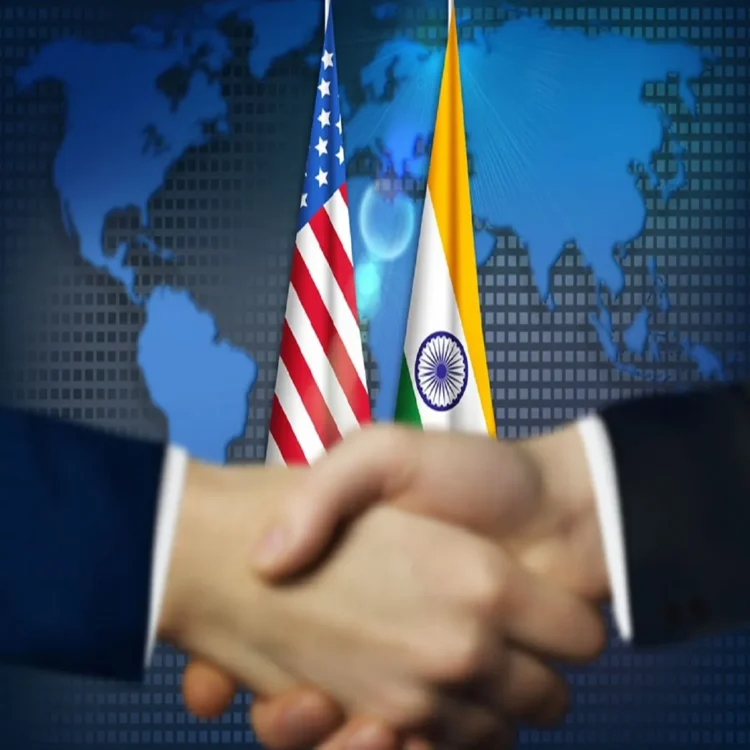
Speaking at the Capitol Hill Summit 2026 organised by the US-India Friendship Council, Kwatra said several assumptions about tensions between the two countries were not aligned with the actual state of bilateral engagement.
Strong Political Support Across Administrations
According to the ambassador, India and the United States have steadily strengthened their strategic relationship over the past two decades, regardless of political leadership changes in Washington. He noted that successive American administrations have continued to build upon the groundwork laid by their predecessors, creating long-term continuity in cooperation between the two democracies.
Kwatra also referred to shared democratic values as the foundation of the partnership, echoing remarks previously made by Prime Minister Narendra Modi during his address to the US Congress. He said the relationship is rooted not merely in geopolitical interests but in broader common principles and institutional trust.
Trade and Economic Engagement Expanding
The ambassador highlighted India’s ongoing economic transformation as one of the key factors driving closer engagement with the United States. He pointed to rapid growth across multiple sectors since 2014 and said economic reforms in India have created new opportunities for cooperation and investment.
He stated that both countries are working toward increasing bilateral trade to $500 billion by the year 2030, compared to the current annual trade volume of around $220 billion. The expanding commercial relationship, he added, reflects growing confidence among businesses and investors in both countries.
Defence and Technology Cooperation Strengthen
Kwatra described defence and security ties as one of the fastest-growing dimensions of the India-US partnership. He said operational coordination between the two countries has increased significantly in recent years, supported by updated long-term defence agreements and strategic frameworks.
He also noted that India has become one of the largest international operators of certain American defence platforms, underlining the increasing level of military interoperability between the two nations.
On the technology front, the ambassador highlighted growing American investment in India’s semiconductor and electronics industries. He referred to projects involving Micron Technology and other US firms as examples of deeper collaboration in advanced manufacturing and critical technologies.
Focus on Critical Minerals and Nuclear Cooperation
The discussion also covered cooperation in critical minerals and civil nuclear energy. Kwatra said recently approved legislation in India’s civil nuclear sector has opened the door for greater private sector participation and international collaboration.
He indicated that these developments could create new opportunities for joint projects and long-term investment in energy infrastructure and supply chain security.
India Defends Intellectual Property Environment
During a question-and-answer session, Kwatra responded to concerns regarding patent and trademark protection in India. He defended India’s intellectual property framework by pointing to the strong presence of global capability centres operated by American companies in the country.
According to him, nearly 2,000 such centres are currently operating in India, with roughly half belonging to US-based corporations. He said this reflects the confidence international companies have in India’s legal and regulatory systems related to intellectual property protection.
Education and Diaspora Remain Key Connectors
Addressing educational cooperation, the ambassador said India is working toward building institutions capable of attracting international scholars and students. He added that the country aims to develop globally competitive centres of academic excellence in the coming years.
Kwatra also described the Indian diaspora in the United States as a major pillar of the bilateral relationship. He credited Indian Americans with helping strengthen cultural, economic, and political connections between the two nations over several decades.
The summit brought together diplomats, lawmakers, business executives, and policy specialists amid ongoing discussions surrounding trade disagreements, visa policies, and changing geopolitical dynamics affecting international partnerships.