
Defense – Chinese Military Activity Intensifies Near Taiwan Airspace
Defense – Taiwan’s defense authorities reported renewed military activity by China near the island early Wednesday, noting the presence of multiple aircraft and naval vessels operating close to its territory. The situation, observed as of 6 a.m. local time, reflects a continued pattern of increased movements in the region.
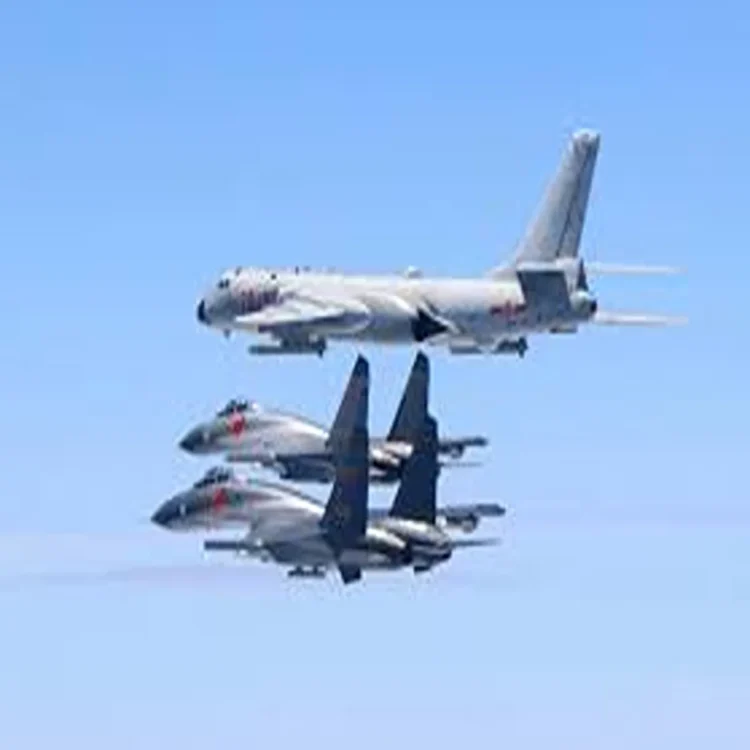
Military Presence Detected Around Taiwan
According to Taiwan’s Ministry of National Defense, 10 Chinese military aircraft sorties, along with 11 naval vessels and one official ship, were detected near Taiwan’s surrounding waters. Officials stated that nine of the aircraft crossed the median line of the Taiwan Strait, entering the island’s northern, southwestern, and eastern Air Defense Identification Zone (ADIZ).
The ministry confirmed that Taiwan’s armed forces closely monitored the developments and responded as required, though no further operational details were disclosed.
Previous Day Saw Higher Activity Levels
The latest detection follows a similar but more extensive movement recorded a day earlier. On Tuesday, Taiwan reported 22 sorties of Chinese aircraft and nine naval vessels operating near its territory. Out of these, 20 aircraft crossed the median line and entered Taiwan’s northern and southwestern ADIZ.
Defense officials indicated that such repeated crossings are being tracked carefully, with appropriate defensive measures taken to ensure regional stability and security.
Ongoing Tensions in the Taiwan Strait
The Taiwan Strait remains one of the most sensitive geopolitical zones in the world. China continues to assert its claim over Taiwan, viewing the island as part of its territory under national policy. These claims are supported by Beijing’s interpretation of historical and legal frameworks.
Taiwan, however, functions independently with its own political system, military, and economic structure. It maintains that it operates as a self-governing entity, despite not formally declaring independence. This delicate position is aimed at avoiding direct military confrontation while preserving its autonomy.
Historical Roots of the Dispute
The origins of the Taiwan issue can be traced back several centuries. In 1683, the Qing Dynasty incorporated Taiwan after defeating Ming loyalist forces. Despite this, governance over the island remained limited for much of that period.
A significant turning point came in 1895, when China ceded Taiwan to Japan following the First Sino-Japanese War. Taiwan remained under Japanese control for five decades until the end of World War II, when it was handed back to Chinese authorities. However, the legal status of this transfer has been a subject of ongoing debate.
Division Following Civil War
The modern phase of the dispute began in 1949 after the Chinese Civil War. The People’s Republic of China was established on the mainland, while the Republic of China government relocated to Taiwan. Both governments initially claimed to represent all of China, resulting in overlapping sovereignty claims.
Over time, Taiwan evolved into a self-administered entity with democratic governance. Despite this, it has refrained from formally declaring independence, largely due to concerns over potential military escalation.
International Implications
The situation continues to draw global attention, as it raises important questions about sovereignty, self-determination, and regional stability. Analysts note that developments in the Taiwan Strait have broader implications for international security and diplomatic relations.
Recent military activities highlight the fragile balance that exists in the region, where both sides maintain vigilance while avoiding direct confrontation.