
Education Reform – Akhilesh Yadav Says Student Movement Forced Centre to Respond
Education Reform – Samajwadi Party president Akhilesh Yadav on Tuesday argued in the Lok Sabha that the recent nationwide student movement over alleged examination irregularities proved that sustained public participation can influence government decisions. Speaking during the discussion on the Public Examinations (Prevention of Unfair Means) Amendment Bill, 2026, he said the protests reflected the determination of young people and highlighted growing concerns about the credibility of competitive examinations.
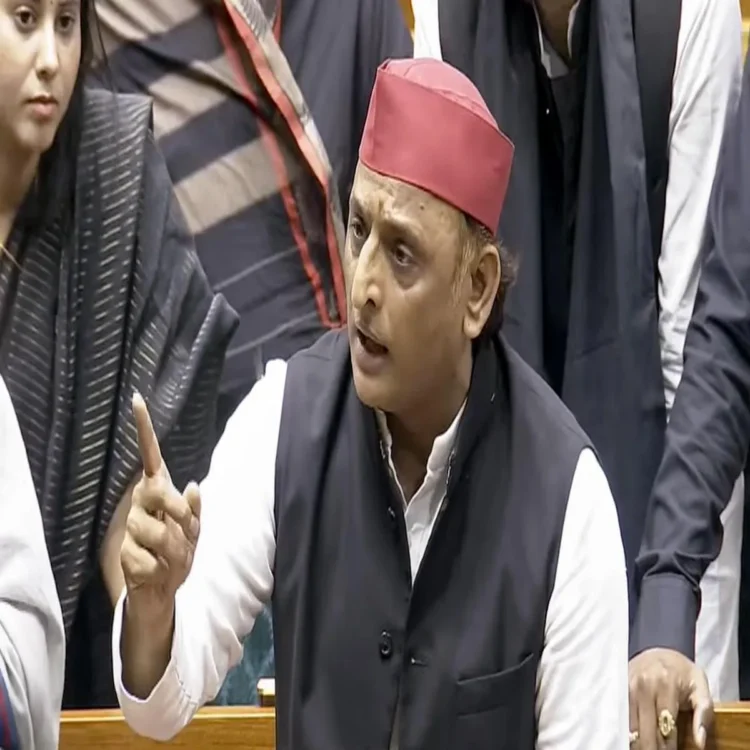
Akhilesh Yadav Cites Student Protests
Referring to the demonstrations that followed the alleged NEET paper leak, Yadav claimed the Centre initially appeared unwilling to acknowledge the concerns raised by students. According to him, the government later accepted several demands after public pressure intensified. He recalled a slogan used during the protests, saying it symbolised the belief among young people that governments eventually respond when citizens remain united and persistent in their demands.
Yadav maintained that the movement demonstrated the collective strength of students and their ability to influence public policy through peaceful mobilisation.
Questions Over Government Commitments
The Samajwadi Party chief stated that the government had agreed to several issues raised during the protests, including the resignation of the then Union Education Minister Dharmendra Pradhan. However, he questioned why these commitments had not been formally presented before Parliament.
Commenting on the reception given to Pradhan after his resignation, Yadav said his party had no objection to the welcome but suggested that the political focus had shifted away from the broader concerns surrounding examination reforms.
Praise for Youth Participation
Congratulating students, especially members of Generation Z, Yadav said their unity and determination played a significant role in bringing national attention to the issue. He remarked that despite extensive political campaigning by the ruling party, the coordinated efforts of students succeeded in compelling the government to reconsider its approach.
He also expressed hope that the remaining demands raised by protesting students would receive due consideration from the Centre.
Protest Movement and Previous Agitations
During his speech, Yadav referred to the Cockroach Janata Party (CJP), describing how what began as a satirical campaign eventually developed into a large-scale movement. He said the demonstrations became significant enough that authorities permitted protesters to hold peaceful sit-ins.
Drawing a comparison with the farmers’ protests, the Kannauj MP argued that governments often respond only after prolonged public pressure. He recalled the repeal of the three farm laws, claiming that electoral considerations influenced that decision. According to him, public movements become effective when they maintain sustained momentum.
Concerns Over Paper Leaks and Examination System
Yadav questioned the need for fresh amendments to the anti-paper leak legislation, noting that a law addressing unfair practices had already been enacted in 2024. He asked why major examination leaks were still being reported in 2026 if the earlier legal framework was sufficient.
He observed that the issue affected not only candidates but also millions of family members whose futures were linked to these examinations. Stressing the scale of the impact, he urged the government to provide clear answers regarding the recurring incidents. He also invited the Home Minister to clarify the government’s position if any of his claims were inaccurate.
Remarks on Accountability and Education
The SP leader also raised questions about the alleged theft of donations at the Ram Temple, arguing that if authorities struggled to safeguard such assets, concerns naturally arose about preventing examination paper leaks.
He further pointed to reported examination leaks in Uttar Pradesh and criticised the outsourcing of functions within the National Testing Agency (NTA). According to Yadav, institutions responsible for conducting public examinations must remain fully accountable and maintain public trust. He remarked that accountability should not be confused with merely managing financial accounts.
Criticism Over Schools and Protest Response
Yadav also criticised the BJP-led government over the reported closure of more than one lakh primary schools nationwide, including over 26,000 in Uttar Pradesh. He questioned why examination papers for Classes 10 and 12 continued to leak despite the existence of laws intended to prevent such incidents.
Concluding his address, he criticised the police response to the recent student protests in Delhi. Referring to the use of tear gas and force against demonstrators, he alleged that the situation reflected an atmosphere of suppression and drew a comparison with the restrictions associated with the Emergency period.