
NEET Protest – RAF Action Details Surface Through Official Police Record
NEET Protest –Fresh details from an official police record have shed light on the security measures used during the July 20 protest in central Delhi, where demonstrators gathered to demand accountability over the NEET-UG paper leak controversy.
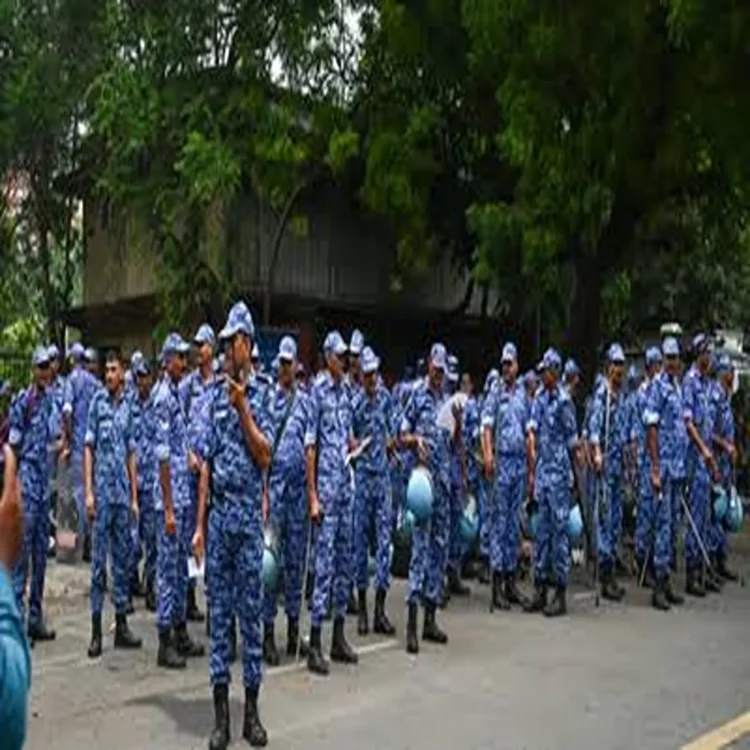
The official record indicates that the Rapid Action Force (RAF) used several types of non-lethal crowd-control equipment, including plastic pellet rounds, while dispersing protesters during the “Sansad Chalo” march near Jantar Mantar. The information has drawn renewed attention as political leaders continue to debate the handling of the demonstration and the response of law enforcement agencies.
Police Record Details Crowd-Control Measures
According to an entry recorded in the general diary at Parliament Street Police Station on July 22 at 1:24 pm, the operational report was submitted by a Deputy Commandant of the RAF. The officer was deployed in Zone 1 of the Jantar Mantar area alongside a Delhi Police officer of Deputy Commissioner of Police (DCP) rank during the protest.
The police record states that, acting under the instructions of the DCP, RAF personnel discharged 55 non-electrical shells, 15 electrical shells, five tear smoke grenades, two rounds from anti-riot guns, and two rounds of plastic pellets as part of efforts to control the crowd.
Authorities Clarify Nature of Plastic Pellets
Officials familiar with the record emphasized that the plastic pellets used during the operation were non-lethal and designed to minimize the risk of serious injury. They explained that each round contains four plastic projectiles and differs significantly from metal pellets, which are capable of penetrating the body.
According to the officials, the equipment is intended for riot-control situations where security personnel seek to disperse crowds while reducing the possibility of life-threatening injuries.
Political Debate Intensifies
The disclosure has added momentum to an ongoing political dispute over the police response to the demonstration. Opposition parties have called for Union Home Minister Amit Shah to address Parliament regarding the reported use of force during the protest.
The march was organized by the Cockroach Janta Party (CJP), which had launched a sustained campaign demanding the resignation of then Union Education Minister Dharmendra Pradhan following the controversy surrounding the NEET-UG paper leak.
Reports have also emerged claiming that two to three protesters sustained serious pellet-related injuries during the confrontation, although the circumstances surrounding those injuries remain a subject of public and political discussion.
Protest Ends After Minister’s Resignation
The month-long protest campaign concluded after Dharmendra Pradhan stepped down from his ministerial position on Saturday. Following his resignation, the CJP announced that it was ending its agitation, and demonstrators dispersed.
The developments marked the conclusion of one of the most prominent protest movements linked to the examination controversy, which had sparked widespread concern among students and political groups across the country.
Police Maintain Earlier Position
Delhi Police has continued to reject allegations that force involving pellets was used against peaceful protesters. The force has previously described such claims as “false and misleading,” maintaining that its actions were carried out in accordance with law and operational requirements.
Meanwhile, neither the Central Reserve Police Force (CRPF) nor the Rapid Action Force has issued a formal statement specifically addressing the contents of the police record.
CRPF Director General G. P. Singh has said that, with the protest now concluded and the gathering dispersed, the force will conduct its standard post-operation review. He added that, as with every major deployment, a professional assessment would be completed before the Force Headquarters presents its official observations.