
Monsoon – Weak July Rains Keep Food Supply and Price Risks in Focus
Monsoon – India’s monsoon performance has shown a modest improvement from the previous week, but rainfall across several regions remains below expectations, raising concerns over crop sowing, reservoir levels and food supplies. A recent assessment by Emkay Global Financial Services said food inflation is currently under control, although a prolonged rainfall deficit could create price pressures in the weeks ahead.
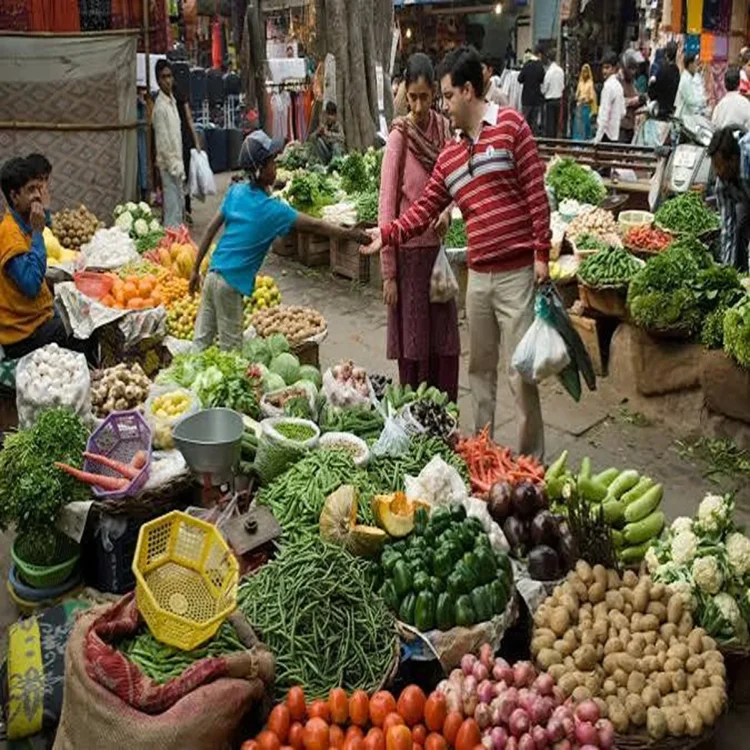
Food Prices Remain Stable for Now
The report noted that weekly retail food price movements were limited despite the weak monsoon. Vegetable prices increased by 1.5 per cent during the week, while eggs became costlier by 1 per cent. Cereals recorded a rise of 0.5 per cent, and oils and fats moved up by 0.2 per cent.
On a year-on-year basis, oils and fats registered the sharpest increase at 11 per cent, followed by eggs at 6 per cent. Prices of vegetables, milk and spices were each higher by around 3 per cent compared with the same period last year. Cereals rose by 2 per cent, while pulses recorded an annual increase of 1 per cent.
Rainfall Deficit Continues Across Key Farming Regions
Monsoon rainfall has remained weak in several important agricultural states, including Maharashtra, Gujarat, Madhya Pradesh and Uttar Pradesh. These regions play a major role in the production of cereals, pulses, oilseeds, vegetables and other essential crops.
According to the report, inadequate rainfall in these states may affect farm output if conditions do not improve soon. Lower crop production could tighten food availability and lead to higher retail prices, particularly for items that depend heavily on timely rainfall and adequate irrigation.
July Rainfall Outlook Raises Further Concern
The India Meteorological Department has projected below-normal rainfall for July 2026, keeping attention on the progress of the monsoon season. The report said cumulative rainfall across the country stood 31 per cent below the long-period average as of July 3.
June also ended with a significant rainfall shortfall. Rainfall during the month was 40 per cent below the long-period average, making it the weakest June monsoon performance recorded in the past decade, according to the assessment.
The continuing rainfall gap has affected the early phase of the Kharif sowing season. Farmers in several regions depend on regular monsoon showers to begin planting crops such as rice, maize, cotton, soybean, pulses and oilseeds. Delayed or uneven rainfall can slow sowing activity and reduce the area brought under cultivation.
Reservoir Storage Levels Remain Low
Water storage in major reservoirs has also remained under pressure due to the weak monsoon. Pan-India reservoir levels were reported at 26 per cent of total capacity, which is 39 per cent lower than the storage level recorded during the same period last year.
Central India had the highest reservoir storage at 32 per cent of capacity, followed by North India at 29 per cent and West India at 28 per cent. Storage levels were notably lower in South India, where reservoirs stood at 20 per cent of capacity, while East India reported the lowest level at 19 per cent.
Lower reservoir storage may affect irrigation availability if rainfall remains subdued through the coming weeks. It could also increase pressure on water resources in regions already facing limited rainfall.
Kharif Season Outlook Remains Closely Watched
The report said the pace of Kharif sowing and the development of monsoon conditions will be important factors for food prices in the near term. While inflation in essential food items has remained stable so far, a continued rainfall deficit could alter the outlook for agricultural production and household food costs.