
Industrial Output – South Korea Records Factory Slowdown as Chip Production Weakens
Industrial Output – Manufacturing performance South Korea economy May industrial production retail sales growth – South Korea’s industrial sector lost momentum in May as manufacturing activity declined for a second straight month, largely because of reduced semiconductor production and temporary supply-related adjustments. Despite the slowdown in factories, consumer spending showed modest improvement, offering a small sign of resilience in domestic demand.
Manufacturing Activity Extends Monthly Decline
Fresh government statistics released on Tuesday showed that the country’s industrial production slipped by 0.3 percent in May compared with the previous month. This marked the second consecutive monthly decline, reflecting weaker performance across several key industries. The mining and manufacturing sector, one of the country’s major economic drivers, recorded a sharper 3 percent contraction, mainly due to lower output from semiconductor and pharmaceutical companies. In contrast, automobile production posted moderate growth during the same period.
Chip Industry Faces Temporary Production Adjustment
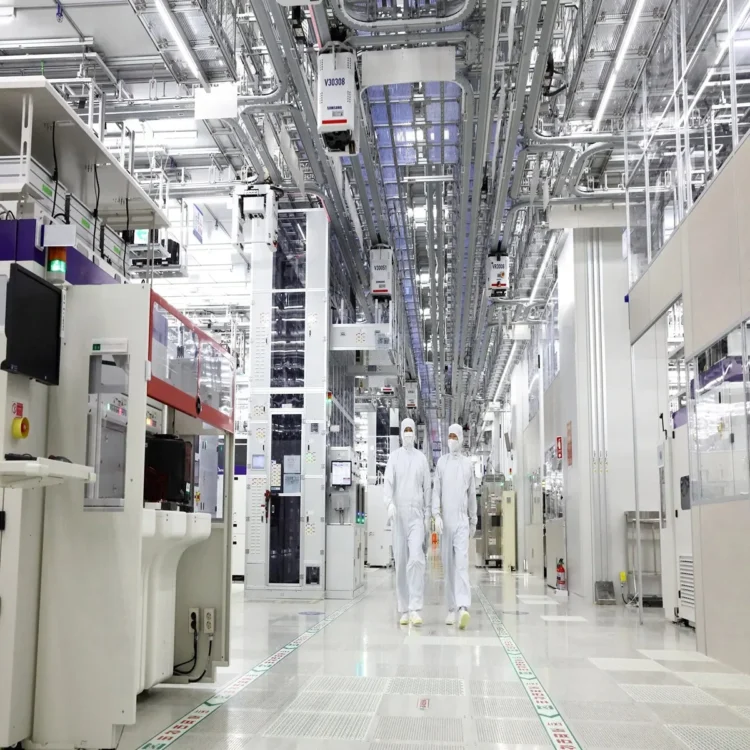
Officials attributed much of the decline to changes in semiconductor manufacturing schedules rather than weakening demand. According to the government, semiconductor production dropped 10 percent from April as shipments of memory products, including DRAM chips, eased following exceptionally strong output in previous months. Authorities explained that the decline was influenced by a statistical base effect and planned volume adjustments by manufacturers.
A senior official from the statistics ministry said the industry’s long-term outlook remains positive. He noted that production levels had reached capacity in many facilities, making temporary adjustments necessary to align manufacturing with shipment schedules. The official also expressed confidence that production volumes and overall output value would rise once newly built semiconductor fabrication plants begin full-scale operations.
Supply Chain Challenges Add Pressure
The finance ministry said external factors also contributed to weaker industrial performance. It pointed to disruptions in the supply of raw materials linked to ongoing tensions in the Middle East, which affected manufacturing operations across several sectors. Combined with production adjustments in the semiconductor industry, these supply challenges weighed on overall factory output during May.
The pharmaceutical sector experienced one of the sharpest declines, with production falling 17.5 percent compared with the previous month. Meanwhile, vehicle manufacturing increased by 2.7 percent, helping to offset part of the broader industrial weakness.
Service Sector Provides Positive Support
While factory activity slowed, the country’s service industry delivered stronger results. Output across the service sector rose 1.3 percent in May, supported by improved performance in finance and scientific services. The increase highlighted continued stability in areas of the economy that are less dependent on manufacturing exports.
Retail sales also showed slight improvement, rising 0.1 percent from April. Higher spending on automobile fuel, cosmetics and clothing contributed to the monthly increase. However, demand for durable goods remained under pressure, with automobile sales declining 3.4 percent. At the same time, purchases of non-durable goods such as fuel rose 0.9 percent, while sales of semi-durable products, including clothing, climbed 2.3 percent.
Investment Activity Remains Mixed
Business investment remained largely unchanged during the month. Facility investment edged down 0.1 percent as weaker demand for machinery offset gains elsewhere. Investment in transportation equipment recorded a modest 0.2 percent increase, while spending on machinery, including precision equipment, slipped by 0.2 percent.
The latest figures suggest that although South Korea’s manufacturing sector is navigating temporary production adjustments and global supply challenges, stable consumer spending and stronger service-sector activity continue to provide some support for the broader economy. Market observers will now watch whether expanded semiconductor production capacity in the coming months helps restore industrial growth.