
IndiaUSRelations – Senator Calls for Stronger India-US Partnership After Modi-Trump Meeting
IndiaUSRelations – A senior American lawmaker has underlined the importance of deepening ties between India and the United States, a day after Prime Minister Narendra Modi held discussions with US President Donald Trump in France. The senator said both nations should work towards strengthening their relationship rather than creating obstacles through trade measures that could affect long-term cooperation.
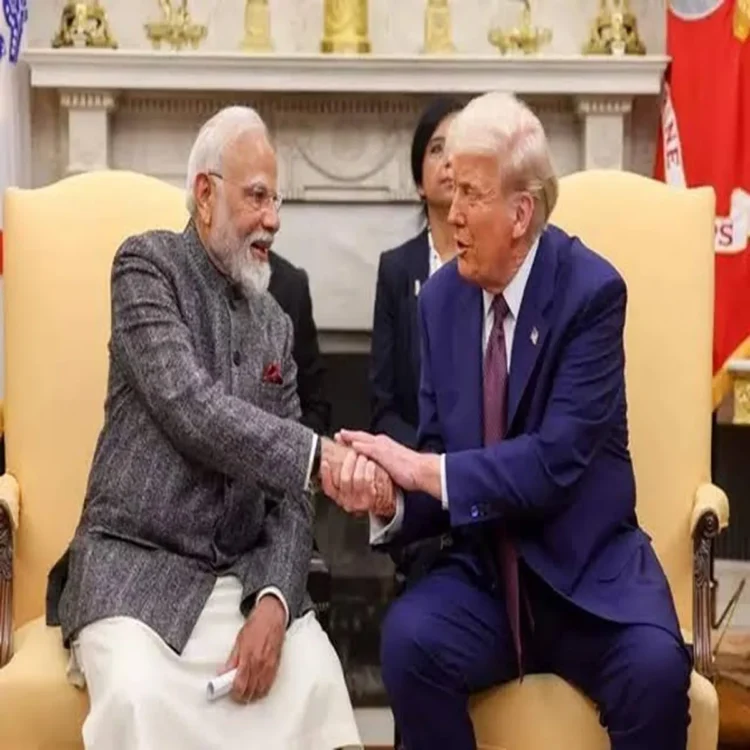
Senator Highlights Importance of Bilateral Ties
Speaking in response to questions regarding the Modi-Trump meeting, Senator Mark Warner said he hopes the interaction contributes positively to relations between the two countries. While noting that he had not yet received a detailed briefing on the discussions, Warner stressed that India and the United States share a partnership of significant global importance.
The Virginia-based Democrat, who serves as co-chair of the Senate India Caucus, said he has consistently supported stronger engagement between Washington and New Delhi. According to him, collaboration between the world’s largest democracies remains essential in addressing emerging geopolitical and economic challenges.
Long-Term Efforts to Expand Cooperation
Warner pointed out that successive American administrations have spent decades encouraging closer strategic engagement with India. He noted that Washington has worked to support India’s growing cooperation with democratic partners while reducing its historical dependence on Russia in key sectors.
The senator said these efforts have included initiatives aimed at promoting security and economic collaboration across the Indo-Pacific region. Among them is the Quad grouping, which includes India, the United States, Japan and Australia. The platform has become an important mechanism for cooperation on regional stability, security and economic development.
Concerns Over Tariff Policies
Warner also expressed concern about previous tariff decisions that affected Indian exports. He questioned the rationale behind imposing significantly higher duties on Indian goods, arguing that such measures risk sending an unfavorable message to a strategic partner.
According to the senator, trade policies that create friction could undermine broader diplomatic objectives. He suggested that when countries are working to build stronger partnerships, economic barriers may complicate efforts to enhance trust and cooperation.
Impact on Broader Strategic Goals
The lawmaker warned that policies perceived as punitive could influence how India evaluates its international partnerships. He argued that maintaining a stable and predictable relationship is particularly important at a time when global powers are competing for influence across Asia.
Warner said the United States has invested considerable effort in encouraging deeper engagement with India and that any actions weakening confidence in the relationship could have unintended consequences. He emphasized that both countries stand to benefit from closer cooperation across multiple sectors.
Growing Significance of India-US Engagement
Describing the relationship as one of the most consequential geopolitical partnerships of the modern era, Warner said strengthening bilateral ties should remain a priority for both governments. He added that he intends to review details of the Modi-Trump discussions once official information becomes available.
The comments came shortly after the leaders met on the sidelines of international events in France, where trade, defence collaboration and broader strategic matters were among the topics under discussion.
Expanding Cooperation Across Key Sectors
Over the past two decades, India and the United States have significantly broadened their engagement in several areas. Cooperation has expanded beyond defence to include critical technologies, energy security, education, semiconductor manufacturing, artificial intelligence and resilient supply chains.
The two countries have also signed important defence agreements, increased military exercises and strengthened collaboration in emerging technology sectors. Analysts widely view the partnership as a central pillar of stability and economic growth in the Indo-Pacific region, with both nations continuing to explore new opportunities for cooperation in the years ahead.