
AravalliHillsReview – Concerns Grow Over Independence of Supreme Court-Appointed Aravalli Panel-
AravalliHillsReview – Questions have been raised by environmental experts and former government officials regarding the independence and effectiveness of the recently formed committee tasked with reviewing the scientific definition and boundaries of the Aravalli Hills. Several experts argue that the Supreme Court-appointed body may not possess the level of autonomy and expertise expected from a high-powered panel entrusted with such a significant environmental responsibility.
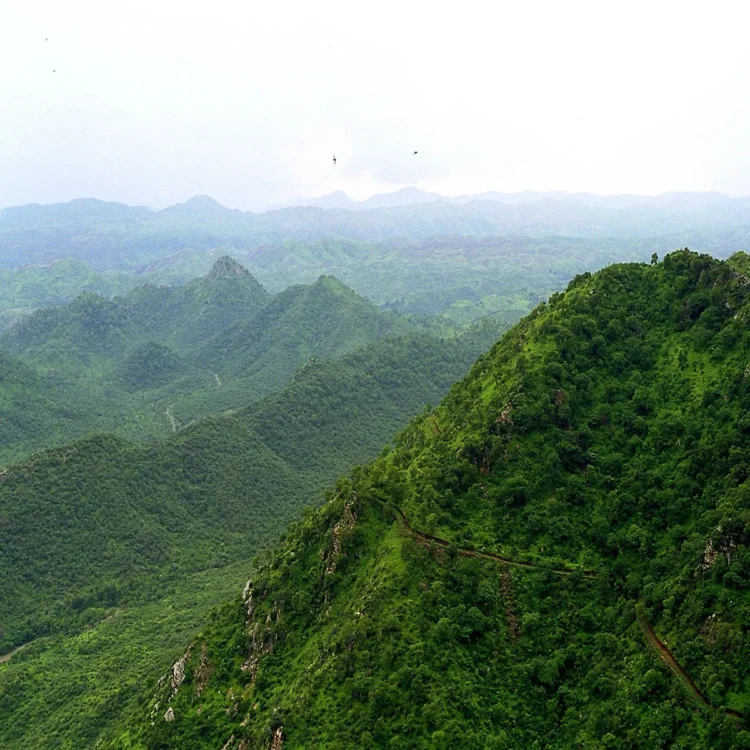
Experts Question Committee Structure
The concerns largely stem from the composition of the five-member committee established by the Supreme Court on June 3, 2026. The panel has been assigned the responsibility of conducting an independent assessment of the scientific criteria used to define and demarcate the Aravalli Hills and Ranges. It is expected to submit its findings by August 31, 2026.
The committee is chaired by Kanchan Devi, Director General of the Indian Council of Forestry Research and Education (ICFRE). However, critics point out that the organization itself operates under a governance framework linked to the Ministry of Environment, Forest and Climate Change (MoEFCC), raising concerns about institutional independence.
Previous Recommendations Under Scrutiny
The latest debate follows a Supreme Court order that relied on recommendations submitted by a committee led by the Environment Ministry Secretary. That report defined the Aravalli Hills as landforms rising at least 100 meters above the surrounding terrain while excluding smaller hills and slopes from protected status.
Environmental groups and conservation advocates have strongly criticized that interpretation, arguing that it could leave several ecologically sensitive areas vulnerable to mining and other developmental activities. Critics believe the new committee should have been designed to provide a more detached review of those recommendations.
Concerns Over Representation and Expertise
Former Indian Forest Service officer Prakruti Srivastava stated that many observers perceive the panel as being closely aligned with government institutions that have previously issued reports viewed as less favorable toward conservation priorities.
Experts have also highlighted the professional backgrounds of some committee members. According to critics, one member has extensive experience in mineral and mining exploration, while another previously headed the Forest Survey of India and has faced criticism over the implementation of forest conservation directives.
Another issue raised by environmental observers is the absence of a wildlife specialist on the committee. They argue that wildlife movement corridors and biodiversity concerns are central to understanding the ecological importance of the Aravalli landscape and should be represented in the panel’s expertise.
Lack of Regional Experience Highlighted
Some experts have additionally questioned whether the committee adequately reflects local knowledge of the states through which the Aravalli range extends. While one member has worked on issues related to desertification and community development in Madhya Pradesh, critics note that none of the core members have extensive professional experience directly linked to the Aravalli region.
This has prompted calls for greater regional representation to ensure that the committee’s recommendations reflect on-ground ecological realities and conservation challenges.
Composition of the Committee
Apart from chairperson Kanchan Devi, the committee includes former Forest Survey of India Director General Dr. Subhash Ashutosh, former Geological Survey of India Director Dr. Rajendra Kumar Sharma, former Environment Ministry Joint Secretary Brij Mohan Singh Rathore, and former Delhi University Botany Department head Prof. Ashok K. Bhatnagar.
The panel also includes special invitees Prof. Jagdish Krishnaswamy of the Indian Institute for Human Settlements and Prof. Laxmikant Sharma of the Central University of Haryana.
Comparisons With Earlier Environmental Panels
Environmental activist Lokesh Bhiwani has suggested that the Aravalli committee should match the standards set by earlier expert groups that played influential roles in environmental policymaking. He referred to the committee led by scientist Ravi Chopra on the Char Dham project in the Himalayas and the panel chaired by Prof. M.G.K. Menon on hazardous waste management as examples of expert bodies whose recommendations contributed significantly to environmental protection efforts.
As the committee begins its work, environmental groups, policymakers and local communities are expected to closely monitor its findings, which could influence the future protection and management of one of India’s most important ecological landscapes.