
Delimitation – NDA Still Short of Numbers Needed for Key Constitutional Reform
Delimitation – The National Democratic Alliance (NDA) continues to face a significant numerical challenge in Parliament despite expectations that a group of rebel Trinamool Congress (TMC) lawmakers could extend support to the ruling coalition. The issue has gained importance as the Union government explores the possibility of bringing back the delimitation proposal, a move linked to the implementation of women’s reservation in the Lok Sabha before the next general election.
Constitutional Amendment Requires Larger Majority
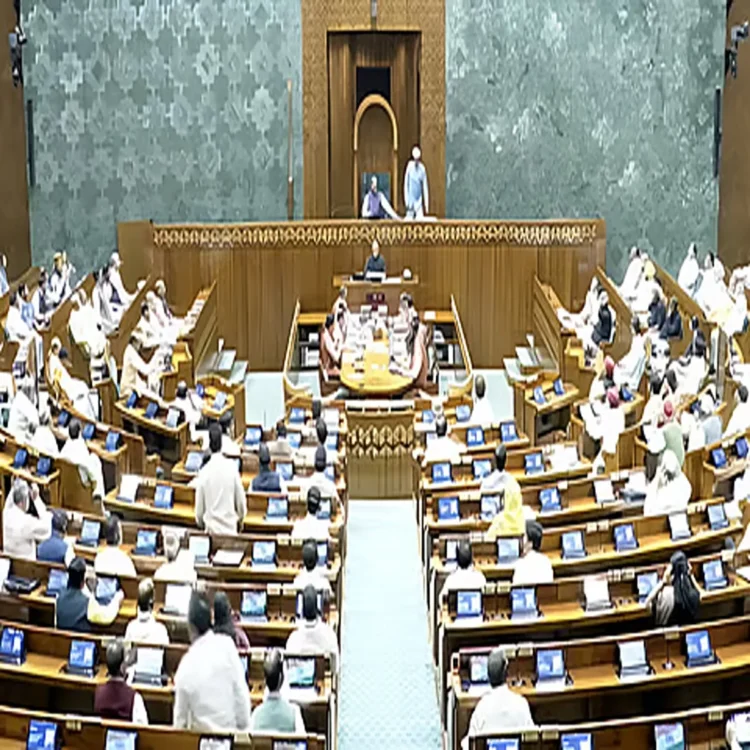
For any constitutional amendment to be approved, the government must secure support from at least two-thirds of members present and voting in both Houses of Parliament. In a Lok Sabha comprising 543 members, the benchmark for such a majority stands at 362 seats.
At present, the NDA commands the backing of 293 MPs. Political developments involving a faction of rebel TMC parliamentarians could potentially raise that figure. If around 20 MPs from the breakaway group formally support the government, the alliance’s effective strength may rise to approximately 313 members.
Numbers Still Fall Well Below Requirement
Even with the anticipated support from dissident TMC lawmakers, the ruling coalition would remain considerably short of the required two-thirds majority. Calculations indicate that the NDA would still need an additional 49 votes to cross the 362-member threshold necessary for passing a constitutional amendment.
The challenge is not new. During the previous Budget Session, an amendment connected to delimitation and women’s reservation faced strong resistance from opposition parties and failed to secure the required backing in the Lok Sabha, despite the NDA holding close to 298 votes at the time.
Rebel TMC MPs Seek Separate Political Identity
On Sunday, rebel TMC parliamentarians announced plans to align themselves with a regional political outfit and seek recognition as an independent bloc in the Lok Sabha. Members of the group have also claimed that they enjoy the support of as many as 22 MPs.
The development has generated fresh political speculation regarding possible shifts in parliamentary equations. However, legal and procedural hurdles may complicate the process before any political advantage can materialize for the ruling alliance.
Constitutional Experts Raise Legal Concerns
Constitutional specialists have pointed to provisions contained in the Tenth Schedule of the Constitution, commonly associated with anti-defection rules. Former Lok Sabha Secretary General and constitutional expert PDT Achary has argued that elected representatives cannot independently decide to merge with another political party.
According to his interpretation, only the original political organization can formally merge with another party. Individual MPs or MLAs may subsequently accept such a merger, provided the required proportion of legislators agrees to it. This distinction could become crucial in determining the legal validity of the rebels’ move.
Voting Rights Could Face Scrutiny
Legal experts further note that any attempt by rebel TMC MPs to support the NDA in Parliament may be challenged if questions regarding their status remain unresolved. A disqualification petition could potentially be pursued by TMC leadership, creating uncertainty over their ability to participate in crucial votes.
As a result, even projected support from the rebel faction may not immediately strengthen the government’s position in constitutional amendment matters.
BJP May Explore Additional Support
Political observers believe the Bharatiya Janata Party may also seek support from other opposition parties and regional groups. Attention has turned to factions such as Shiv Sena (UBT) and NCP (SP), which collectively hold a limited number of seats in the Lok Sabha.
Meanwhile, speculation has also surrounded the position of the DMK, which has 22 MPs. The party’s future parliamentary strategy remains uncertain following shifts within opposition alliances. However, the DMK had previously opposed the delimitation proposal, making its eventual stand difficult to predict.
With several political and legal factors still unresolved, the government’s path toward securing the numbers needed for a constitutional amendment remains challenging despite ongoing efforts to broaden support.