
DefenceModernization – Indian Army Advances Readiness for Multi-Domain Security Challenges
DefenceModernization – As India navigates an increasingly complex security environment, the Indian Army is intensifying efforts to prepare for emerging military and internal security threats. Army Chief General Upendra Dwivedi, who is set to conclude his tenure on June 30, has outlined the force’s evolving approach to national defence, highlighting preparations for simultaneous challenges along both major borders while also addressing internal security concerns. He emphasized that the Army’s future strategy is focused on adaptability, technology integration, and maintaining operational readiness across multiple domains.
Preparing for a Multi-Layered Security Environment
According to General Dwivedi, India’s security concerns extend beyond a conventional two-front military scenario involving China and Pakistan. He described the challenge as a broader security framework that also includes internal disturbances, proxy threats, and activities occurring in the grey zone between peace and conflict.
The Army, he said, has adjusted its deployment patterns, operational planning, and force development programs to ensure preparedness for various contingencies without compromising effectiveness on any front. Internal security operations continue to rely heavily on intelligence inputs and coordination with central agencies, security forces, and state administrations.
He noted that the security situation in the Northeast has shown encouraging progress, with violence levels continuing to decline and stability improving across the region.
Restructuring the Force for Future Conflicts
General Dwivedi said the nature of warfare is rapidly changing, with increasing importance being placed on cyber operations, space assets, information warfare, and the electromagnetic spectrum. In response, the Army has accelerated reforms aimed at creating faster, more flexible, and technologically connected combat formations.
Several specialized units have already been introduced. Among them are Bhairav Battalions, designed to bridge operational gaps between conventional assault units and Special Forces. Additional drone-focused platoons are also being established to improve surveillance, reconnaissance, and battlefield awareness.
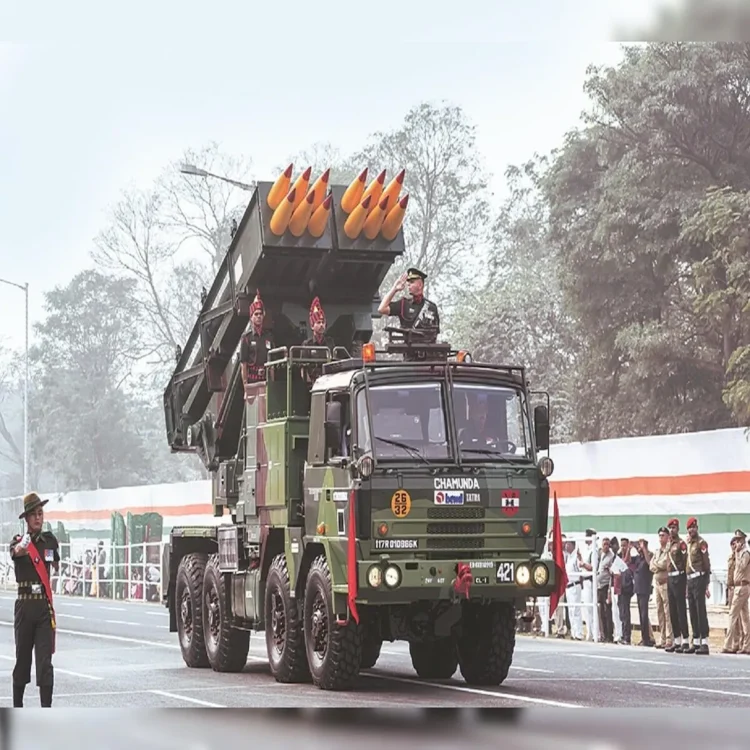
The Army is simultaneously strengthening its precision-strike capabilities through new artillery formations and specialized batteries intended to support long-range targeting and guided fire missions closer to operational zones.
Integrated Combat Formations Gain Momentum
One of the major reforms involves the development of integrated combat formations known as Rudra Brigades. These units combine infantry, mechanized forces, armour, artillery, drones, Special Forces, and support elements under a unified structure.
Two such brigades are already operational, while additional formations are planned based on strategic requirements and terrain considerations. Military planners expect these brigades to provide commanders with greater flexibility and faster battlefield response capabilities.
The Army is also moving ahead with the Integrated Battle Group model. Following extensive testing and evaluation, a mountain strike formation is expected to be reorganized under this concept. New electronic warfare formations are also being created to strengthen operations in contested electromagnetic environments and support future information-domain requirements.
Technology Becomes Central to Battlefield Advantage
Recent military operations have demonstrated the growing importance of drones, persistent surveillance, and network-centric warfare. General Dwivedi stressed that unmanned systems now play a critical role in intelligence gathering, targeting, logistics support, and communications.
At the same time, counter-drone technologies have become equally important. The Army is investing in systems capable of detecting, disrupting, and neutralizing hostile unmanned platforms.
Rather than viewing drones as independent assets, the Army is integrating them into a larger operational network connecting artillery, air defence systems, aviation assets, intelligence platforms, and electronic warfare capabilities. This approach is designed to shorten decision-making cycles and improve battlefield effectiveness.
Situation Along the LAC Remains Stable
Discussing the Line of Actual Control with China, the Army Chief described the situation as stable but sensitive. He noted that disengagement measures at key friction points have helped reduce tensions, while military dialogue mechanisms continue to support confidence-building efforts.
Interactions between Indian and Chinese military personnel have increased significantly, helping resolve local issues and maintain stability along the border. Existing communication channels, including commander-level talks and established engagement mechanisms, remain active and continue to facilitate routine activities in frontier regions.
Despite ongoing diplomatic and military engagement, General Dwivedi reaffirmed that India will maintain a strong and credible military posture along its northern borders.
Modernization Priorities for the Next Decade
Looking ahead, the Army is prioritizing advanced surveillance systems, precision-guided weapons, modern artillery, air defence capabilities, drone technologies, cyber operations, electronic warfare, and artificial intelligence-based decision support tools.
Efforts are also underway to modernize tanks, anti-tank weapons, battlefield communications, logistics networks, and soldier equipment. Future battlefields, he said, will require a blend of conventional military strength and advanced technologies such as autonomous systems, hypersonic capabilities, directed-energy weapons, and resilient digital networks.
General Dwivedi emphasized the importance of developing indigenous solutions tailored to India’s unique terrain and security requirements, with modernization plans increasingly focused on domestic innovation and long-term capability development.