
NuclearForces – SIPRI Report Points to Changes in India’s Nuclear Deployment Strategy
NuclearForces – India’s nuclear posture appears to be undergoing a gradual transformation, according to the latest assessment released by the Stockholm International Peace Research Institute (SIPRI). In its annual Yearbook published on Monday, the institute estimated that a limited number of Indian nuclear warheads are now deployed with active military forces, marking a notable shift from its earlier evaluations. SIPRI believes India may have begun placing a small number of nuclear warheads aboard a ballistic missile submarine engaged in deterrence patrol operations. The country’s total nuclear inventory is estimated at approximately 190 warheads as of January 2026, compared with 180 the previous year.
Signs of an Evolving Nuclear Doctrine
For many years, analysts generally believed that India kept its nuclear warheads separate from delivery systems during peacetime. However, SIPRI noted that the increasing use of canister-based missile systems and the expansion of sea-based deterrence missions indicate a possible move toward integrating certain warheads with launch platforms even during non-conflict periods.
The report emphasized that the conclusion carries a degree of uncertainty. Nevertheless, researchers assessed that India may already have deployed a small number of warheads on a single nuclear-powered ballistic missile submarine conducting occasional patrols aimed at strengthening deterrence capabilities.
Expansion of the Submarine Fleet
SIPRI also highlighted developments in India’s naval nuclear program. The institute expects the country to introduce its fourth ballistic missile submarine next year. Satellite imagery reviewed by researchers suggests that both the recently commissioned INS Aridhaman and the upcoming submarine are considerably larger than earlier vessels and are capable of carrying a greater number of missiles.
According to the report, India’s long-term S5-class submarine initiative could eventually allow the country to operate between six and eight ballistic missile submarines simultaneously, significantly enhancing its sea-based nuclear deterrent.
Focus on China While Pakistan Remains a Factor
The study noted that India’s modernization efforts are increasingly centered on developing longer-range weapons capable of reaching targets deeper inside China. At the same time, strategic planning in New Delhi continues to be shaped by its long-standing security competition with Pakistan.
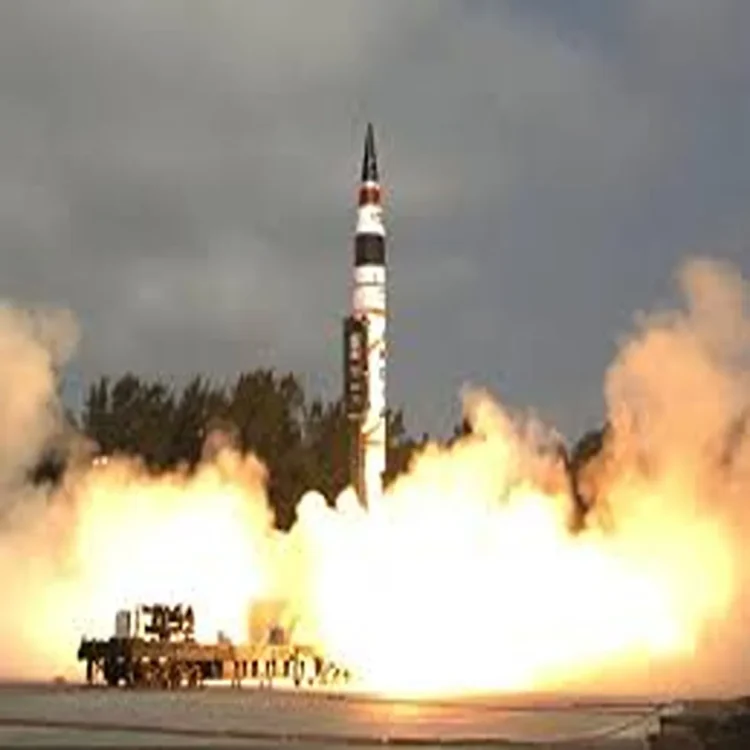
Another area of progress identified by SIPRI is multiple independently targetable re-entry vehicle technology. The report stated that the Agni-V missile has demonstrated the ability to carry as many as three nuclear warheads. India is also pursuing the development of hypersonic cruise missile systems that could potentially serve both conventional and nuclear roles.
Concerns Over Regional Stability
SIPRI warned that technologies such as MIRVs and dual-capable missile systems are becoming increasingly important factors in global nuclear security discussions. China, India and Pakistan all possess missile platforms capable of carrying either conventional or nuclear payloads. Such ambiguity, the report said, can increase the risk of misunderstandings during periods of tension because an opponent may not immediately know the type of warhead being launched.
The institute also reviewed last year’s military confrontation between India and Pakistan, describing it as the most serious conflict between the two countries in decades. According to the assessment, Indian operations targeted Pakistani air and missile facilities believed to have nuclear-related roles.
Although both nations took measures to prevent escalation into a nuclear crisis, SIPRI cautioned that the episode demonstrated how rapidly a future confrontation could become more dangerous if tensions spiral unexpectedly.
Pakistan and China Continue Nuclear Developments
Pakistan’s estimated stockpile remained at around 170 warheads, unchanged from the previous year. However, SIPRI noted that ongoing production of fissile material and the development of additional delivery systems suggest future growth in its arsenal. The report added that Pakistan’s Ababeel missile program has faced setbacks, while its sea-based nuclear capability remains under development.
China, meanwhile, continues to expand its nuclear forces at a pace SIPRI described as the fastest in the world. The institute estimates that China now possesses approximately 620 nuclear warheads, up from 600 a year earlier. Around 34 of those are believed to be deployed with operational forces.
Researchers also pointed to China’s continued investment in advanced missile systems, next-generation submarines, strategic bombers and early-warning networks. SIPRI assessed that Beijing is moving closer to a launch-on-warning posture supported by an expanding satellite-based detection system.
Global Nuclear Inventory Remains Significant
At the global level, SIPRI estimated that 12,187 nuclear warheads existed as of January 2026. Of these, approximately 9,745 were held in military stockpiles. Around 4,012 warheads were deployed with operational forces, while between 2,100 and 2,200 remained on high operational alert, underscoring the continued importance of nuclear weapons in international security calculations.