
WaterSharing – BJP MP Revives Debate Over India-Bangladesh River Agreements
WaterSharing – A fresh political debate has emerged over historical water-sharing arrangements between India and Bangladesh after Bharatiya Janata Party (BJP) Member of Parliament Nishikant Dubey criticized decisions taken by previous Congress-led governments. The BJP leader argued that agreements signed decades ago affected the interests of farmers and several Indian states dependent on major river systems. His remarks, shared on social media on Saturday, focused on the Ganga and Teesta river agreements reached during the tenures of former Prime Ministers Indira Gandhi and Rajiv Gandhi.
Criticism of Earlier Water Agreements
Dubey described the agreements as a controversial phase in India’s water management history. Referring to developments from the late 1970s and early 1980s, he stated that India had repeatedly renewed arrangements for sharing river water with Bangladesh. According to him, decisions made during that period allowed significant portions of river resources to be allocated beyond India’s borders despite growing domestic demands.
The BJP MP recalled that an earlier understanding related to the Ganga River was implemented in 1977 for a limited duration. He further noted that subsequent arrangements were reached in 1982 and later in 1985, involving discussions between Indian and Bangladeshi leadership. He also pointed to agreements concerning the Teesta River, claiming that water distribution decisions taken at the time continue to influence regional debates.
Concerns Raised About Farmers and States
In his statement, Dubey linked the issue to agricultural challenges faced by several Indian states. He argued that regions such as Bihar, Jharkhand, and Uttar Pradesh require reliable access to water resources for farming and development. According to him, concerns related to irrigation, river management, and sediment accumulation in major waterways deserve greater attention.
The MP also highlighted the importance of the Teesta River for Sikkim, describing it as a key source for irrigation and hydropower potential. He similarly referred to the Brahmaputra River’s role in supporting economic activity and livelihoods in Assam and West Bengal. His comments suggested that domestic water requirements should remain a priority while framing future policy decisions.
Political Allegations Against Congress
Along with questioning past agreements, Dubey accused the Congress party of placing political considerations ahead of national interests. He alleged that the party’s approach toward Bangladesh-related issues had been influenced by electoral calculations. His remarks formed part of a broader political exchange between the ruling BJP and the opposition Congress on matters related to national resources and border-region concerns.
The Congress party had not immediately responded to the latest comments. However, water-sharing arrangements between India and Bangladesh have often remained sensitive political subjects, particularly in states located along shared river basins.
Background of the India-Bangladesh Understanding
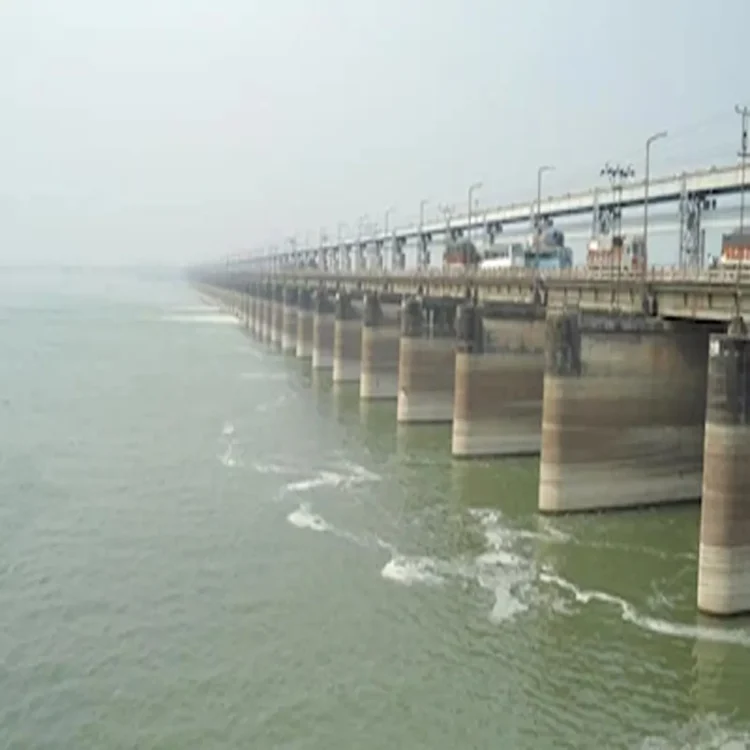
The discussion relates to agreements negotiated between the two neighboring countries over the use of common river systems. After the expiry of the 1977 Ganga water-sharing arrangement, India and Bangladesh pursued additional discussions to manage water distribution at Farakka.
In October 1982, then Prime Minister Indira Gandhi and Bangladesh leader Lieutenant General HM Ershad signed a Memorandum of Understanding concerning the sharing of Ganga waters. The arrangement served as an interim framework designed to ensure a balanced allocation of water while both countries continued negotiations on a long-term settlement.
The Joint Rivers Commission was assigned the responsibility of conducting technical assessments and exploring sustainable solutions for future cooperation. Discussions surrounding the Teesta River also resulted in an interim formula in 1983. Under that arrangement, India was allotted 39 percent of the river’s flow, Bangladesh received 36 percent, and the remaining 25 percent was left unallocated pending further studies and evaluation.
Today, these historical agreements continue to be referenced in political discussions, reflecting the ongoing importance of water security, agricultural needs, and cross-border cooperation in South Asia.