
TradeRelations – India and Canada Push for Stronger Economic Partnership
TradeRelations -India and Canada are moving ahead with fresh efforts to strengthen economic cooperation, with both countries aiming to significantly increase trade and business investments over the next few years.
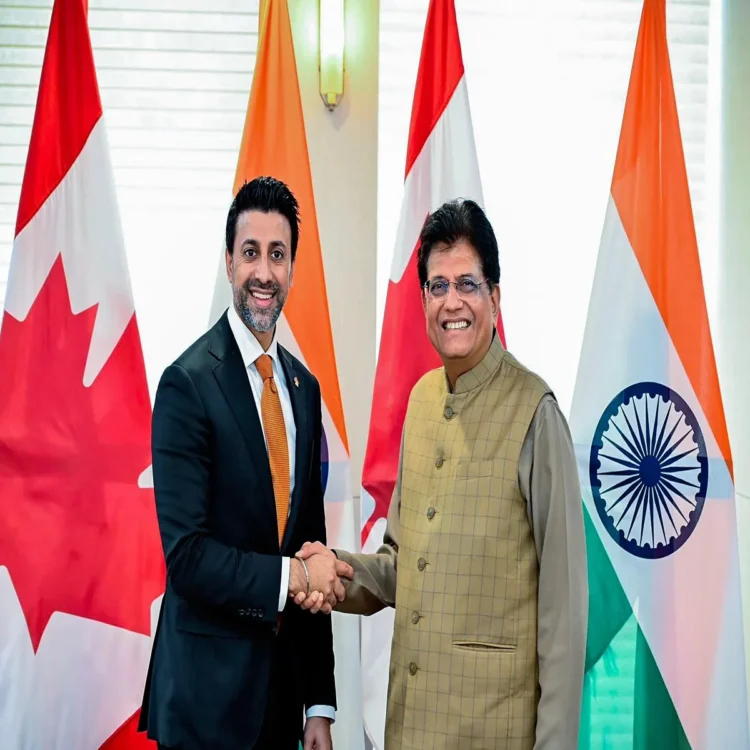
Union Commerce and Industry Minister Piyush Goyal on Monday praised the renewed pace of engagement between India and Canada during his official visit to Ottawa. The visit comes at a time when both nations are working to rebuild and expand their economic partnership through deeper trade discussions and long-term commercial cooperation.
Talks Focus on Expanding Economic Cooperation
Addressing a joint media briefing alongside Canada’s Minister of International Trade, Maninder Sidhu, Goyal said relations between the two countries are entering a new phase with stronger intent and clearer economic goals. According to him, recent high-level interactions have helped both governments move toward a broader and more structured partnership.
He pointed to Canadian Prime Minister Mark Carney’s earlier visit to India as an important step that helped create momentum for stronger bilateral engagement. Goyal said both sides are now working with a focused approach to establish new priorities and advance discussions at a faster pace.
Ambitious Trade Target Set for 2030
The minister stated that India and Canada have jointly set a target of increasing bilateral trade from the current level of around 17 billion US dollars to 50 billion US dollars by the year 2030. He added that leaders from both countries have also directed officials to complete negotiations on a comprehensive free trade agreement before the end of the year, or even earlier if possible.
Goyal described the progress in discussions as encouraging and said the commitment shown by both governments has been exceptional. He noted that the trade expansion goal is achievable because of the growing trust and cooperation between the leadership of the two countries.
According to the minister, recent developments following the signing of the terms of preference agreement in March have helped create a positive environment for further negotiations.
Large Indian Business Delegation Visits Canada
Highlighting the scale of the visit, Goyal said he had arrived in Canada with the largest business delegation India has ever sent abroad. More than 112 Indian companies are participating in the visit, reflecting strong interest from Indian businesses in exploring opportunities across Canadian markets.
The delegation includes representatives from multiple sectors looking to strengthen investment partnerships, increase exports, and identify areas for long-term collaboration. Officials believe these interactions could open new opportunities in technology, manufacturing, clean energy, infrastructure, and services.
The minister said the strong participation from businesses on both sides demonstrates confidence in the future of India-Canada economic relations.
Partnership Seen as Important for Global Growth
Goyal also described India and Canada as influential democratic economies that share common goals related to economic development, peace, and international stability. He said both nations have the potential to contribute significantly to global growth while creating opportunities for businesses and workers in their respective countries.
He added that stronger ties between the two countries would not only benefit trade but also support innovation, investment, and strategic cooperation in the coming years.
Three-Day Visit Focused on Trade Discussions
The Union minister’s visit to Ottawa began on May 25 and will continue until May 27. During the three-day programme, officials from both countries are expected to hold detailed discussions on the proposed Comprehensive Economic Partnership Agreement, widely viewed as a major step toward improving economic ties.
The agreement is expected to cover several sectors and could help reduce trade barriers while encouraging smoother market access for businesses operating in both countries. Observers see the ongoing negotiations as an important effort to revive and modernize bilateral economic relations.